
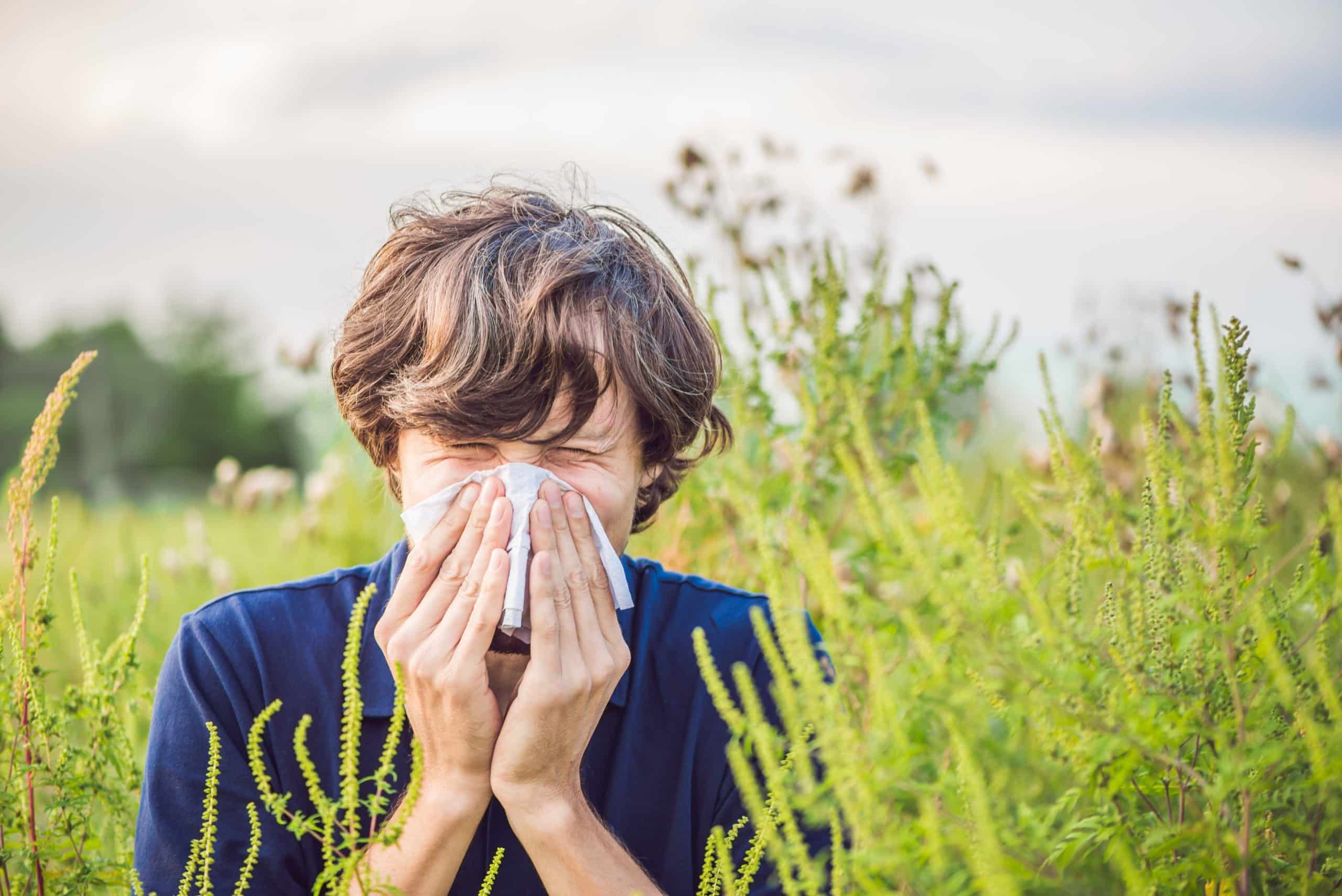
 Ragweed allergy is a common cause of seasonal allergy symptoms in Canada, especially as late summer transitions into early fall. People affected often experience sneezing, nasal congestion, and itchy or watery eyes—symptoms commonly associated with hay fever (seasonal allergic rhinitis).
Ragweed plants grow easily across Canada, including along roadsides, vacant lots, fields, and urban areas, making exposure difficult to avoid during peak pollen season.
This article is intended for general education and allergy awareness. It does not replace medical advice or professional diagnosis.
Why Ragweed Triggers Allergies
Ragweed releases large amounts of lightweight pollen that can travel long distances through the air. While not everyone reacts, people who are sensitive can develop symptoms after even brief exposure.
Ragweed pollen season typically lasts from late August through the fall, depending on weather conditions.
Common Signs and Symptoms
Symptoms vary from person to person and may range from mild to disruptive.
Typical allergy symptoms include:
-
Sneezing fits
-
Stuffy or runny nose
-
Itchy nose, throat, or eyes
-
Watery or red eyes
For individuals with asthma, ragweed pollen can worsen respiratory symptoms such as:
-
Chronic coughing
-
Chest tightness
-
Wheezing
-
Shortness of breath
Ongoing symptoms can interfere with sleep, concentration, school performance, and work productivity, leading to fatigue and reduced quality of life.
Who Is More Likely to Be Affected?
People who already experience seasonal allergies or hay fever are more likely to react to ragweed pollen. Many individuals are sensitive to multiple types of pollen, which can make symptoms more intense during ragweed season.
If allergy symptoms consistently worsen as autumn approaches, ragweed may be a contributing factor.
Reducing Exposure to Ragweed Pollen
While there is no cure for ragweed allergy, symptoms can often be managed by limiting exposure.
Helpful prevention strategies include:
-
Checking daily pollen forecasts before spending time outdoors
-
Keeping windows and doors closed during high pollen days
-
Using air conditioning instead of outdoor air circulation
-
Installing HEPA air filters to reduce indoor pollen levels
-
Showering and changing clothes in the evening to remove pollen
-
Bathing pets regularly to prevent pollen from spreading indoors
If possible, spending time in areas with lower pollen counts—such as near large bodies of water—may also provide temporary relief.
Managing Ongoing Symptoms
When avoidance strategies are not enough, symptom management may include:
-
Nasal sprays designed to reduce inflammation
-
Non-prescription allergy medications
-
Medications that help control allergy-related asthma symptoms
-
Immunotherapy (allergy shots) for long-term symptom reduction
A healthcare professional can help determine the most appropriate approach based on symptom severity and individual health needs.
Supporting Seasonal Health and Safety
Understanding environmental allergies like ragweed sensitivity helps individuals and families plan ahead, reduce symptoms, and manage related conditions such as asthma more effectively—especially during peak pollen seasons.
Educational Note
This article is provided for learning and awareness purposes only. It is not intended to diagnose or treat allergies. Consult a qualified healthcare professional for personalized allergy management.
About The Author

Mark Kascha
Certified First Aid Instructor Trainer with 30+ years of real-world experience, including lifeguarding, workplace emergency response, and first aid program development across Canada. Has worked with WorkSafeBC, WSIB, and Manitoba Health.
👉 [View full credentials]🔗 View LinkedIn Profile
Last reviewed: March 2026