Salt water (saline) has been used for centuries to rinse minor wounds. While it may sting on contact, diluted salt solutions can help clean debris and reduce surface contamination. Salt water is not a primary first aid treatment and does not replace proper wound care or medical assessment.
Relevance in First Aid & Canadian Settings
Minor cuts and scrapes are common at home, in sports, and in workplaces. People sometimes use homemade saline as part of wound rinsing. Awareness of what salt water can and cannot do helps avoid misunderstandings and supports safer decisions. Modern first aid courses in Canada generally focus on cleaning, protecting, and monitoring wounds without prescribing household chemical disinfectants.
Scenario: Mild & Realistic
During a backyard barbecue, a teenager scraped their knuckle while preparing food. A family member rinsed the area with clean tap water and later used a mild salt water rinse to remove grit. The scrape healed with simple cleaning and a small bandage.
What Salt Water Can Do
Salt water (saline) solutions may help with:
-
Rinsing away dirt or small debris
-
Reducing surface contamination
-
Cleansing before applying a protective dressing
Saltwater rinses are typically made by dissolving salt into clean warm water. Concentrations vary depending on purpose, and excess salt can irritate skin. Commercial sterile saline products are also commonly used for rinsing in healthcare and first aid environments.
Limitations & Considerations
Salt water is not considered a complete first aid treatment. It does not:
-
Stop bleeding
-
Disinfect deeply
-
Replace medical assessment
-
Heal wounds on its own
Deeper, larger, contaminated, or persistent wounds may require professional evaluation and treatment.
When Is Salt Water Not Appropriate?
Public first aid education generally notes that salt water rinses are not ideal when:
-
Bleeding is ongoing
-
There is significant swelling, deformity, or suspected fracture
-
The wound is large, gaping, or may require stitches
-
The wound is caused by animal bites or dirty metal
-
The injury involves burns or eye exposure
-
There are signs of infection
In these situations, a healthcare professional can determine next steps.
Modern First Aid Approach (Awareness Summary)
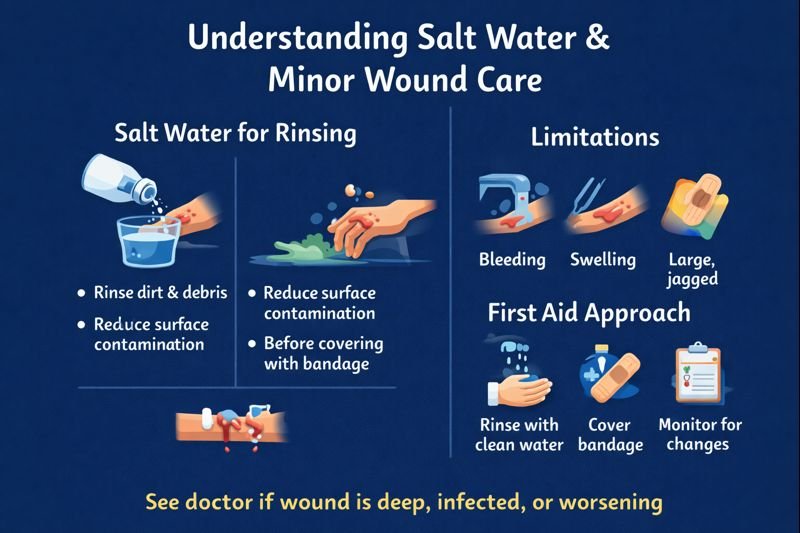 For minor wounds, first aid education often highlights:
-
Rinsing with clean running water
-
Gently removing visible debris
-
Covering with a clean dressing
-
Monitoring for changes (redness, swelling, heat, discharge, increasing pain)
-
Seeking medical care if healing does not progress or symptoms worsen
Salt water is sometimes used as an additional rinsing method, but household use should remain cautious and non-prescriptive.
Prevention & Workplace Context
Workplaces may reduce minor wound hazards by:
-
Using appropriate tools and equipment
-
Wearing gloves for manual tasks
-
Keeping first aid kits stocked
-
Maintaining clean workstations
-
Encouraging early reporting of injuries
At home, safe tool use, kitchen safety, and child supervision help minimize routine scrapes and cuts.
FAQ
1. Is salt water the same as sterile saline?
Not necessarily. Sterile saline contains salt and water but is manufactured under controlled conditions for reliable purity.
2. Why does salt water sting?
Salt can irritate exposed nerve endings in broken skin, producing a sharp or tingling sensation.
3. Can salt water heal wounds faster?
Salt water alone does not heal wounds. Proper cleaning, protection, and monitoring support normal healing.
4. Should salt water be used on deep wounds?
Deep or complex wounds require healthcare assessment rather than home treatments.
5. What if a wound becomes red, swollen, or painful?
Persistent or worsening symptoms may indicate the need for medical evaluation.
Educational Note
This article provides general first aid awareness and public education on minor wound care and salt water rinsing. It does not replace first aid training or healthcare evaluation.
About The Author

Mark Kascha
Certified First Aid Instructor Trainer with 30+ years of real-world experience, including lifeguarding, workplace emergency response, and first aid program development across Canada. Has worked with WorkSafeBC, WSIB, and Manitoba Health.
👉 [View full credentials]🔗 View LinkedIn Profile
Last reviewed: March 2026