
Understanding Tension Headaches
Tension headaches are the most common type of headache experienced by adults. They usually cause mild to moderate pain that can be felt across the head, behind the eyes, or along the neck and shoulders. Many people describe the sensation as a tight band or pressure around the forehead. While often manageable, tension headaches can sometimes be strong enough to interfere with daily activities at home, school, or work.
Tension headaches may occur occasionally or become more frequent over time. Some individuals experience them once or twice a month, while others develop chronic tension headaches that occur on many days throughout the month.
First Aid & Workplace Relevance in Canada
In Canadian workplaces, tension headaches are a common reason for reduced concentration, eye strain, and discomfort—especially in roles involving prolonged screen use, driving, or repetitive tasks. First aid awareness helps individuals and coworkers recognize early signs, apply simple comfort measures, and reduce triggers such as poor posture or prolonged muscle tension.
A Short Realistic Scenario
An office employee develops a dull, tightening headache late in the afternoon after several hours at a computer. A coworker familiar with first aid awareness suggests taking a short screen break, adjusting posture, and gently stretching the neck and shoulders. After resting briefly and sipping water, the pressure eases enough for the employee to finish the day comfortably.
How Common Are Tension Headaches?
-
 Many people experience tension headaches occasionally.
 -
Some develop chronic tension headaches, occurring more than half the days in a month.
-
Women tend to experience tension headaches more frequently than men.
-
Episodes may last from 30 minutes to several hours, or sometimes longer.
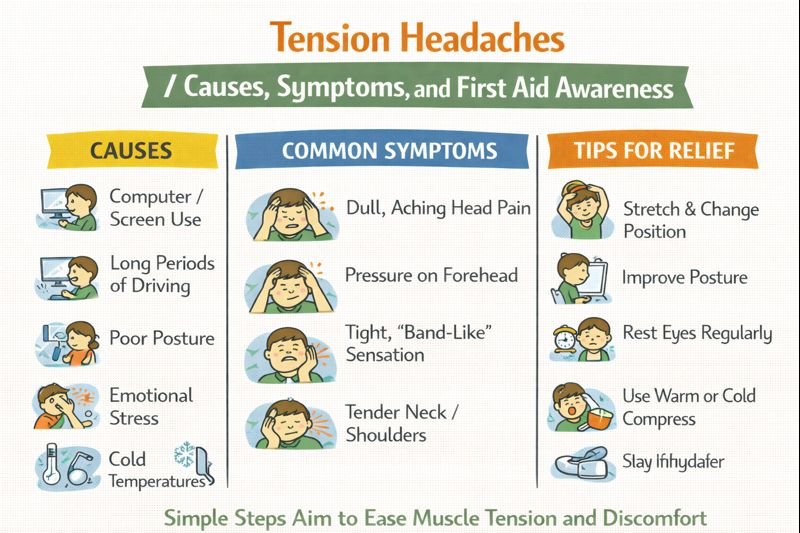
Possible Causes of Tension Headaches
Tension headaches are often linked to muscle tension in the head, neck, and shoulders. This tension may be triggered by physical, environmental, or emotional factors.
Common Triggers
-
Prolonged computer or screen use
-
Long periods of driving
-
Poor posture
-
Eye strain
-
Emotional stress or anxiety
-
Exposure to cold temperatures
-
Fatigue
Other Contributing Factors
-
Sinus congestion or infection
-
Alcohol consumption
-
Smoking
-
Caffeine use or withdrawal
-
Cold or flu
-
Irregular meals
Triggers vary from person to person and may overlap.
Common Symptoms
Tension headache symptoms typically include:
-
Dull, aching head pain
-
Pressure or tightness across the forehead or temples
-
Tenderness of the scalp, neck, or shoulders
-
A “band-like” squeezing sensation around the head
Unlike migraines, tension headaches usually do not involve nausea or vomiting. Sensitivity to light or sound is uncommon, though it may occur mildly in some individuals.
First Aid Awareness and Comfort Measures
For mild to moderate tension headaches, general comfort strategies may include:
-
Resting in a quiet, comfortable space
-
Gently stretching the neck and shoulders
-
Adjusting posture and workstation setup
-
Taking regular screen breaks
-
Applying a warm or cool compress to the head or neck
-
Staying hydrated
These measures focus on easing muscle tension and reducing environmental triggers.
Prevention and Everyday Management
Because tension headaches are often linked to identifiable triggers, prevention focuses on awareness and routine adjustments.
Practical Prevention Strategies
-
Maintain good posture during work and screen use
-
Take regular breaks from repetitive activities
-
Manage stress through relaxation techniques
-
Ensure proper lighting to reduce eye strain
-
Dress appropriately for cold environments
-
Maintain regular meals and hydration
Using a Headache Diary
Keeping a simple headache diary can help identify patterns. Recording activities, stress levels, meals, beverages, and sleep habits over time may reveal triggers that can be adjusted or avoided.
Workplace Considerations
-
Encourage ergonomic workstation setup
-
Promote regular movement and stretch breaks
-
Reduce glare and improve lighting where possible
-
Support flexible scheduling during headache flare-ups
-
Include headache awareness in workplace wellness or first aid education
Frequently Asked Questions
Are tension headaches dangerous?
They are usually not serious, but recurring or worsening headaches should be monitored.
How are tension headaches different from migraines?
Tension headaches cause pressure-like pain and usually lack nausea or visual disturbances.
Can stress alone cause a tension headache?
Yes. Emotional stress is a common trigger due to muscle tightening.
Do tension headaches always feel mild?
Most are mild to moderate, but some can be strong enough to disrupt daily activities.
Why is posture important?
Poor posture increases muscle strain in the neck and shoulders, which can trigger headaches.
Educational Note
This information is provided for general public education and first aid awareness. Headaches have many causes, and learning common patterns and comfort strategies can help individuals respond calmly and effectively.
About The Author

Mark Kascha
Certified First Aid Instructor Trainer with 30+ years of real-world experience, including lifeguarding, workplace emergency response, and first aid program development across Canada. Has worked with WorkSafeBC, WSIB, and Manitoba Health.
👉 [View full credentials]🔗 View LinkedIn Profile
Last reviewed: March 2026