 Ice packs and heat pads are two of the most common comfort measures used for injuries. They can help with pain, stiffness, and swelling, but their timing and purpose differ. Choosing the right option depends on whether the injury is recent or long-standing.
First Aid & Workplace Relevance (Canadian context)
Whether in sports, schools, outdoor programs, vehicles, or workplaces, bumps and strains happen. Knowing when to use cooling or warming strategies can support comfort while waiting for medical guidance or recovery.
Scenario
During a recreational basketball game, a player rolled their ankle while pivoting. A trained first aid rescuer checked for serious signs, supported the player to rest, and applied a cold pack briefly to help with swelling. Later in the week, once swelling had eased, the player used gentle heat at home for stiffness as advised by their therapist.
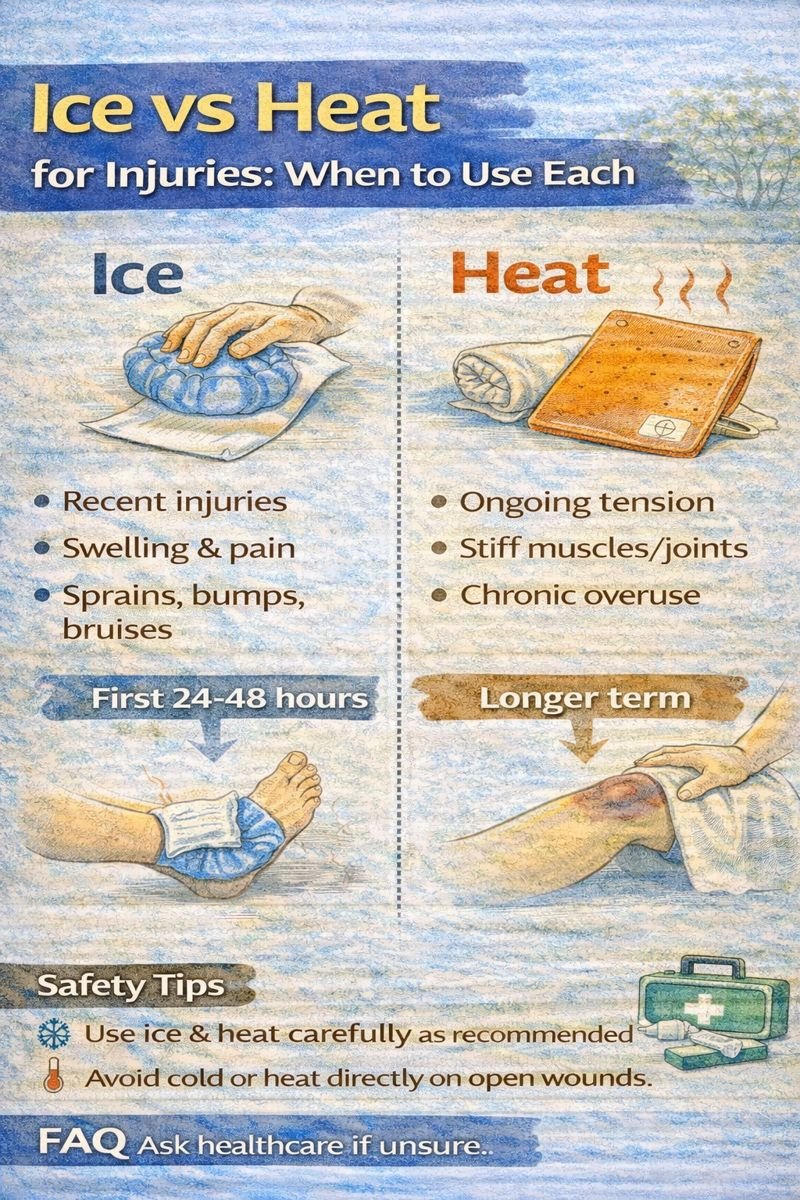
Ice (Cold) Treatment — Typically for Recent Injuries
Cold is generally associated with acute or recent injuries, especially those with swelling.
Common examples include:
-
Sprains
-
Strains
-
Bruises
-
Bumps and impact injuries
Cold compresses are often used within the first 24–48 hours after injury to limit swelling. Some people with chronic overuse injuries also use cold after activity to help with post-exercise irritation.
Heat Treatment — Typically for Ongoing or Chronic Tension
Heat is often associated with chronic or lingering discomfort, stiffness, or muscle tightness.
Common examples include:
-
Sore or tight muscles
-
Stiff joints
-
Chronic overuse tension
Heat can help relax tissues and promote flexibility, but people avoid applying heat directly to swollen or very recent injuries.
Safety Considerations (Public-Safe)
Cold awareness:
-
Use clean cloth barriers between cold packs and skin
-
Avoid prolonged direct contact to prevent frostbite
Heat awareness:
-
Check heat source temperature
-
Avoid using heat while sleeping
-
Avoid heat on open wounds or areas with reduced sensation
Individuals with health conditions such as diabetes or circulatory concerns should use heat cautiously and seek professional guidance when unsure.
Injury Timeline Awareness
Time affects comfort strategies:
-
Early phase (0–48h): swelling common → cooling used more frequently
-
Later phase: stiffness common → warmth used for comfort
Many injuries heal with time, rest, and gradual movement. Persistent pain, swelling, or loss of function can be evaluated by a clinician or physiotherapist.
FAQ
Can ice be harmful?
Long cold exposure or direct ice contact can irritate the skin, especially in children or individuals with circulation concerns.
Can heat make swelling worse?
Yes. Heat can increase blood flow and may worsen swelling if used too early.
Can both be used?
Some people use cold first for swelling, then heat later for stiffness. Guidance can vary depending on the injury.
What about sports injuries?
Many sports programs teach cold use right after impact and heat later during recovery phases.
Educational Note
This information supports public first aid awareness and encourages safe decision-making around cooling and warming strategies. Individuals seeking specific injury guidance can speak with healthcare or rehabilitation professionals.
About The Author

Mark Kascha
Certified First Aid Instructor Trainer with 30+ years of real-world experience, including lifeguarding, workplace emergency response, and first aid program development across Canada. Has worked with WorkSafeBC, WSIB, and Manitoba Health.
👉 [View full credentials]🔗 View LinkedIn Profile
Last reviewed: March 2026