
Rats and other rodents can bite when frightened or handled. While most bites are not life-threatening, infection is the key concern, especially if the wound is deep or located on the hands or face. Awareness of first aid measures helps reduce complications and prompts timely medical follow-up when appropriate.
First Aid & Workplace Relevance
Rodents may be encountered in homes, farms, warehouses, construction sites, food service environments, or outdoor spaces. Canadian workplaces with pest exposure often include health and safety protocols for animal bites and contact.
Scenario
At a community garden, volunteers noticed a small rodent near a compost bin. When someone attempted to move a piece of wood, the startled rat bit their hand and ran off. A trained first aid rescuer helped wash the wound with warm water and soap, applied a clean dressing, and advised the group to monitor for signs of infection and seek a medical opinion about the injury.
First Aid Awareness for Rat Bites
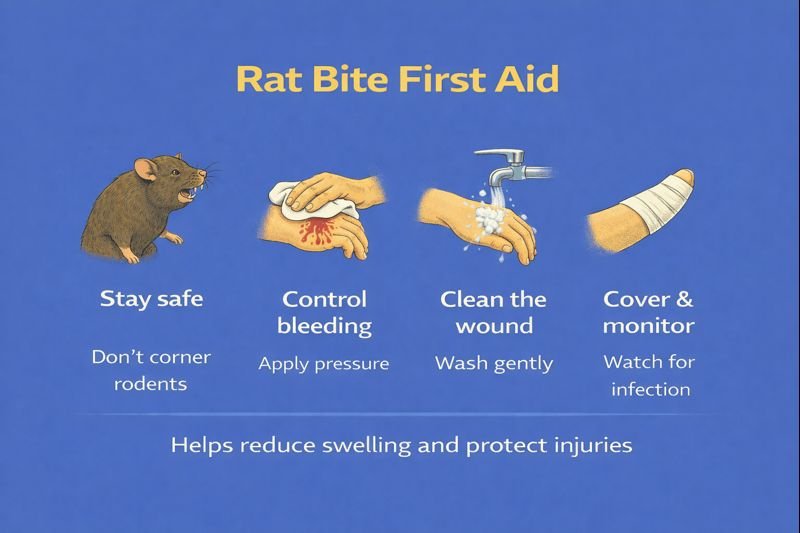 General first aid education emphasizes:
-
Safety first: Avoid handling wild rodents; allow them to retreat without cornering or chasing.
-
Controlling bleeding: Apply direct pressure with a clean cloth or bandage.
-
Cleaning the wound: Use warm water and mild soap, gently rinsing debris.
-
Dressing: Cover with a clean, dry dressing. Rings should be removed if the bite is on a finger to avoid swelling issues.
-
Monitoring: Check for signs of infection (redness, swelling, warmth, pus, increasing pain).
Bites to the hands, face, or deep puncture wounds often benefit from medical assessment due to higher infection risk.
Infection Considerations
Rat bites may expose the wound to bacteria. Some infections may not appear immediately. In a small number of cases, bacteria associated with rat bite fever can cause symptoms several days after the wound appears to have healed, such as:
-
Fever
-
Joint or muscle pain
-
Headache
-
Rash on hands or feet
These symptoms warrant medical evaluation.
Rabies Context (Clarifying Misconceptions)
While animal bites raise concerns about disease, rabies transmission from rats to humans is considered rare. In Canada, other wildlife such as bats, foxes, skunks, or raccoons are more frequently associated with rabies exposure. Public health units provide regional information on rabies risks.
Prevention & Handling Awareness
To reduce exposure to rodent bites:
-
Avoid handling wild rodents
-
Keep pets that interact with rodents supervised
-
Wear gloves for outdoor tasks where rodents may nest
-
Maintain clean storage areas to discourage pests
Pest control professionals can assist in workplaces or homes when rodent activity becomes persistent.
FAQ
Do all rat bites require medical attention?
Deep bites, facial bites, or wounds showing infection signs are often assessed by a clinician.
How long does infection take to show up?
Redness or swelling may appear within days, while rat bite fever symptoms can appear about a week or more after the bite.
Are rat bites painful?
They can be sharp and may bleed, especially on the hands or fingers.
Do rats carry rabies?
Rabies transmission from rats is rare. Other wildlife species are more common rabies carriers in Canada.
Educational Note
This material promotes awareness of rat bites, infection concerns, and basic first aid considerations. It is for public learning and does not replace clinical assessment or recommendations from health professionals.
About The Author

Mark Kascha
Certified First Aid Instructor Trainer with 30+ years of real-world experience, including lifeguarding, workplace emergency response, and first aid program development across Canada. Has worked with WorkSafeBC, WSIB, and Manitoba Health.
👉 [View full credentials]🔗 View LinkedIn Profile
Last reviewed: March 2026