
 What is a tibia fracture?
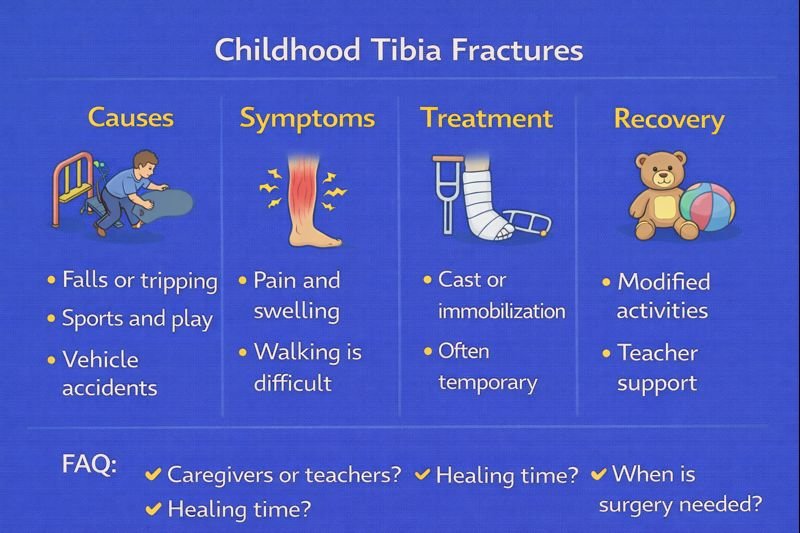
The tibia (shin bone) is a long bone in the lower leg. In children, tibia fractures are relatively common due to falls, sports, playground activities, and other everyday incidents.
Why they matter
The tibia plays a major role in standing, walking, running, and balance. Fractures can temporarily limit mobility and daily participation in school, play, and recreation.
Scenario: Playground fall
During recess, a child tripped and landed awkwardly on the lower leg. They felt sudden pain and had difficulty walking. A caregiver arranged medical evaluation, and treatment involved a cast and follow-up appointments. Over several weeks, function gradually returned.
How tibia fractures happen in children
Common causes include:
-
Tripping on uneven surfaces
-
Sports collisions and falls
-
Playground or scooter accidents
-
Cycling or skating incidents
-
Motor vehicle collisions (less common but more serious)
Children’s bones bend more easily than adult bones, so fracture patterns can vary.
Symptoms & signs caregivers may notice
Children may show:
-
Swelling or tenderness
-
Difficulty walking or bearing weight
-
Refusal to play or move the leg
A healthcare assessment is typically required to determine the type and severity of fracture.
Treatment overview (non-prescriptive, non-procedural)
Management is determined by a healthcare professional and may include:
-
Immobilization with a cast or boot
-
Mobility restrictions or assistive devices
-
In some cases, surgical stabilization
Healing times vary depending on age, fracture type, and activity level.
Recovery & daily life considerations (supportive, non-instructional)
During recovery, children may benefit from:
-
Reassurance about temporary limitations
-
Age-appropriate activities that do not stress the injured leg
-
Inclusive participation at school or daycare (teachers informed)
-
Encouragement to follow clinical guidance during mobility progression
Caregivers, coaches, and educators may help modify activities to prevent re-injury.
Monitoring & follow-up
Healthcare professionals typically schedule follow-up to monitor healing, adjust treatment plans, and support safe return to activity.
Seek medical attention if:
-
Pain worsens unexpectedly
-
New swelling, numbness, or difficulty moving toes develops
-
Mobility setbacks occur after initial improvement
-
Instructions from the care team recommend reassessment
Prevention & safety awareness for play and sport
While injuries cannot be eliminated entirely, risk can be reduced through:
-
Safe playground supervision
-
Proper sports equipment and footwear
-
Bicycle and scooter safety habits
-
Age-appropriate play environments
FAQ
Are tibia fractures common in children?
Yes. They are among the more common long bone fractures in childhood.
Can children return to full activity?
Most return to regular activities once healing is confirmed by a healthcare professional.
How long does healing take?
Healing time varies by age, fracture type, and treatment plan.
Do all tibia fractures require surgery?
No. Many are managed with immobilization alone, depending on alignment and stability.
Educational note
This post provides public and caregiver awareness about childhood tibia fractures. Diagnosis and management are guided by healthcare professionals.
About The Author

Mark Kascha
Certified First Aid Instructor Trainer with 30+ years of real-world experience, including lifeguarding, workplace emergency response, and first aid program development across Canada. Has worked with WorkSafeBC, WSIB, and Manitoba Health.
👉 [View full credentials]🔗 View LinkedIn Profile
Last reviewed: March 2026