 Mild bleeding from small cuts or scrapes is common at home, school, recreational settings, and workplaces. With basic first aid awareness, bleeding can often be controlled while also lowering the chance of infection or complications.
Why It Matters in Canada + Workplace Relevance
Across Canadian workplaces, minor injuries involving cuts, scrapes, and small wounds are among the most frequent occupational first aid events. Quick and calm first aid can reduce contamination of a wound, support return to activity, and help prevent a minor injury from escalating.
Scenario (Realistic, Mild, Non-Alarmist)
During a shift in a shipping area, a worker slides a cardboard box across a metal shelf and ends up with a small cut on the forearm. A co-worker uses the workplace first aid kit to apply gentle pressure with sterile gauze, keeps the arm elevated, and dresses the wound before the worker returns to light duties.
What Mild Bleeding Looks Like
Mild bleeding generally:
-
Comes from a shallow cut or scrape
-
Slows and stops with direct pressure
-
Does not involve a deep puncture or gushing blood
-
Does not expose underlying structures (tendons, bone, etc.)
Common Causes / Mechanisms
Mild bleeding can occur due to:
-
Tool or equipment contact (e.g., warehouse, kitchen, trades)
-
Paper or cardboard cuts
-
Sports or recreational scrapes
-
Minor household accidents
-
Outdoor activities and minor falls
-
Workplace handling of sharp materials or surfaces
General First Aid Awareness (Non-Prescriptive)
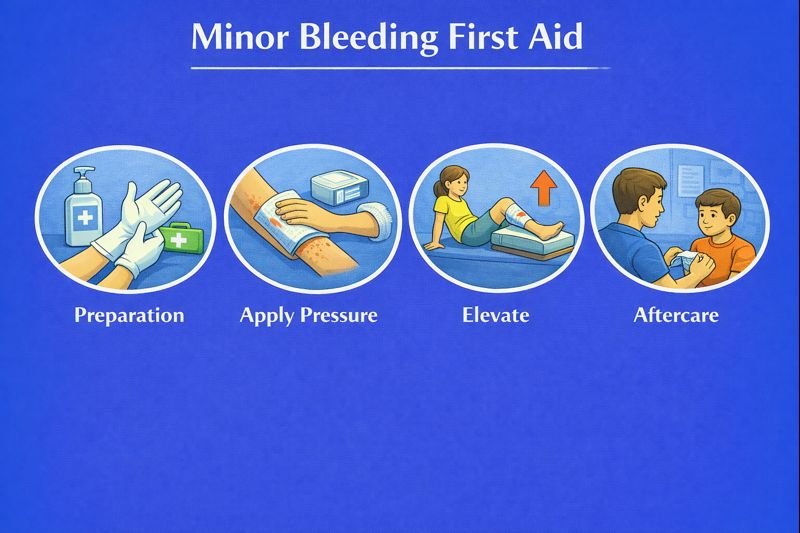
For minor bleeding, typical first aid measures focus on:
-
Protecting both the responder and the injured person from contact with blood
-
Applying gentle direct pressure with clean material
-
Allowing bleeding to slow and clot
-
Keeping the injured area clean to reduce infection risk
-
Dressing the wound once bleeding has been controlled
Workplace first aid kits often include sterile gauze, adhesive bandages, gloves, and dressings to support these steps.
When to Seek Medical Assessment
Even small wounds should be assessed if there is:
-
Bleeding that does not stop or resumes after pressure
-
A wound that is deep, gaping, or contaminated
-
Numbness, tingling, or colour change in the limb
-
Signs of possible infection in the days following
-
An embedded object in the wound
-
Concerns about tetanus vaccination status (handled by a clinician)
Prevention & Workplace Considerations
Reducing injury risk can include:
-
Housekeeping and safe material handling
-
Using appropriate gloves for tasks
-
Maintaining sharp tool awareness
-
Ensuring workplace first aid kits are stocked and accessible
-
Encouraging reporting of minor incidents for hazard control
-
Supporting training around basic first aid response
FAQ (Educational)
Q: Does mild bleeding always need dressing?
Dressings can help protect the wound surface and reduce contamination, especially in workplace or outdoor settings.
Q: Why apply pressure for bleeding?
Pressure supports natural clotting, which helps slow and stop minor bleeding.
Q: Can mild bleeding become infected?
Yes. Dirt, debris, or inadequate cleaning can allow bacteria to enter the wound, which is why good aftercare matters.
Q: Should a minor bleeding injury be reported at work?
Many workplaces encourage reporting even small injuries as part of hazard tracking and prevention.
Educational Note
Information here supports general first aid learning and awareness and does not replace medical assessment or workplace policies.
About The Author

Mark Kascha
Certified First Aid Instructor Trainer with 30+ years of real-world experience, including lifeguarding, workplace emergency response, and first aid program development across Canada. Has worked with WorkSafeBC, WSIB, and Manitoba Health.
👉 [View full credentials]🔗 View LinkedIn Profile
Last reviewed: March 2026