 Burns are categorized by how deeply they damage the skin. Severity is influenced by temperature, contact time, and the body area affected. Knowing how burns differ helps with first aid awareness and recognizing when more advanced care may be required.
First Aid & Workplace Relevance
Burns are common in daily life and in workplaces such as kitchens, manufacturing, construction, electrical trades, and outdoor seasonal work. At home, burns often occur in kitchens and with hot liquids, steam, or heated appliances. Public first aid awareness helps people manage minor burns safely and recognize when a burn is more serious.
Scenario
During a community barbeque, a teen accidentally brushed their hand against a hot grill plate and yelped from pain. A trained first aid rescuer recognized signs of a superficial burn and immediately cooled the area under cool running water for several minutes while reassuring them. The discomfort eased and the rescuer reminded them not to apply ice or butter to the burn.
Types of Burns
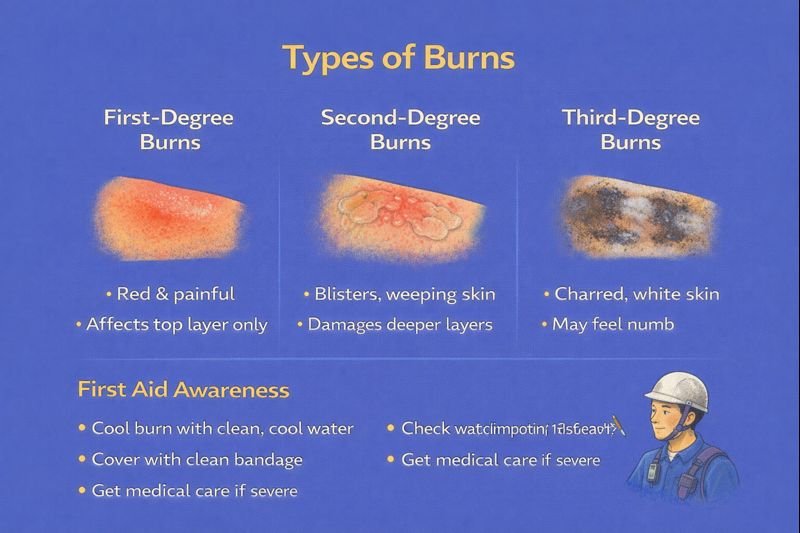
First-Degree (Superficial) Burns
Affects only the epidermis, the top layer of skin.
Common features:
-
Redness
-
Mild swelling
-
Pain
-
Possible peeling as it heals
These burns commonly result from brief contact with a hot object or mild sunburn. Most heal within days.
Second-Degree (Partial-Thickness) Burns
Damages the epidermis and parts of the dermis.
Features may include:
-
Blisters
-
Deep or irregular redness
-
Wet or shiny appearance
-
Significant pain due to exposed nerve endings
These burns may take longer to heal and may require medical assessment to prevent complications.
Third-Degree (Full-Thickness) Burns
Involves full destruction of the epidermis and dermis.
Features may include:
-
Dry, leathery, charred, black, or white skin
-
Swelling
-
Little or no pain due to nerve damage
These burns are considered medical emergencies and may require specialized treatment and long-term healing support.
Causes & Mechanisms
Burns can result from:
-
Hot surfaces, steam, or boiling liquids
-
Flame or high-heat exposure
-
Electrical sources
-
Chemicals
-
Prolonged sun exposure
General First Aid Education for Burns
Public first aid guidelines often recommend:
-
Cool the burned area with cool running water (not ice)
-
Protect the burn with a clean, non-stick dressing
-
Avoid home remedies such as butter, oil, or toothpaste
-
Monitor for signs of infection as healing progresses
Burns involving the face, hands, feet, genitals, or larger body areas may require medical care.
Prevention & Workplace Considerations
-
Use thermal protection (oven mitts, gloves, PPE)
-
Follow workplace safety protocols for heat, flame, and chemicals
-
Check water temperatures in kitchens and childcare settings
-
Use sun protection outdoors to reduce UV burns
FAQ
Q1: Why do second-degree burns blister?
Damage to the lower skin layers allows fluid to collect under the surface, forming blisters.
Q2: Why might third-degree burns not hurt?
Nerve endings may be destroyed, reducing the sensation of pain at the site despite serious tissue damage.
Q3: How do you know if a burn needs medical care?
Burns that blister, cover larger areas, involve sensitive regions, or show signs of infection should be assessed by a healthcare professional.
Q4: Can sunburn be considered a first-degree burn?
Mild sunburn is typically superficial, though severe sunburn may blister like a second-degree burn.
Educational Note
This content supports public education and first aid awareness. Burn severity and care can vary widely; individuals with serious or persistent symptoms may benefit from medical assessment.
About The Author

Mark Kascha
Certified First Aid Instructor Trainer with 30+ years of real-world experience, including lifeguarding, workplace emergency response, and first aid program development across Canada. Has worked with WorkSafeBC, WSIB, and Manitoba Health.
👉 [View full credentials]🔗 View LinkedIn Profile
Last reviewed: March 2026