 Food poisoning occurs when bacteria, viruses, or toxins contaminate food. While people of all ages can be affected, young children are more likely to become dehydrated or unwell because of their smaller body size and limited ability to explain symptoms.
Why it matters in Canada & everyday settings
Foodborne illnesses can occur at home, in childcare environments, or in workplaces where food is prepared, stored, or served. Awareness of symptoms and early recognition can help caregivers respond calmly and seek appropriate help when needed.
Scenario (mild & realistic)
A parent noticed their toddler had loose stools and seemed uncomfortable after a family picnic. Two older siblings also felt nauseated after eating the same chicken salad. The parent offered small sips of fluids and observed the child’s energy level, then checked in with a health professional for guidance. Symptoms improved over the next two days.
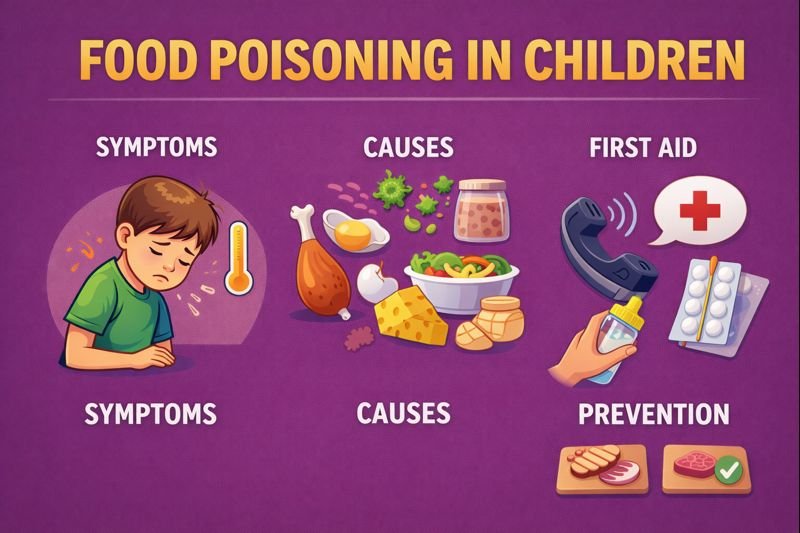
Symptoms of food poisoning in children
In young children, symptoms may be harder to describe. Common signs include:
-
Diarrhoea (loose or watery stools)
-
Nausea or vomiting
-
Abdominal cramps or general discomfort
-
Reduced appetite or irritability
-
Chills, fever, or headache in some cases
If others who ate the same food become ill, foodborne illness becomes more likely.
Duration
Symptoms typically begin 2 to 28 hours after eating contaminated food. Many mild cases resolve within 1–2 days, although some illnesses may last longer depending on the cause and the child’s overall condition.
Common causes in children
Young children may be exposed to contaminated food through:
-
Undercooked or raw poultry, meat, or eggs
-
Unwashed hands or contact with contaminated surfaces
-
Foods left at room temperature for long periods
-
Dented cans, loose lids, or spoiled jarred food
-
Unpasteurized milk or cheeses
-
Improper storage or handling during picnics, parties, or buffets
Good hygiene and safe food-handling practices reduce the risk of illness.
First aid awareness & management
If foodborne illness is suspected in a young child:
-
Encourage rest and small sips of fluids to help prevent dehydration
-
Monitor for signs of reduced urination, dry mouth, or listlessness
-
Avoid unpasteurized foods for children and ensure proper cooking temperatures
-
Contact a health professional or telehealth service for guidance if symptoms persist, worsen, or if dehydration is suspected
Health professionals may recommend oral rehydration solutions to replace lost fluids and electrolytes. In some cases, assessment or hospital observation may be recommended for persistent vomiting or dehydration.
When to seek medical attention
Seek prompt medical advice for:
-
Signs of dehydration (fewer wet diapers, dry lips, lethargy)
-
Blood in the stool or vomit
-
Fever with concerning symptoms
-
Illness lasting more than a couple of days
-
Very young children who are not able to maintain hydration
-
Unexpected severe illness
Emergency assessment may be recommended if dehydration is significant or the child appears very unwell.
Prevention & safety in homes and workplaces
Preventing foodborne illness includes:
-
Handwashing before meals and food preparation
-
Safe storage and refrigeration
-
Proper cooking temperatures for meats and eggs
-
Avoiding cross-contamination between raw and cooked foods
-
Using pasteurized dairy products
-
Discarding spoiled food or containers with damaged seals
-
Safe practices in childcare, school, and food-handling workplaces
FAQ
How do I tell if my child’s stomach upset is food poisoning?
It can be difficult to tell in young children. Diarrhoea, vomiting, and abdominal pain shortly after eating questionable food may suggest food poisoning, especially if others become ill too.
Is dehydration common in toddlers with food poisoning?
It can be. Because toddlers have smaller bodies and lose fluid quickly, caregivers often monitor hydration closely.
Can food poisoning be caused by food eaten outside the home?
Yes. Picnics, potlucks, buffets, or shared meals can increase risk if food is not kept at safe temperatures.
What types of foods should be handled carefully around children?
Undercooked meats, raw eggs, unpasteurized dairy, and foods left out too long are more commonly linked with bacterial contamination.
How long does food poisoning last in young children?
Many mild cases resolve in 1–2 days, though duration varies based on the cause and the child.
Educational note
This information supports general first aid and food safety education. For guidance on a suspected illness, local public health, telehealth, or health care professionals can assist.
About The Author

Mark Kascha
Certified First Aid Instructor Trainer with 30+ years of real-world experience, including lifeguarding, workplace emergency response, and first aid program development across Canada. Has worked with WorkSafeBC, WSIB, and Manitoba Health.
👉 [View full credentials]🔗 View LinkedIn Profile
Last reviewed: March 2026