
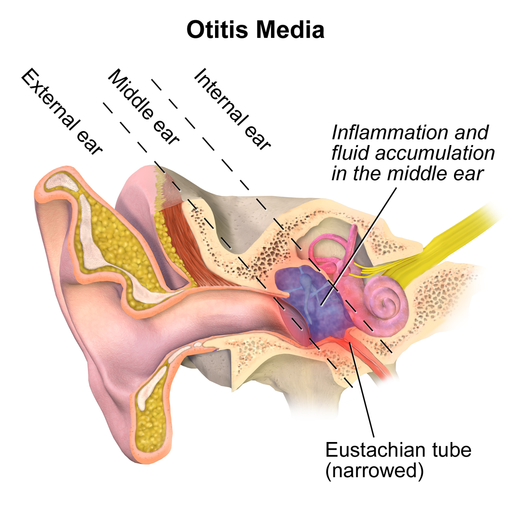
 Fluid in the ear occurs when liquid becomes trapped behind the eardrum in the middle ear. This often happens after an ear infection, but it can also develop anytime the Eustachian (auditory) tube is not working properly. Doctors refer to this trapped fluid as an effusion.
From a first aid and safety awareness perspective, fluid in the ear is important because it can affect hearing, balance, communication, and learning, especially in young children.
This article is intended for general education only and does not replace medical assessment or treatment.
Why Fluid Builds Up in the Ear
The Eustachian tube normally:
-
Drains fluid from the middle ear
-
Equalizes pressure
-
Keeps the middle ear space dry
When this tube becomes blocked—commonly due to colds, allergies, or inflammation—fluid cannot drain properly and collects behind the eardrum.
Fluid can be present:
-
With an active ear infection
-
After an infection has resolved
-
Without any infection at all
Who Is Most at Risk?
Fluid in the ear can affect people of any age, but it is far more common in children.
Children are at higher risk because:
-
Their Eustachian tubes are shorter and more horizontal
-
Drainage is less efficient
-
They experience more frequent colds
Many Canadian children experience at least one episode before reaching school age.
Signs and Symptoms
In many cases, fluid in the ear causes no obvious symptoms. In fact, nearly half of children with fluid behind the eardrum may not complain of pain.
When symptoms do occur, they may include:
-
Mild ear discomfort that comes and goes
-
Temporary hearing loss or muffled hearing
-
Balance problems or clumsiness
-
Delays in speech or language development
-
Delays in gross motor skills
Because symptoms can be subtle, the condition may go unnoticed without regular checkups.
Conditions That May Look Similar
Some symptoms overlap with other ear-related problems, including:
-
Acute middle ear infections
-
Ear barotrauma (pressure-related injury)
-
Ear drainage
-
Persistent earaches
Medical assessment helps distinguish these conditions.
First Aid Awareness: Why Monitoring Matters
From a safety standpoint, reduced hearing or balance can:
-
Increase fall risk
-
Affect learning and communication
-
Impact awareness of surroundings
Parents, caregivers, and educators should pay attention to:
-
Changes in hearing
-
Speech delays
-
Balance concerns
Treatment and Management
What Does Not Help
Research has shown that the following are not effective for clearing fluid in the ear:
-
Antihistamines
-
Decongestants
-
Steroids
-
Antibiotics (unless there is an active infection)
Fluid can exist without infection, so antibiotics are not routinely used.
Watchful Waiting
If a child:
-
Has no symptoms
-
Is not at risk for developmental delays
Doctors often recommend monitoring for about 3 months, as fluid frequently clears on its own.
If fluid persists but remains asymptomatic, follow-up may continue at 3–6 month intervals.
When Surgery Is Considered
Surgical placement of ventilation (ear) tubes may be recommended if:
-
Fluid persists for several months
-
Hearing is affected
-
Speech or development is impacted
-
Symptoms are bothersome
This decision is made on an individual basis by a healthcare professional.
Prevention and Practical Tips
While fluid in the ear cannot always be prevented, risk may be reduced by:
-
Managing allergies effectively
-
Reducing exposure to respiratory infections
-
Avoiding second-hand smoke
-
Encouraging good hand hygiene
Key Takeaways for Canadians
-
Fluid in the ear is common, especially in children
-
It may cause no pain but still affect hearing and balance
-
Most cases resolve on their own
-
Medications are usually not helpful
-
Ongoing monitoring supports healthy development
Educational Disclaimer
This article is provided for general education and first aid awareness only. It does not diagnose or treat ear conditions. Consult a healthcare professional for persistent ear symptoms or developmental concerns.
About The Author

Mark Kascha
Certified First Aid Instructor Trainer with 30+ years of real-world experience, including lifeguarding, workplace emergency response, and first aid program development across Canada. Has worked with WorkSafeBC, WSIB, and Manitoba Health.
👉 [View full credentials]🔗 View LinkedIn Profile
Last reviewed: March 2026