
Fleas are small, blood-feeding parasites that live on mammals and birds. Adult fleas are wingless but highly mobile, capable of jumping long distances—up to 100 times their body length—using powerful legs and a spring-like mechanism. Flea larvae, which look pale and caterpillar-like, live in bedding, carpets, and floor debris rather than on the host itself.
Fleas are common in both residential and workplace-adjacent environments, particularly where pets, wildlife, or shared flooring are present.
First Aid & Workplace Relevance (Canada)
Flea bites may occur in Canadian workplaces such as animal care facilities, shelters, warehouses, childcare centres, property maintenance settings, or any location with carpeting or upholstered furniture. While flea bites are not usually serious, they can cause discomfort, itching, and skin irritation that may interfere with work duties.
First aid awareness helps workers recognize flea bites early, reduce scratching-related complications, and identify when environmental controls or professional pest management may be required.
Scenario: Early Recognition Reduces Ongoing Exposure
An employee in a small office noticed several itchy bumps around their ankles after returning from a storage room used for deliveries. A supervisor familiar with first aid awareness recognized the clustered bite pattern as possibly flea-related. Maintenance was notified, and the area was treated promptly, preventing ongoing bites and further disruption.
Understanding the Flea Life Cycle
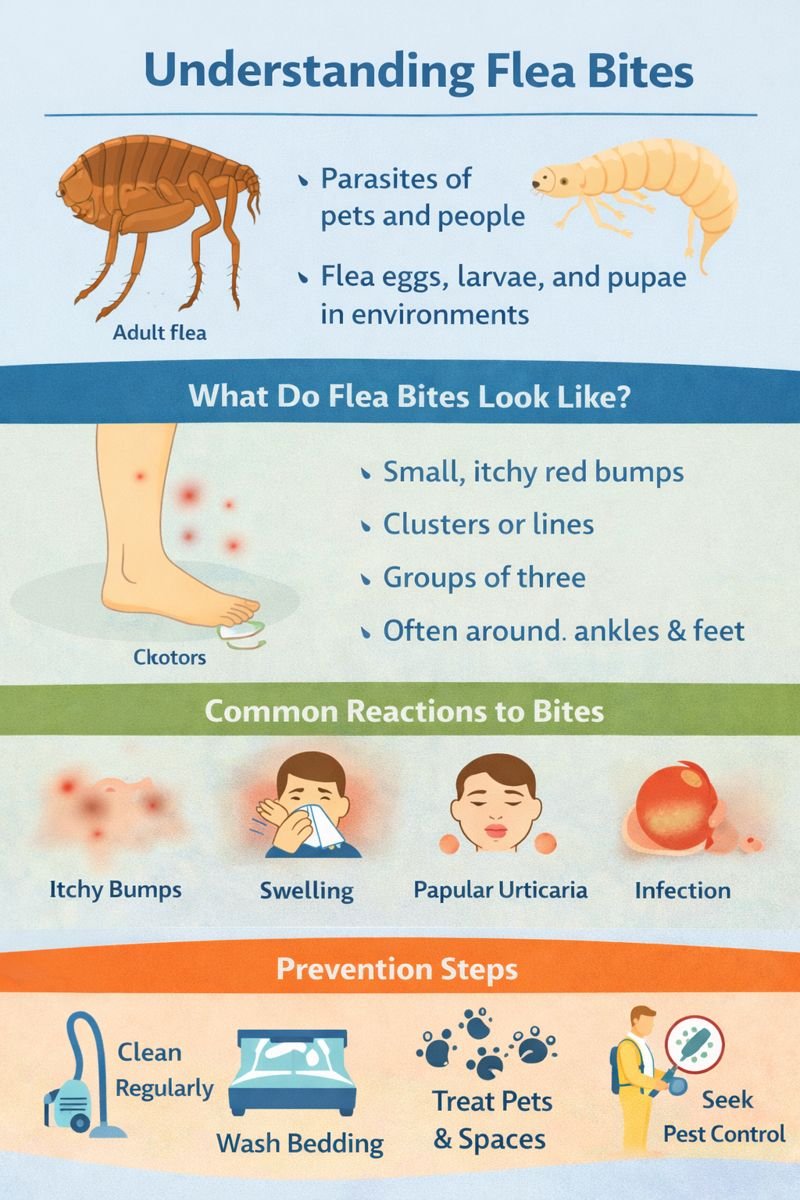 Only adult fleas feed on blood, using piercing mouthparts. Larvae, however, feed on organic debris such as lint, dust, and dried material found in carpets and bedding. Fleas reproduce by laying eggs in these environments.
Key points about flea development include:
-
Eggs typically hatch into larvae within about two weeks
-
Pupae are highly resilient and can survive extreme temperatures without food
-
Adult fleas may live for weeks without feeding
-
Fleas can remain dormant and emerge when they sense nearby warm-blooded hosts
This explains why flea infestations may appear suddenly, even in previously unoccupied spaces.
What Do Flea Bites Look Like?
Flea bites commonly appear as:
-
Small, itchy red bumps (papules)
-
Clusters or lines, often in groups of three
-
Bites that are not centred on hair follicles
-
Locations around the ankles, feet, and lower legs
These areas are affected most often because fleas live close to the floor in carpets, baseboards, and bedding.
Reactions to Flea Bites
Most flea bites cause mild irritation, but reactions can vary. Possible responses include:
-
Intense itching
-
Local redness and swelling
-
Papular urticaria, a hypersensitivity reaction causing recurring itchy welts
-
Skin infection if bites are scratched repeatedly
In rare cases, highly sensitive individuals may experience more generalized allergic symptoms, including respiratory discomfort.
First Aid Awareness and General Care
From a first aid education perspective, managing flea bites focuses on comfort and preventing complications. General principles include:
-
Avoiding scratching, which can break the skin and introduce bacteria
-
Keeping the affected area clean
-
Being aware that flea bites may worsen if exposure continues
Scratching is especially discouraged because fleas leave irritating material on the skin while feeding, increasing inflammation when rubbed into the bite.
Prevention and Environmental Considerations
Reducing flea exposure involves addressing both personal comfort and the surrounding environment. General prevention strategies include:
-
Regular cleaning of carpets, rugs, and upholstered furniture
-
Washing bedding and soft materials frequently
-
Monitoring shared spaces for signs of infestation
-
Addressing flea issues in pets or wildlife nearby
-
Seeking professional pest control services when infestations are suspected
Environmental treatment is essential, as flea larvae and pupae are not visible and may survive for extended periods.
Frequently Asked Questions
Why are flea bites often found around the ankles?
Fleas live close to the ground and jump onto exposed skin, making feet and lower legs common bite locations.
Do flea bites always appear right away?
Some people notice bites quickly, while others may react hours or days later, depending on skin sensitivity.
Can flea bites become infected?
Yes. Scratching can break the skin, allowing bacteria to enter and cause redness, swelling, or soreness.
Are flea bites a sign of poor hygiene?
No. Flea infestations are environmental and can occur in clean homes or workplaces if fleas are present.
When should flea exposure be investigated further?
If bites continue to appear or affect multiple people, environmental assessment and pest control may be needed.
Educational Note
This article is intended for general public education and first aid awareness. It does not provide medical diagnosis or treatment advice. First aid training focuses on recognizing common bites, reducing irritation, and understanding when further support may be required.
About The Author

Mark Kascha
Certified First Aid Instructor Trainer with 30+ years of real-world experience, including lifeguarding, workplace emergency response, and first aid program development across Canada. Has worked with WorkSafeBC, WSIB, and Manitoba Health.
👉 [View full credentials]🔗 View LinkedIn Profile
Last reviewed: March 2026