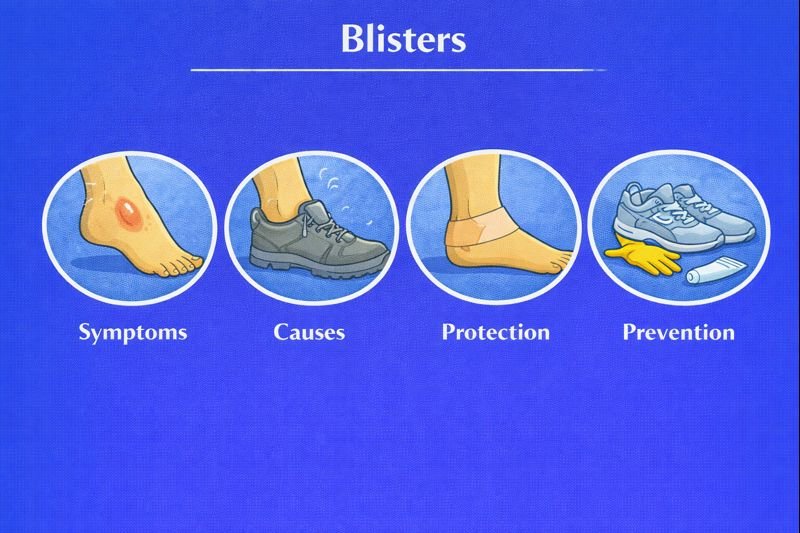
 Blisters are small fluid-filled bubbles that form on the skin in response to friction, heat, or irritation. Although often mild, they can be uncomfortable and can become infected if not cared for or protected properly.
Canadian & Workplace Relevance
Blisters are common in many Canadian workplaces where repetitive hand use, tool handling, or long periods of walking or standing occur. Workers in food services, trades, manufacturing, healthcare, hospitality, and recreation frequently report blister-related discomfort. Awareness of protective measures can help reduce lost time and prevent secondary skin infections.
Scenario (Mild, Realistic, Non-Alarmist)
A warehouse employee notices a small blister forming on the back of the heel after a long day in new safety boots. The worker stops to adjust socks and adds a soft bandage to reduce rubbing, allowing the shift to continue comfortably while avoiding further irritation.
What Blisters Look Like
Common blister characteristics:
-
Small bubble of clear fluid near the surface of the skin
-
Soreness or burning before the blister forms
-
Tenderness when touched or rubbed
-
Intact skin acting as a natural protective barrier
Blisters caused by friction are most often seen on:
-
Heels and toes
-
Palms and fingers
-
Areas where tools, footwear, or gear make repeated contact
Common Causes / Mechanisms
Blisters may develop due to:
-
Friction from footwear, gloves, tools, or sports equipment
-
Heat or moisture that softens the skin
-
Long periods of walking, hiking, or running
-
Repetitive manual tasks
-
Poorly fitted shoes or work boots
-
Outdoor activities with prolonged contact
General First Aid Awareness (Non-Prescriptive)
For mild friction blisters, first aid awareness typically focuses on:
-
Protecting the blistered skin
-
Reducing friction and pressure
-
Monitoring for signs of infection
-
Keeping the area clean and dry
-
Applying dressings or padding to prevent rubbing
In many cases, the blister roof (skin covering) acts as a natural barrier and can help reduce infection risk.
When to Seek Medical Assessment
Blisters should be assessed by a healthcare professional if:
-
They show signs of infection (increasing redness, warmth, pain, swelling, cloudy fluid, or streaking)
-
The blister was caused by a burn, chemical exposure, frostbite, or underlying condition
-
There are multiple unexplained blisters
-
Pain interferes with work or daily activity
-
A person is immunocompromised or has diabetes (skin infections can progress more quickly)
Prevention & Workplace Considerations
Prevention strategies may include:
-
Ensuring properly fitted footwear and socks
-
Using gloves for repetitive manual tasks
-
Choosing moisture-wicking materials during activity
-
Padding areas prone to rubbing
-
Keeping feet dry during prolonged outdoor activity
-
Breaking in new shoes slowly
-
Reporting discomfort early in workplace settings to prevent worsening
FAQ (Educational)
Q: Should blisters always be drained?
Draining may increase infection risk. Many small friction blisters heal naturally when protected and left intact.
Q: Can blisters get infected?
Yes. Skin breakdown allows bacteria to enter. Keeping the area clean and monitoring for changes is important.
Q: Why do my blisters form mainly at work?
Tool use, footwear, repetitive motions, and heat or moisture can increase friction and place stress on the same areas repeatedly.
Q: Do sports blisters and workplace blisters differ?
The mechanism (friction and moisture) is often similar, although footwear, equipment, and duration of activity may differ.
Educational Note
This information supports general first aid awareness and prevention. It does not replace clinical assessment or workplace safety protocols.
About The Author

Mark Kascha
Certified First Aid Instructor Trainer with 30+ years of real-world experience, including lifeguarding, workplace emergency response, and first aid program development across Canada. Has worked with WorkSafeBC, WSIB, and Manitoba Health.
👉 [View full credentials]🔗 View LinkedIn Profile
Last reviewed: March 2026