
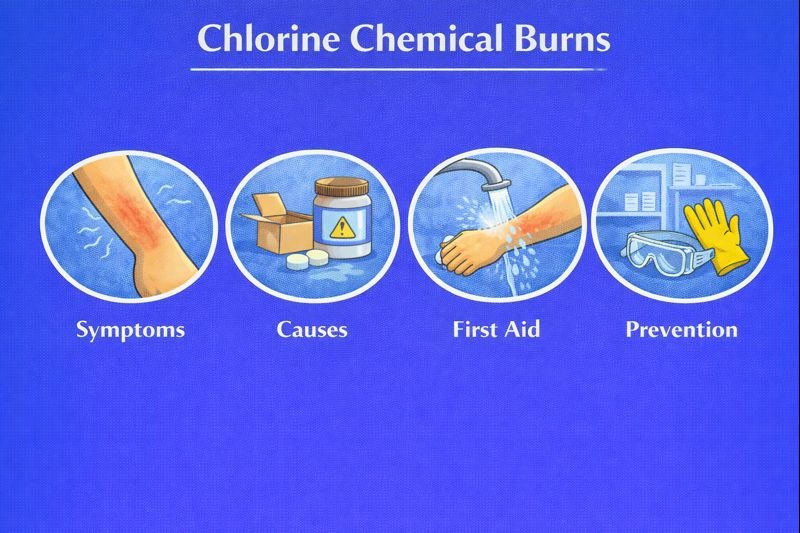
Chlorine is widely used in Canadian pools, recreation facilities, and water treatment systems to help maintain clean water. When used properly it is safe, but concentrated chlorine or chlorine-containing products can irritate skin, eyes, and airways, and can occasionally cause chemical burns.
Workplace & Public Relevance (Canada)
Chemical irritation from pool disinfectants can occur in recreational settings, at community centres, aquatics facilities, and in occupations involving pool maintenance or water chemistry. Awareness of prevention and early first aid response helps reduce discomfort, avoid infection, and know when to seek medical care.
Scenario (Mild, Realistic, Non-Alarmist)
During an afternoon swim, a teenager notices stinging and redness on the forearm after adjusting swim goggles at the edge of the pool. A staff member suggests rinsing the skin with clean running water and monitoring for irritation. The redness settles within the hour and no further care is needed.
What Chlorine Burns Are
Chlorine-based solutions can irritate or damage the skin if concentrated product comes into direct contact. Water-diluted chlorine in pools is much weaker, but can still cause irritation for some people—especially on sensitive skin, freshly shaved areas, or if exposure is prolonged.
Signs & Symptoms
Mild irritation or chlorine contact may involve:
-
Redness or rash-like irritation
-
Itching or stinging sensation
-
Dry or tight skin
-
Eye irritation if splashed
More significant chlorine chemical burns may involve:
-
Increasing pain or burning
-
Swelling and marked redness
-
Skin peeling or blistering
-
Sensitivity to touch
-
Possible breathing discomfort if fumes were inhaled
Causes & Mechanisms
Chlorine-related irritation or burns may result from:
-
Contact with concentrated pool chemicals
-
Splashing during chemical handling
-
Prolonged skin exposure to chlorinated water
-
Incorrect dilution or chemical imbalance in a pool
-
Improper storage or mixing of disinfectants
-
Limited ventilation in indoor pool settings
First Aid Awareness (General, Educational, Non-Prescriptive)
Public first aid guidance focuses on:
-
Removing the source of exposure
-
Rinsing skin gently with running water
-
Avoiding ointments or home remedies that trap heat or irritants
-
Protecting the affected area from friction
-
Monitoring for changes that suggest infection or worsening injury
Medical assessment may be required for burns involving:
-
Eyes, face, hands, feet, or genitals
-
Larger surface areas
-
Suspected inhalation exposure
-
Broken skin or blistering
-
Increasing pain or swelling
When to Seek Medical Care
A healthcare professional should assess chlorine burns when:
-
The burn is large or worsening
-
Eyes, mouth, or airways are affected
-
There are breathing changes
-
Blistering or open skin develops
-
Infection signs appear (increasing redness, warmth, swelling, cloudy fluid)
-
The individual has underlying health conditions affecting healing
Emergency care may be required if:
-
Symptoms progress rapidly
-
Vision changes occur
-
The person appears unwell, disoriented, or has breathing difficulty
Prevention & Workplace Considerations
Prevention strategies include:
-
Wearing gloves and eye protection in occupational settings
-
Ensuring proper dilution, storage, and labelling
-
Routine pool testing for chemical balance
-
Adequate ventilation in indoor aquatic facilities
-
Showering after swimming to remove residual chlorine
-
Early reporting of irritation or spills in work settings
FAQ (Educational, Non-Prescriptive)
Q: Are pool chemical burns common?
Mild skin irritation is more common than chemical burns. Burns typically involve concentrated product rather than pool water.
Q: Can chlorine cause breathing irritation?
Yes. Fumes from concentrated chlorine products can irritate the nose, throat, or lungs, especially indoors or with poor ventilation.
Q: What if a burn shows blisters?
Blistering indicates deeper skin involvement and should be medically assessed.
Q: Do dry indoor pools cause more irritation?
Warm, low-ventilation indoor air can make chlorine fumes more noticeable and may irritate skin and eyes.
Educational Note
This content supports public first aid awareness, prevention, and safe decision-making. It does not replace clinical assessment or workplace safety procedures.
About The Author

Mark Kascha
Certified First Aid Instructor Trainer with 30+ years of real-world experience, including lifeguarding, workplace emergency response, and first aid program development across Canada. Has worked with WorkSafeBC, WSIB, and Manitoba Health.
👉 [View full credentials]🔗 View LinkedIn Profile
Last reviewed: March 2026