
 What Is an Emergency Eye Wash?
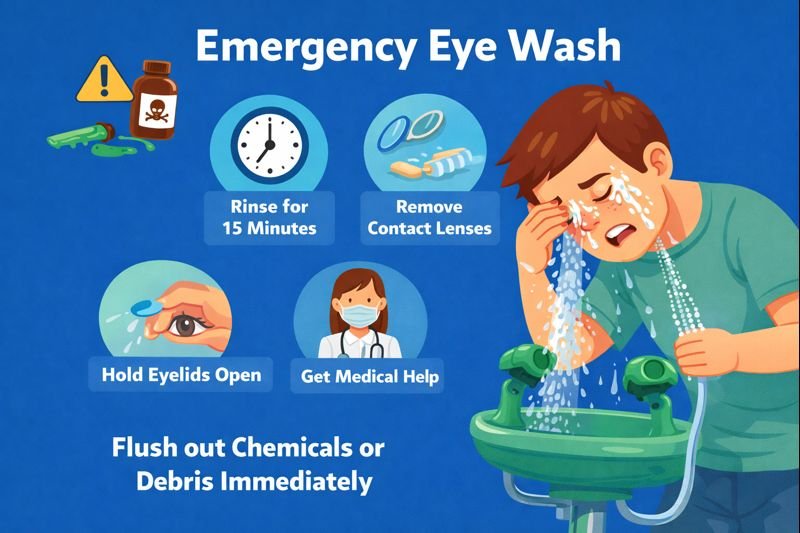
An emergency eye wash is a first aid response used when chemicals, dust, or other contaminants enter the eyes. The goal is to flush the eyes immediately with clean water or a sterile rinsing solution to reduce irritation and limit potential injury. Chemical eye exposures can be serious, especially in workplaces where corrosive or toxic substances are present, so quick action and proper awareness are essential.
Why This Matters in Canadian Workplaces and First Aid Settings
Across Canada, emergency eye wash awareness is especially important in environments such as laboratories, construction sites, manufacturing plants, maintenance departments, and cleaning services. Even offices and retail spaces may use cleaning chemicals that pose a risk if splashed into the eyes. First aid training emphasizes early recognition, immediate rinsing, and knowing how to access emergency equipment like eye wash stations.
A Simple, Realistic Scenario
While refilling cleaning supplies in a school custodial room, a staff member accidentally splashes diluted cleaning solution toward their face. A coworker nearby recognizes the situation, guides them to the nearest sink, and helps them begin rinsing their eyes right away while another staff member alerts a supervisor.
Common Signs That an Eye Wash May Be Needed
-
Redness or excessive tearing
-
Blurred vision or discomfort when blinking
-
Sensation of a foreign object in the eye
-
Swelling or difficulty keeping the eye open
Any suspected chemical or contaminant exposure should be treated as urgent from a first aid perspective.
Causes and Mechanisms
Eye contamination can occur through:
-
Chemical splashes from cleaning agents or solvents
-
Dust, powders, or debris in industrial or construction settings
-
Laboratory substances or maintenance products
-
Accidental hand-to-eye transfer after handling irritants
The eye’s surface is delicate, and chemicals or particles can quickly irritate or damage tissues if not flushed out promptly.
First Aid Awareness and General Emergency Eye Wash Steps
From a public education and workplace awareness standpoint, key principles include:
-
Begin rinsing immediately with clean, lukewarm water or approved eye wash solution
-
Remove contact lenses if they are present and easy to take out
-
Gently hold the eyelids open to allow water to reach the entire eye surface
-
Use a steady, moderate stream of water — not too forceful
-
Encourage the person to move their eyes up, down, and side to side while rinsing
-
Continue rinsing for at least 15 minutes when possible
If others are nearby, one person can start rinsing while another seeks additional assistance. The emphasis in first aid is on not delaying the flushing process.
Prevention and Workplace Considerations
Preventive safety practices significantly reduce the risk of eye injuries:
-
Wearing protective eyewear when handling chemicals or debris
-
Ensuring eye wash stations or accessible sinks are available in higher-risk areas
-
Clearly labelling chemical containers
-
Training staff on chemical safety and emergency response procedures
-
Practising awareness drills so responses feel more natural if an incident occurs
In Canadian workplaces, these steps align with occupational safety expectations and general first aid preparedness.
Frequently Asked Questions About Emergency Eye Washing
Why is immediate rinsing so important?
Prompt flushing helps dilute and remove harmful substances before they can cause deeper irritation or damage.
Should contact lenses be removed during rinsing?
Yes, if they can be removed easily. Lenses can trap contaminants against the eye surface.
How strong should the water flow be?
A gentle, steady stream is best — strong enough to rinse but not so forceful that it causes additional discomfort.
How long should the eye be rinsed?
A general public-education guideline is about 15 minutes of continuous rinsing when feasible.
Is follow-up important after a chemical eye exposure?
Yes. Even if discomfort improves, further assessment helps ensure the eyes are recovering properly.
Educational Note
This article is intended for general public and workplace first aid education in Canada. It promotes awareness of emergency eye washing and chemical safety but does not replace evaluation or care from qualified healthcare professionals.
About The Author

Mark Kascha
Certified First Aid Instructor Trainer with 30+ years of real-world experience, including lifeguarding, workplace emergency response, and first aid program development across Canada. Has worked with WorkSafeBC, WSIB, and Manitoba Health.
👉 [View full credentials]🔗 View LinkedIn Profile
Last reviewed: March 2026