
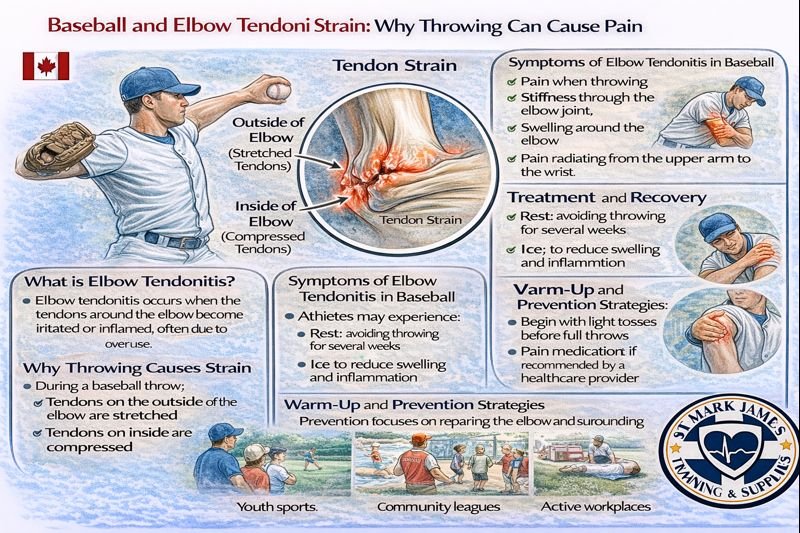
 Although baseball appears low-risk compared to high-impact sports like football, the repetitive act of throwing places significant force on the elbow. Fast throwing motions can strain the tendons, muscles, and ligaments that stabilize the joint — especially in younger athletes who are still developing technique and strength.
What is Elbow Tendonitis?
Elbow tendonitis occurs when the tendons around the elbow become irritated or inflamed, often due to overuse. The elbow includes a network of bones, tendons, ligaments, and muscles that must work together during throwing. When these tissues are repeatedly stressed, they can become sore, swollen, or weak.
Why Throwing Causes Strain
During a baseball throw:
-
Tendons on the outside of the elbow are stretched
-
Tendons on the inside are compressed
-
The motion repeats at high speed and force
Over time, repetitive loading can contribute to microscopic tendon injury and inflammation. Cold, stiff muscles and tendons are more vulnerable, which is why warming up matters.
Players who skip stretching or increase throwing volume quickly may notice symptoms earlier. Tendon irritation is also common among young pitchers who have not yet developed prevention habits or strength conditioning.
Symptoms of Elbow Tendonitis in Baseball
Athletes may experience:
-
Pain when throwing
-
Stiffness through the elbow joint
-
Swelling around the elbow
-
Pain radiating from the upper arm to the wrist
-
Loss of throwing velocity or endurance
Symptoms often appear during or after throwing sessions.
Treatment and Recovery
Most cases improve with:
-
Rest: avoiding throwing for several weeks (4–8 weeks depending on severity)
-
Ice: to reduce swelling and inflammation
-
Pain medication: if recommended by a healthcare provider
Gradual return-to-play programs ensure tendon tissues are ready for throwing again.
Warm-Up and Prevention Strategies
Prevention focuses on preparing the elbow and surrounding muscles for high-speed movement:
-
Begin with light tosses before full throws
-
Warm up shoulders, elbows, and wrists
-
Stretch the arm from shoulder to forearm
-
Keep tendons warm between innings (e.g., sweatshirt or jacket for pitchers)
-
Monitor throwing volume and rest days
These habits support tendon health throughout the season.
Sports & Safety Context for Canadians
Baseball injuries intersect with broader safety education in Canada — especially for youth sports, community leagues, and workplaces that involve coaching or recreation programs. Early recognition of overuse injuries aligns with first aid training, injury prevention, and return-to-activity planning. CPR/AED courses, sports first aid, and workplace safety certifications all contribute to safer sports and extracurricular environments.
Disclaimer
This post is for public education only and not a substitute for medical assessment. Canadians with persistent elbow pain or loss of function should consult a qualified healthcare professional.
About The Author

Mark Kascha
Certified First Aid Instructor Trainer with 30+ years of real-world experience, including lifeguarding, workplace emergency response, and first aid program development across Canada. Has worked with WorkSafeBC, WSIB, and Manitoba Health.
👉 [View full credentials]🔗 View LinkedIn Profile
Last reviewed: March 2026