 Finger arthritis can significantly affect day-to-day function at home, at work, and in recreational activities. For many Canadians, early symptoms start subtly — making simple tasks like typing, gripping small objects, or opening jars more difficult over time.
There are two main types of arthritis that commonly affect the fingers:
-
Osteoarthritis (OA): Due to gradual wear-and-tear and breakdown of joint cartilage.
-
Rheumatoid Arthritis (RA): An autoimmune condition involving inflammation of multiple joints, often on both hands.
Both conditions can produce similar early warning signs before more advanced changes develop.
Common Early Signs of Finger Arthritis
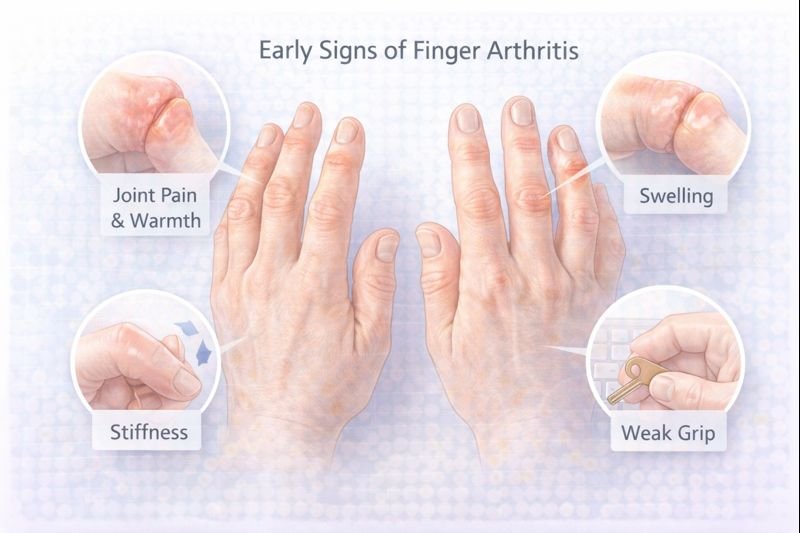
1. Joint Pain & Warmth
Pain is often the first noticeable symptom. It may worsen during hand-intensive activities (typing, manual tools, cooking) or after long periods of inactivity.
-
OA typically affects joints at the fingertips or the base of the thumb.
-
RA often affects the same joints on both hands and can feel warm to the touch.
2. Swelling & Puffiness
Some people notice swelling before pain begins. Fingers may look puffy first thing in the morning and gradually improve as movement increases. Swelling can make it harder to grip objects such as pens or grooming tools.
3. Stiffness
Morning stiffness is a common early complaint.
-
In OA, stiffness often improves within minutes as joints warm up.
-
In RA, stiffness may last hours and is often paired with pronounced inflammation.
Stiffness can make everyday personal care tasks—buttoning shirts, brushing teeth, or using utensils—more challenging.
4. Weak Grip Strength
Weakness can make tasks involving small hand muscles more difficult, such as turning a key, opening jars, or securely holding objects. OA affecting the thumb can be particularly noticeable for these movements.
When to See a Healthcare Professional
A physician should assess persistent joint symptoms, especially if:
-
Mobility is affected
-
Symptoms interfere with work or daily activities
-
Symptoms are present on both hands (suggesting RA)
-
There is prolonged swelling or warmth in multiple joints
A healthcare provider may recommend medications, lifestyle modifications, hand exercises, or referrals to physiotherapy or rheumatology depending on the diagnosis.
Workplace & Training Considerations (Canadian Context)
Conditions that affect grip strength and hand function can influence workplace performance and safety in both office and hands-on environments. Canadian first aid and occupational health training often highlights:
-
Ergonomic considerations for repetitive tasks
-
Safe adaptations for manual equipment and tools
While arthritis is not an emergency condition, it’s another example of why regular workplace safety training and awareness matter — especially in occupations involving repetitive hand function or manual tasks.
Disclaimer (Educational Use Only)
This information is intended for general learning and awareness. It does not replace medical assessment, diagnosis, or treatment. Individuals concerned about symptoms should consult a licensed healthcare professional in Canada.
About The Author

Mark Kascha
Certified First Aid Instructor Trainer with 30+ years of real-world experience, including lifeguarding, workplace emergency response, and first aid program development across Canada. Has worked with WorkSafeBC, WSIB, and Manitoba Health.
👉 [View full credentials]🔗 View LinkedIn Profile
Last reviewed: March 2026