
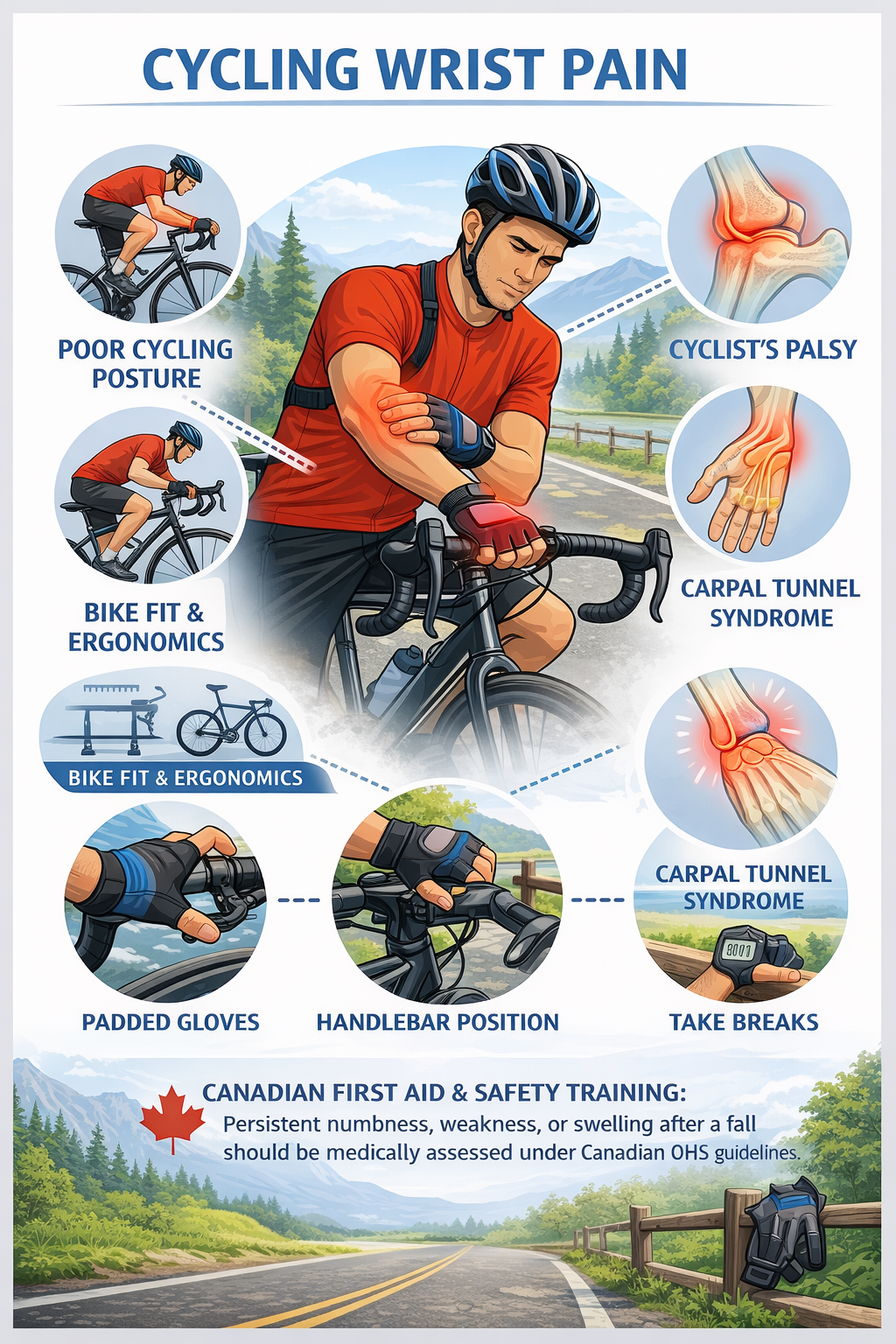
 Cycling is a popular way to stay active across Canada — whether commuting through Vancouver’s seawall, riding gravel trails in Alberta, or exploring paved paths throughout Ontario. While cycling promotes cardiovascular health and reduces environmental impact, the repetitive vibration, positioning, and grip required on handlebars can irritate the wrists and hand structures, leading to discomfort during or after riding.
In many cases, wrist pain can be corrected with minor mechanical adjustments or technique improvements. However, if symptoms persist, medical evaluation is recommended to rule out nerve compression or musculoskeletal injury.
Poor Cycling Posture
Posture plays a major role in how pressure is distributed through the shoulders, elbows, wrists, and hands. If cyclists lean too far forward or place excess weight through the wrists, pain and numbness may develop over time.
Helpful adjustments include:
✔ Rolling the shoulders back
✔ Keeping elbows slightly bent to absorb shock rather than locking them
✔ Ensuring the saddle tilt is neutral — tipping the saddle forward causes sliding and additional wrist loading
Bike Fit & Ergonomics
Wrist pain is common when a bike does not fit the rider’s body proportions. A quick fit check includes comparing the distance between the saddle and handlebars to the length between the rider’s middle finger and elbow.
If the reach is:
• Too long → Overreaching increases wrist pressure
• Too short → Wrists angle awkwardly, increasing strain
Professional bike fitting can help reduce repetitive strain and prevent overuse injuries.
Cyclist’s Palsy (Ulnar Neuropathy)
Cyclist’s palsy occurs when vibration and pressure irritate the ulnar nerve as it passes through the wrist. Symptoms may include:
• Tingling in the ring or little finger
• Wrist pain
• Numbness
• Reduced grip strength
A period of rest (often up to a month), padded gloves, or handlebar adjustments may help. Persistent symptoms should be assessed by a physician.
Carpal Tunnel Syndrome
Cycling can aggravate carpal tunnel syndrome due to repetitive gripping and vibration through the median nerve. Symptoms can include:
• Burning or aching wrist pain
• Numbness
• Nighttime discomfort
• Reduced finger dexterity
Splinting or workplace ergonomic adjustments may be recommended. Treatment varies depending on the severity and occupation of the individual — especially for Canadians working in manual labour or shift settings.
When Wrist Pain Matters in First Aid & Workplace Safety
From a first aid perspective, wrist complaints that involve:
• Progressive numbness
• Loss of function
• Grip weakness
• Sudden swelling after a fall
…should be evaluated promptly to rule out fractures or nerve compression injuries.
In Canadian workplaces, repetitive strain injuries are common among workers using tools, scanning devices, computers, or vibrating equipment. Early recognition can prevent disability claims and time away from work. First aid training helps identify when to monitor, modify activity, or escalate to emergency care.
Canadian First Aid & CPR Connection
Even though wrist pain is not typically life-threatening, cycling-related falls can involve head injuries, fractures, or bleeding. Basic first aid and CPR training helps Canadians respond to unexpected emergencies on trails, roadways, and workplaces.
Training is available nationwide through St. Mark James Training, supporting safer recreation and occupational environments.
Disclaimer
This educational content is for general reference only and does not replace medical assessment, diagnosis, or treatment. Consult a healthcare professional for concerns regarding persistent wrist pain, injury, or neurological symptoms.
About The Author

Mark Kascha
Certified First Aid Instructor Trainer with 30+ years of real-world experience, including lifeguarding, workplace emergency response, and first aid program development across Canada. Has worked with WorkSafeBC, WSIB, and Manitoba Health.
👉 [View full credentials]🔗 View LinkedIn Profile
Last reviewed: March 2026