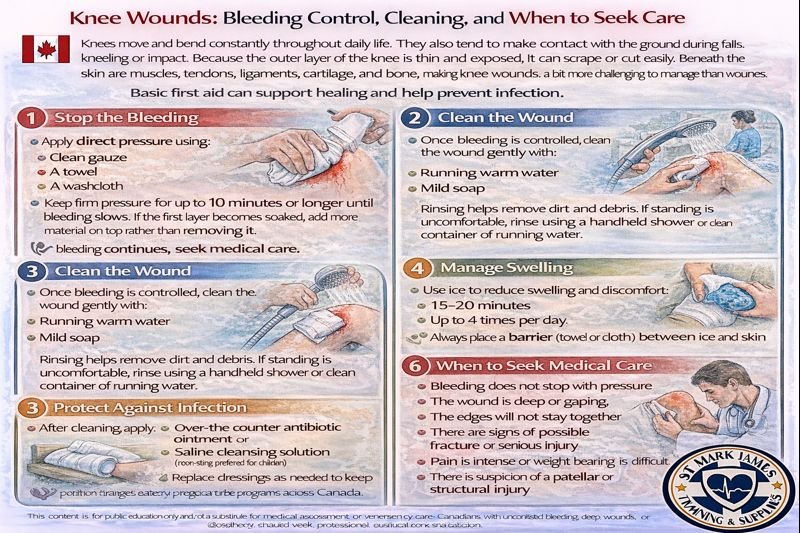
 Knees move and bend constantly throughout daily life. They also tend to make contact with the ground during falls, kneeling, or impact. Because the outer layer of the knee is thin and exposed, it can scrape or cut easily. Beneath the skin are muscles, tendons, ligaments, cartilage, and bone, making knee wounds a bit more challenging to manage than wounds on flatter surfaces.
Basic first aid can support healing and help prevent infection.
1. Stop the Bleeding
Apply direct pressure using:
-
Clean gauze
-
A towel
-
A washcloth
Keep firm pressure for up to 10 minutes or longer until bleeding slows. If the first layer becomes soaked, add more material on top rather than removing it.
If bleeding continues, seek medical care.
2. Clean the Wound
Once bleeding is controlled, clean the wound gently with:
-
Running warm water
-
Mild soap
Rinsing helps remove dirt and debris. If standing is uncomfortable, rinse using a handheld shower or clean container of running water.
3. Protect Against Infection
After cleaning, apply:
-
Over-the-counter antibiotic ointment or
-
Saline cleansing solution (non-sting preferred for children)
Cover with clean gauze and secure with a bandage or wrap to prevent dirt from entering the wound. Replace dressings as needed to keep the area clean and dry.
4. Manage Swelling
Use ice to reduce swelling and discomfort:
-
15–20 minutes
-
Up to 4 times per day
-
Always place a barrier (towel or cloth) between ice and skin
Cold therapy helps manage inflammation and supports comfort during early healing.
5. Elevation and Rest
Keep the leg elevated when sitting or lying down, using pillows or cushions for support. Rest allows tissues to heal and helps reduce swelling.
6. When to Seek Medical Care
Consult a healthcare provider if:
-
Bleeding does not stop with pressure
-
The wound is deep or gaping
-
The edges will not stay together
-
There are signs of possible fracture or serious injury
-
Pain is intense or weight-bearing is difficult
-
There is suspicion of a patellar or structural injury
Proper medical assessment may determine the need for sutures, skin adhesive, or additional care.
Sports, Workplace, and First Aid Context
Knee wounds are common in:
-
Sports and recreation
-
Construction and trades
-
Food service and retail (slips and falls)
-
Healthcare environments
-
Schools and playgrounds
These settings benefit from first aid skills, infection control awareness, and broader emergency preparedness training such as CPR/AED and workplace safety programs across Canada.
Disclaimer
This post is for public education only and not a substitute for medical assessment or emergency care. Canadians with uncontrolled bleeding, deep wounds, or difficulty walking should seek professional evaluation.
About The Author

Mark Kascha
Certified First Aid Instructor Trainer with 30+ years of real-world experience, including lifeguarding, workplace emergency response, and first aid program development across Canada. Has worked with WorkSafeBC, WSIB, and Manitoba Health.
👉 [View full credentials]🔗 View LinkedIn Profile
Last reviewed: March 2026