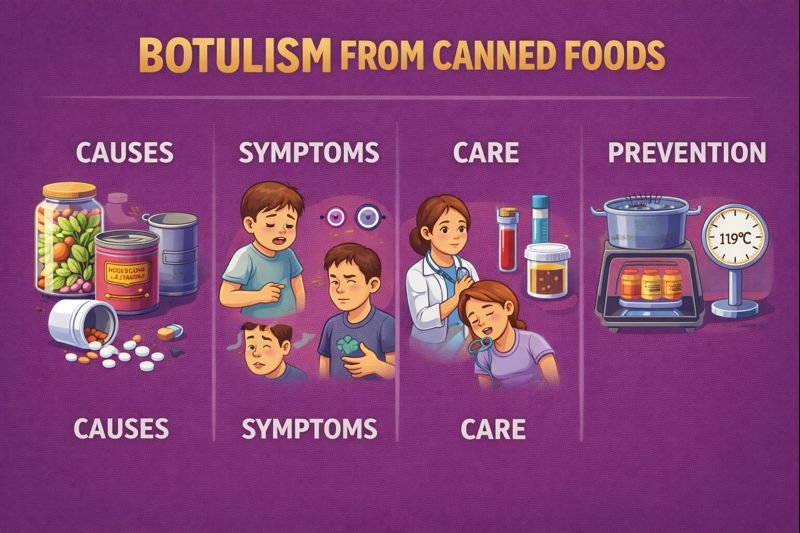
 Botulism is a rare but serious foodborne illness caused by toxins produced by Clostridium botulinum. Although many cases are linked with improperly processed canned or jarred foods, botulism can occur in a variety of settings where food is stored or handled without enough oxygen.
Why it matters in Canada & food-handling workplaces
Botulism is uncommon, but food safety awareness is important in homes, childcare, commercial kitchens, and food processing environments. Canadian food regulations and inspection systems help reduce risk; however, home canning and improperly stored foods can increase the chance of contamination.
Scenario (mild & realistic)
A family shared home-canned vegetables at a weekend gathering. Two days later, an adult noticed difficulty swallowing and nausea and contacted their health care provider to discuss recent foods eaten. Because symptoms aligned with a possible foodborne illness, the individual was assessed and supported by medical professionals.
How botulism develops
Clostridium botulinum bacteria can form spores that survive in low-oxygen environments, such as sealed containers. Under the right storage or processing conditions, spores may produce a toxin that can affect the nervous system.
Spores are naturally widespread in soil and the environment, which is why safe food-handling methods and proper canning techniques are emphasized in food safety courses.
Symptoms of botulism food poisoning
Symptoms may appear within 6 hours or up to 10 days after eating contaminated food. Not everyone experiences the same cluster of symptoms.
Mouth & gastrointestinal symptoms
-
Nausea or vomiting
-
Abdominal discomfort
-
Dry mouth
-
Difficulty swallowing
Vision symptoms
-
Blurred or double vision
-
Drooping eyelids
-
Eye fatigue
Nervous system symptoms
Botulism toxin can affect the nerves that control muscles, leading to weakness and fatigue. In more significant cases, weakness may spread to other body areas. Because botulism affects the nervous system, medical assessment is important if symptoms worsen or breathing becomes difficult.
Diagnosis
Diagnosis typically involves:
-
Reviewing recent food consumption
-
Physical assessment by a health professional
-
Possible blood or stool testing
-
In some cases, samples of suspected food may be evaluated
First aid awareness & care considerations
For mild foodborne illnesses, rest and hydration may help. For suspected botulism, prompt medical evaluation is recommended due to the potential for neurological involvement. Severe or worsening symptoms such as dehydration, persistent vomiting, or difficulty swallowing require medical attention.
Emergency assessment may be needed for severe or rapidly progressing illness.
Prevention & food safety
Preventive strategies focus on:
-
Proper canning techniques for home preserves
-
Following tested recipes for canning and pressure processing
-
Refrigerating leftovers promptly
-
Checking for bulging lids, foul odours, or leaking containers before opening
-
Discarding foods that appear spoiled or improperly sealed
Food safety training in workplaces such as restaurants and commercial kitchens reinforces these practices through certification courses.
FAQ
Is botulism common?
Botulism is rare in Canada but considered serious due to potential neurological effects.
Can commercially canned foods cause botulism?
Commercial products are tightly regulated, so risk is low. Home-canned foods are more commonly associated with cases when proper techniques are not used.
How long after eating contaminated food do symptoms appear?
Symptoms may appear within hours or up to 10 days after eating a contaminated product.
Does botulism always cause vision problems?
Not always. Some people experience gastrointestinal symptoms first, while others notice visual or swallowing difficulties.
Can botulism be prevented?
Safe food storage, high-quality canning practices, and food handler training help reduce risk.
Educational note
This material supports food safety and first aid awareness. Individuals with concerning symptoms or suspected botulism should seek guidance from health professionals for assessment.
About The Author

Mark Kascha
Certified First Aid Instructor Trainer with 30+ years of real-world experience, including lifeguarding, workplace emergency response, and first aid program development across Canada. Has worked with WorkSafeBC, WSIB, and Manitoba Health.
👉 [View full credentials]🔗 View LinkedIn Profile
Last reviewed: March 2026