
How Can Sweets Affect Digestion?
Diarrhea can be uncomfortable and disruptive. For some people, large amounts of added sugars or sweeteners—such as table sugar, high-fructose corn syrup, or certain sugar substitutes—can irritate the digestive system and lead to loose stools. Not everyone is affected the same way, but noticing personal triggers can help reduce repeat discomfort.
Why Awareness Matters in Canadian Homes and Workplaces
Sugary snacks and beverages are common at meetings, school events, and social gatherings across Canada. First aid awareness focuses on moderation, hydration, and early recognition of stomach upset, rather than diagnosing illness. Simple food-label reading and balanced meal choices can support everyday digestive comfort.
A Simple, Realistic Scenario
After an office celebration with cake and soft drinks, an employee experiences stomach cramping and loose stools later that day. Remembering basic digestive-comfort awareness, they switch to water, choose lighter foods, and rest until symptoms settle.
Common Sweet-Related Contributors
Large Amounts of Added Sugar
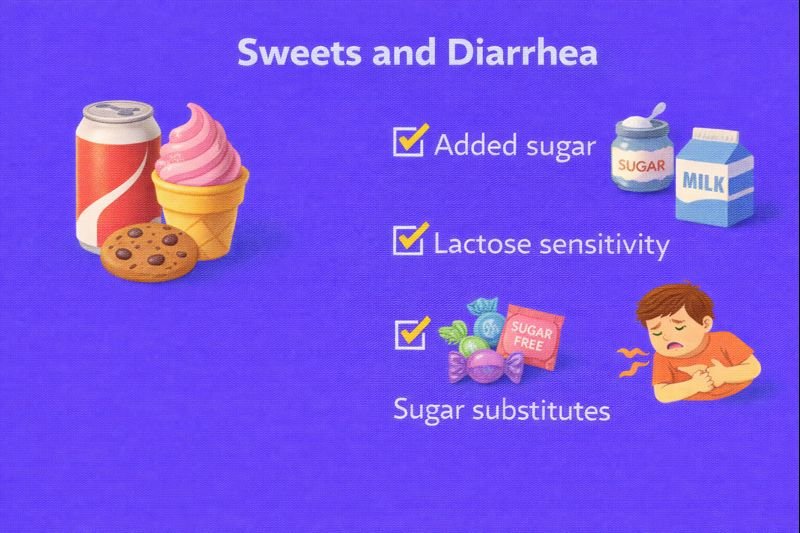 Very sweet foods and drinks can draw extra water into the intestines for some people, leading to:
-
Loose stools
-
Urgency after meals
Lactose Sensitivity
Milk and dairy desserts contain lactose. People who have difficulty digesting lactose may notice:
-
Gas or bloating
-
Diarrhea after ice cream or milk-based sweets
-
Relief when choosing non-dairy alternatives
Sugar Alcohols (Sugar Substitutes)
Ingredients often found in “sugar-free” gums, candies, or cough drops—such as sorbitol, xylitol, maltitol, isomalt, or lactitol—can have a laxative effect in larger amounts, especially for children.
Excess Fructose
Fructose is a natural fruit sugar and a common sweetener in processed drinks and sauces. Some individuals are more sensitive to higher quantities and may experience stomach upset.
First Aid Awareness and General Comfort Measures
From a public-education perspective, the emphasis is on hydration, rest, and gentle food choices:
-
Sip water or oral rehydration fluids regularly
-
Choose bland, easy-to-digest foods for a short time
-
Avoid very sweet, greasy, or spicy meals while symptoms settle
-
Practise good hand hygiene and clean food-prep surfaces
-
Monitor for ongoing fever, weakness, or dehydration signs and seek further guidance if symptoms persist or worsen
These steps support comfort and cleanliness rather than medical treatment.
Prevention and Everyday Considerations in Canada
-
Read nutrition labels and note added sugars or sugar alcohols
-
Balance sweets with fibre-rich meals and adequate fluids
-
Offer non-dairy or low-sugar options at shared events
-
Pace treats rather than consuming large portions at once
-
Maintain regular meal times and adequate sleep to support digestion
Frequently Asked Questions
Do sweets always cause diarrhea?
No. Sensitivity varies; many people tolerate moderate amounts without issue.
Why do sugar-free candies sometimes upset the stomach?
Some sugar substitutes can have a laxative effect in higher quantities.
Can dairy desserts be a trigger?
Yes, for individuals who have difficulty digesting lactose.
Does hydration help?
Yes. Fluids support comfort and help replace losses from loose stools.
When should symptoms be checked further?
If diarrhea is severe, lasts more than a couple of days, or signs of dehydration appear, further assessment is advisable.
Educational Note
This article is intended for general public and workplace education in Canada. It supports digestive-comfort awareness and first aid recognition but does not replace evaluation or care from qualified healthcare professionals.
About The Author

Mark Kascha
Certified First Aid Instructor Trainer with 30+ years of real-world experience, including lifeguarding, workplace emergency response, and first aid program development across Canada. Has worked with WorkSafeBC, WSIB, and Manitoba Health.
Last reviewed: March 2026