
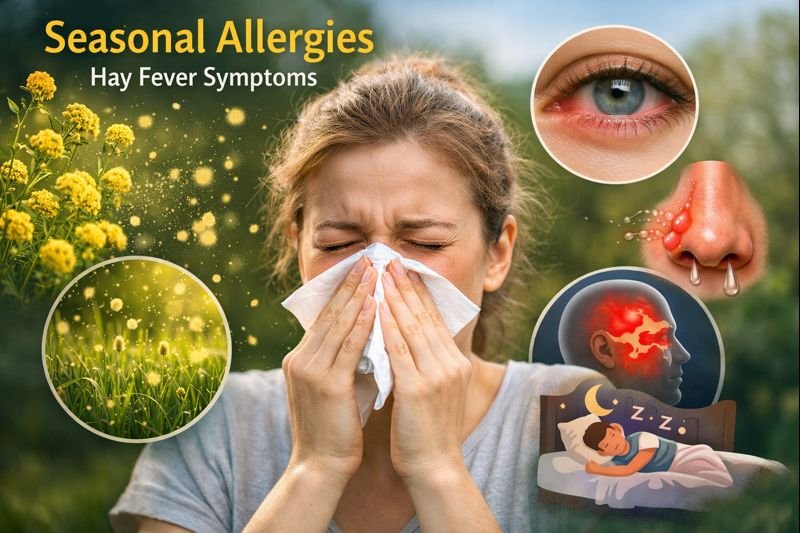
 Seasonal allergies — also called hay fever or seasonal allergic rhinitis — affect millions of Canadians each year, particularly during spring and late summer. Although symptoms can mimic the common cold, seasonal allergies are immune reactions to airborne pollen from trees, grasses, and flowers.
Pollen exposure activates an inflammatory response in the airways, causing symptoms that are uncomfortable but rarely dangerous. Recognizing symptoms early helps people manage them and avoid interruptions to school, work, sports, and outdoor activities.
Eye Symptoms: The First Thing Many Canadians Notice
Seasonal allergies frequently target the eyes. Because there are many tiny blood vessels around the eyes, inflammation shows up quickly as:
-
Itchy eyes
-
Watery eyes
-
Redness
-
Burning or irritation
Rubbing the eyes often makes symptoms worse. Ongoing irritation can also lead to conjunctivitis (“allergic pink eye”), which is common during peak pollen seasons.
Nasal & Sinus Congestion
Allergic reactions often cause:
-
Runny nose
-
Congestion
-
Post-nasal drip
-
Sneezing
-
Sinus headaches
Mucus buildup may reduce sense of smell temporarily and make sleep more challenging. Many Canadians confuse these symptoms with a cold or mild viral infection.
Digestive & Whole-Body Symptoms
Although less common, some people experience:
-
Mild stomach upset
-
Cramps
-
Nausea
Sleep disruption is also common due to congestion, coughing, sneezing, and headaches. Over time, poor sleep can contribute to daytime fatigue and irritability.
Allergies in the Workplace & First Aid Considerations (Canada)
Seasonal allergies can impact:
-
Workplace safety (reduced alertness, headaches, fatigue)
-
Food service roles (hand-to-face contact increases contamination risk)
-
Outdoor workers (landscaping, construction, agriculture)
-
First responders and lifeguards during peak pollen seasons
Canadian workplaces offering Occupational First Aid training often include awareness around asthma, anaphylaxis, and breathing emergencies — all of which can overlap with allergy seasons.
Even though hay fever itself is not life-threatening, severe allergies and anaphylaxis are, and recognizing the difference is part of good first aid preparedness.
How This Connects to First Aid & CPR Training
First aid training in Canada teaches participants to recognize:
-
Allergic reactions vs. anaphylaxis
-
Difficulty breathing
-
Swelling of the lips, tongue, or throat
-
When to call 911
-
How to assist someone with an EpiPen (epinephrine)
Seasonal allergies rarely progress to severe reactions, but individuals with pollen allergies sometimes have overlapping food or environmental allergies that can.
Educational Disclaimer
This article is for general education only. It does not diagnose medical conditions or replace assessment by a healthcare provider. Individuals experiencing difficulty breathing, facial swelling, or other worsening symptoms should seek medical care or call 911 in Canada.
About The Author

Mark Kascha
Certified First Aid Instructor Trainer with 30+ years of real-world experience, including lifeguarding, workplace emergency response, and first aid program development across Canada. Has worked with WorkSafeBC, WSIB, and Manitoba Health.
Last reviewed: March 2026