The common cold is a mild viral illness that often causes symptoms such as a runny or stuffy nose, sneezing, sore throat, headache, and mild muscle aches. For most people, these symptoms improve within a few days and are not serious.
A common question is whether it is safe to continue exercising while experiencing cold symptoms. From a general first aid and public health perspective, light activity is often possible in certain situations, but awareness and caution are important.
First Aid & Workplace Relevance (Canada)
In Canadian workplaces—especially those involving physical labour, fitness settings, or shift work—employees may wonder whether to stay active or return to normal routines while recovering from a cold. Exercise can affect energy levels, coordination, and recovery, which may influence safety at work.
First aid awareness helps workers understand when activity is reasonable, when rest is more appropriate, and how to reduce the risk of spreading illness to others in shared environments.
Scenario: Listening to the Body at Work
A warehouse employee with a mild runny nose and sneezing debated whether to attend a scheduled workout class after work. Remembering guidance from first aid training, they chose light stretching instead of intense exercise and focused on rest and hydration. Their symptoms resolved without worsening, allowing a safe return to normal activity.
Can Exercise Make a Cold Worse?
Research suggests that moderate exercise does not typically worsen the duration or severity of the common cold in otherwise healthy individuals. Studies comparing people who exercised with those who rested found no significant difference in recovery time.
However, this does not mean exercise is always appropriate. How the body feels during activity matters more than maintaining routine.
The “Above-the-Neck” Guideline
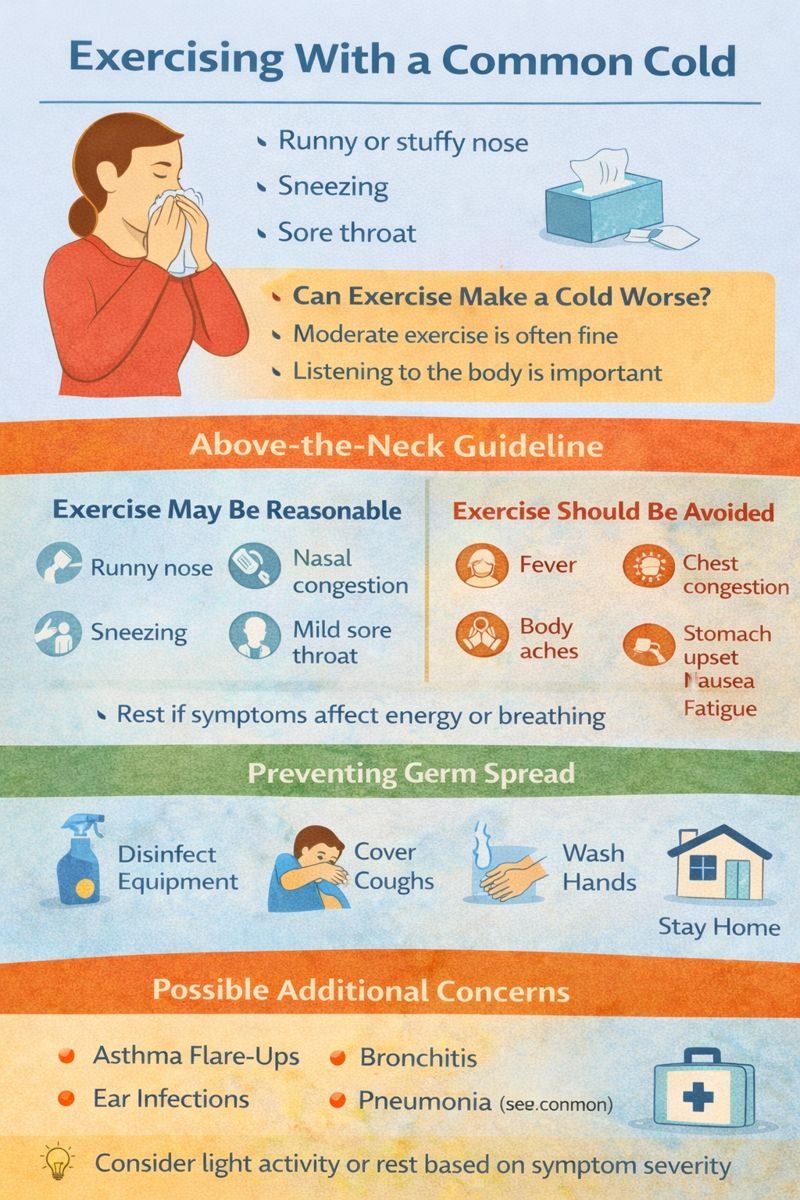 A commonly used educational guideline divides symptoms into “above-the-neck” and “below-the-neck” symptoms.
Exercise may be reasonable if symptoms are mild and limited to:
-
Runny nose
-
Nasal congestion
-
Sneezing
-
Mild sore throat
Exercise should be avoided if symptoms include:
-
Fever
-
Chest congestion
-
Shortness of breath
-
Generalized muscle aches
-
Stomach upset or nausea
-
Significant fatigue
Below-the-neck symptoms may indicate a more systemic illness and increase the risk of complications or injury during activity.
Exercising During Illness: Awareness Tips
When considering exercise while sick, first aid education emphasizes self-monitoring:
-
Reduce intensity if energy levels are low
-
Stop activity if symptoms worsen
-
Avoid pushing through discomfort
-
Prioritize rest if unsure
Light movement may feel manageable for some, but rest is often the most supportive option during illness.
Preventing the Spread of Germs
Even if someone feels well enough to exercise, they may still be contagious. This is especially important in gyms, fitness classes, and shared workplace facilities.
General prevention practices include:
-
Wiping down equipment before and after use
-
Covering coughs and sneezes with the elbow or forearm
-
Washing hands frequently
-
Using hand sanitizer when handwashing is not available
-
Avoiding shared equipment if symptoms are active
Staying home when symptoms are more pronounced helps protect coworkers and the public.
Possible Secondary Health Concerns
In some individuals, a common cold can worsen other conditions or lead to complications, such as:
-
Ear infections
-
Bronchitis
-
Pneumonia (less common)
Those with chronic conditions or a history of complications may benefit from extra rest and medical guidance before resuming exercise.
Frequently Asked Questions
Is it safe to exercise with a runny nose?
Light exercise may be reasonable if symptoms are mild and limited to the nose or throat, and there is no fever or chest involvement.
Can exercise shorten the duration of a cold?
There is no strong evidence that exercise shortens recovery time from the common cold.
Should I avoid the gym if I have cold symptoms?
Yes, avoiding shared spaces can help reduce the spread of germs, especially if coughing or sneezing is present.
When should exercise be avoided completely?
Exercise should be avoided if there is fever, chest congestion, body aches, or significant fatigue.
Why is rest often recommended during illness?
Rest allows the immune system to focus on recovery and reduces the risk of worsening symptoms or injury.
Educational Note
This article is intended for general public education and first aid awareness. It does not provide medical advice or personalized recommendations. First aid training emphasizes symptom recognition, self-monitoring, and knowing when rest or further assessment may be appropriate.
About The Author

Mark Kascha
Certified First Aid Instructor Trainer with 30+ years of real-world experience, including lifeguarding, workplace emergency response, and first aid program development across Canada. Has worked with WorkSafeBC, WSIB, and Manitoba Health.
👉 [View full credentials]🔗 View LinkedIn Profile
Last reviewed: March 2026