
How Chocolate Can Affect Asthma
Chocolate itself is not a common asthma trigger for everyone, but for some individuals, eating chocolate or chocolate-containing foods can worsen asthma symptoms. This usually happens because of an allergic reaction to one or more ingredients commonly found in chocolate, rather than to chocolate alone. Asthma involves inflammation and narrowing of the airways, which can lead to wheezing, coughing, chest tightness, and shortness of breath.
For people with food allergies or sensitivities, the body’s inflammatory response may aggravate asthma symptoms after certain foods are eaten.
Why This Matters for First Aid and Workplaces in Canada
Chocolate is widely available in Canadian workplaces, schools, vending machines, and social events. Because asthma symptoms can worsen unexpectedly after eating certain foods, first aid awareness helps coworkers and supervisors recognize early warning signs, reduce exposure, and respond appropriately. This is especially important in environments where asthma or food allergies are already known health considerations.
A Realistic Scenario
During an afternoon break, an employee with asthma eats a chocolate snack. Shortly afterward, they begin coughing more than usual and notice tightness in their chest. A coworker trained in first aid recognizes this as a possible asthma flare linked to a food reaction, helps the employee move away from potential triggers, and follows workplace procedures to monitor symptoms and seek medical support if needed.
Common Symptoms When Chocolate Triggers Asthma
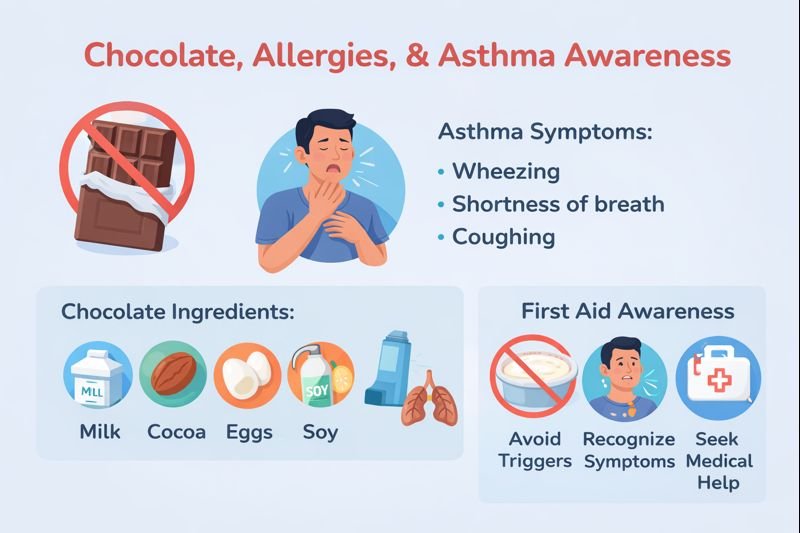 When chocolate or its ingredients worsen asthma, symptoms may include:
-
Wheezing or whistling sounds during breathing
-
Shortness of breath or chest tightness
-
Persistent coughing
-
Increased use of breathing support medication (where applicable)
-
General allergy symptoms such as itching, hives, or nasal congestion
Symptoms may appear shortly after eating or gradually worsen over time.
Chocolate Allergy vs. Asthma Trigger
A chocolate-related allergic reaction usually occurs because of common allergens found in chocolate products, such as:
-
Milk
-
Cocoa
-
Eggs
-
Soy
-
Peanuts or tree nuts
During an allergic reaction, the immune system releases histamine, causing inflammation in various tissues. If this inflammation affects the lungs, it may worsen asthma symptoms.
An asthma trigger, on the other hand, may not involve a true allergy but can still cause airway irritation and breathing difficulty. Some people experience both allergy symptoms and asthma flare-ups at the same time.
What Happens During an Allergic or Asthmatic Reaction?
When allergenic proteins are mistakenly identified as harmful, the immune system releases immunoglobulin E (IgE) antibodies and histamine. In the lungs, histamine can cause swelling and narrowing of the airways. This makes breathing more difficult and may lead to wheezing, coughing, or chest discomfort.
Because asthma symptoms can overlap with allergic reactions, identifying the specific trigger is important for long-term management.
Identifying Possible Triggers
Healthcare professionals may use allergy testing to help identify specific food allergens. Common approaches include skin testing and blood testing to measure immune responses to certain proteins. From a first aid and workplace perspective, awareness focuses on recognizing patterns—such as symptoms occurring after eating chocolate—and responding appropriately.
Prevention and Workplace Considerations
-
Clear ingredient labeling for shared snacks and catered foods
-
Awareness that chocolate often contains multiple allergens
-
Encouraging individuals with asthma or food allergies to communicate triggers
-
Training staff to recognize worsening asthma symptoms
-
Having clear emergency response plans in place
Reducing exposure to known triggers can help lower the risk of asthma flare-ups in shared environments.
Frequently Asked Questions (FAQ)
Can chocolate cause asthma attacks?
Chocolate may worsen asthma symptoms in some people, usually because of an allergy or sensitivity to one of its ingredients rather than chocolate itself.
Is cocoa a common allergen?
Cocoa allergy is uncommon, but chocolate often contains other allergens such as milk, nuts, or soy, which are more frequent causes of reactions.
How quickly can symptoms appear after eating chocolate?
Symptoms may begin shortly after eating or gradually worsen, depending on the individual and the type of reaction involved.
Can someone have both asthma and food allergies?
Yes. Many people with asthma also have food allergies, and allergic reactions can sometimes trigger or worsen asthma symptoms.
Why is first aid awareness important for asthma triggers?
Early recognition helps reduce exposure, monitor symptoms, and activate emergency procedures when breathing becomes difficult.
Educational Note
This article is intended for general first aid and workplace safety education in Canada. It promotes awareness of asthma triggers and allergic reactions but does not replace medical evaluation or emergency care.
About The Author

Mark Kascha
Certified First Aid Instructor Trainer with 30+ years of real-world experience, including lifeguarding, workplace emergency response, and first aid program development across Canada. Has worked with WorkSafeBC, WSIB, and Manitoba Health.
👉 [View full credentials]🔗 View LinkedIn Profile
Last reviewed: March 2026