 Small bumps around the eye can look like tiny pearls or white dots beneath the skin. Although common in infants, adults can develop them as well. While usually harmless, their appearance can be frustrating and occasionally confusing if mistaken for acne or irritation.
Symptoms & Appearance
These bumps often:
-
Look white or yellowish
-
Feel firm or smooth
-
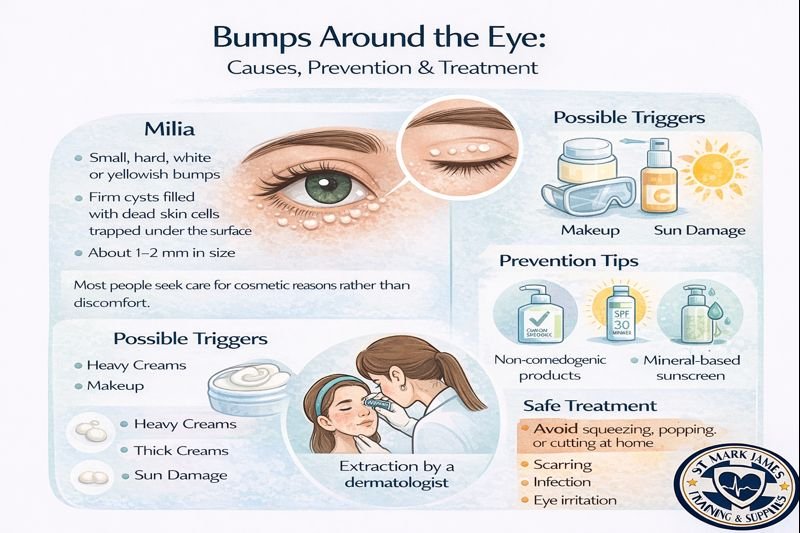
Measure about 1–2 mm
-
Are not itchy or painful
-
May turn red if rubbed or irritated
Most people seek care for cosmetic reasons rather than discomfort.
Possible Causes — Most Commonly Milia
The most frequent cause of these bumps is milia. Milia form when dead skin cells become trapped beneath the surface, creating small firm cysts. They can appear:
-
Around the eyes
-
On the eyelids
-
On the cheeks or forehead
Occasionally, bumps around the eyes may be pimples, which tend to look red or inflamed and may have a white or black head. Acne treatments, however, typically do not work for milia.
Prevention & Skin Care Tips
Milia can occur at any age, but certain habits make them more likely:
-
Heavy or occlusive creams
-
Rich eye products
-
Thick sunscreen formulations
-
Make-up that clogs pores (comedogenic)
-
Sun-damaged skin (more common with age)
Helpful adjustments include:
-
Choosing non-comedogenic skincare and cosmetics
-
Using broad-spectrum, mineral-based sunscreen for daily protection
-
Cleansing gently and avoiding harsh scrubbing
Treatment Options
Among infants, milia usually disappear on their own. In adults, they may persist longer. Professional treatment may involve:
-
Minor extraction performed by a dermatologist or trained clinician
It is not recommended to squeeze, pop, or cut milia at home due to risk of:
-
Scarring
-
Infection
-
Eye irritation
Workplace & PPE Considerations (Canadian Context)
Certain workplaces and PPE can influence eye-area skin irritation, including:
-
Protective goggles
-
Face shields
-
Masks (heat and humidity)
-
Cosmetic requirements in customer-facing roles
-
Sweat + friction from helmets or headgear
Good skincare hygiene, gentle cleansing, and product selection can support comfort and appearance at work.
Disclaimer
This content is for public education only and not a substitute for medical diagnosis or treatment. Anyone with persistent eye-area bumps, irritation, or visual changes should seek advice from a qualified healthcare professional.
About The Author

Mark Kascha
Certified First Aid Instructor Trainer with 30+ years of real-world experience, including lifeguarding, workplace emergency response, and first aid program development across Canada. Has worked with WorkSafeBC, WSIB, and Manitoba Health.
👉 [View full credentials]🔗 View LinkedIn Profile
Last reviewed: March 2026