Understanding Anaphylaxis
Anaphylaxis is a severe, rapid-onset allergic reaction that affects multiple systems in the body and requires immediate medical attention. While many allergic reactions are mild, anaphylaxis can quickly become life-threatening if not recognized and treated promptly.
Epinephrine auto-injectors (often known by brand names such as EpiPen) are a critical first aid tool. When used quickly, they can help slow or reverse dangerous symptoms, buying time until emergency medical care is available.
Why This Matters for First Aid and Workplaces in Canada
Anaphylaxis can occur anywhere—homes, schools, workplaces, childcare centres, restaurants, and public events. Common triggers include foods (such as nuts), insect stings, medications, and latex. First aid training in Canada emphasizes early recognition, prompt use of epinephrine when available, and immediate follow-up emergency care.
People at known risk are often advised by healthcare providers to carry an epinephrine auto-injector at all times.
A Realistic Scenario
During a workplace lunch, an employee with a known nut allergy accidentally eats a dessert containing nuts. Within minutes, they develop hives, throat tightness, and trouble breathing. A coworker trained in first aid recognizes the signs of anaphylaxis, assists with using the employee’s epinephrine auto-injector, and calls emergency services.
What Is Anaphylaxis?
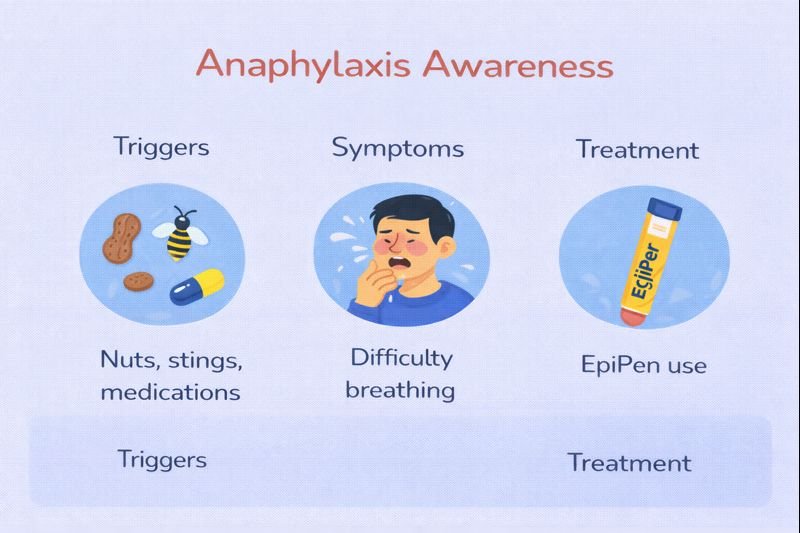 Most allergic reactions involve mild symptoms such as rashes, itchy eyes, or nasal congestion. Anaphylaxis, however, is a severe reaction that can involve:
-
The skin
-
The respiratory system
-
The cardiovascular system
-
The digestive system
Triggers commonly include:
-
Certain foods (especially peanuts and tree nuts)
-
Insect stings (such as bees or wasps)
-
Medications
-
Latex
Anaphylaxis can develop within minutes of exposure and may worsen rapidly.
Symptoms That Require Immediate Medical Attention
Seek emergency help immediately if symptoms appear after exposure to a known or suspected allergen. Warning signs include:
-
Wheezing or noisy breathing
-
Swelling of the throat, lips, tongue, or face
-
Hoarse voice or trouble speaking
-
Chest tightness or heaviness
-
Red, itchy rash or hives
-
Pale or flushed skin
-
Fainting or dizziness
-
Difficulty swallowing
-
Nausea, vomiting, or diarrhea
-
Abdominal cramps
-
A sudden feeling of fear or impending doom
Symptoms may appear together or progress quickly.
Epinephrine Auto-Injectors: First Aid Awareness
An epinephrine auto-injector is a portable device designed for people at risk of severe allergic reactions. It delivers epinephrine (also known as adrenaline) into the thigh muscle.
Epinephrine works by:
-
Reducing airway swelling
-
Improving breathing
-
Supporting blood pressure
-
Counteracting the body’s allergic response
Epinephrine auto-injectors are intended for emergency first aid use, not as a substitute for medical care.
How Epinephrine Auto-Injectors Are Used (Educational Overview)
When signs of anaphylaxis are recognized and an auto-injector is available:
-
The device is removed from its protective case
-
It is administered into the outer thigh as designed
-
Emergency services are contacted immediately afterward
Auto-injectors are available in different strengths intended for different body weights. Some kits contain two devices in case symptoms persist or return before emergency help arrives.
First aid education focuses on recognizing when epinephrine is needed and ensuring emergency follow-up, rather than prescribing doses or treatment plans.
What Happens After Epinephrine Is Used
Using an epinephrine auto-injector is a life-saving first aid step, but it is not the final treatment. After use:
-
Emergency medical services must be contacted
-
The individual should be monitored closely
-
Further medical care may be required
Delayed or absent epinephrine use in severe allergic reactions is associated with increased risk of serious outcomes.
Prevention and Preparedness
-
Individuals with known severe allergies should carry their auto-injector at all times
-
Family members, coworkers, and caregivers should be aware of the allergy
-
Emergency action plans should be shared in workplaces and schools
-
First aid training helps ensure rapid and confident response
Preparedness saves lives.
Frequently Asked Questions (FAQ)
Is anaphylaxis the same as a mild allergy?
No. Anaphylaxis is a severe, systemic reaction that can be life-threatening.
Can anaphylaxis happen quickly?
Yes. Symptoms often develop within minutes of exposure.
Is epinephrine a cure for allergies?
No. It is an emergency treatment used to manage severe reactions until medical care is available.
Should emergency help still be called after epinephrine is used?
Yes. Medical assessment and monitoring are always required afterward.
Why is first aid training important for anaphylaxis?
Early recognition and rapid response significantly reduce the risk of serious complications.
Educational Note
This article is intended for general first aid and workplace safety education in Canada. It supports awareness of anaphylaxis and emergency response but does not replace medical advice, diagnosis, or treatment.
About The Author

Mark Kascha
Certified First Aid Instructor Trainer with 30+ years of real-world experience, including lifeguarding, workplace emergency response, and first aid program development across Canada. Has worked with WorkSafeBC, WSIB, and Manitoba Health.
👉 [View full credentials]🔗 View LinkedIn Profile
Last reviewed: March 2026