
Understanding Partial (Focal) Seizures
The brain works by sending electrical signals between nerve cells. A seizure occurs when there is a sudden surge or disruption in this electrical activity. When the disturbance begins in one specific area of the brain, it is known as a partial seizure, also called a focal seizure.
Partial seizures can cause a wide range of physical, sensory, or behavioural symptoms depending on which part of the brain is involved. Some seizures are brief and subtle, while others may be more noticeable. Many people who experience seizures are able to live full, active lives with appropriate awareness and support.
First Aid & Workplace Relevance in Canada
Partial seizures can occur at work, school, or in public spaces. In Canadian workplaces, first aid awareness helps coworkers respond safely by protecting the individual from injury, maintaining a calm environment, and knowing when additional help may be needed. Understanding what to do — and what not to do — is essential for safety and dignity.
A Short Realistic Scenario
During a lunch break, an employee suddenly becomes unresponsive for a short period and begins making repetitive hand movements. A coworker trained in first aid awareness gently clears nearby objects and ensures the area is safe. Within a minute, the employee regains awareness and is given time to rest. The calm response prevents injury and unnecessary panic.
Types of Partial (Focal) Seizures
Partial seizures are classified based on awareness during the event.
Simple Partial Seizure
-
Usually lasts less than one minute
-
The individual remains conscious
-
The person may remember the event afterward
-
Symptoms may involve movement, sensations, or emotions
Complex Partial Seizure
-
Awareness is reduced or lost
-
May last one to two minutes
-
The individual may not recall what happened
-
May be preceded by a vague feeling of unease or nausea
Partial seizures can sometimes progress into generalized seizures, which affect the entire brain.
Common Symptoms
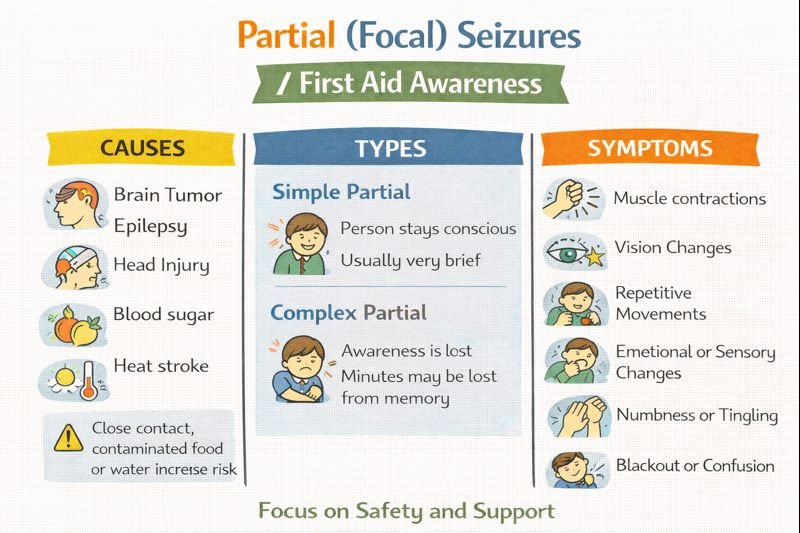 Because only one part of the brain is affected, symptoms vary widely. Possible signs include:
-
Muscle contractions or relaxation
-
Jerking or stiffness on one side of the body
-
Repetitive movements (such as lip-smacking or hand motions)
-
Changes in vision (bright lights or visual disturbances)
-
Numbness or tingling
-
Abdominal discomfort
-
Sudden emotional changes
-
Sweating or flushed skin
-
Rapid heart rate
-
Dilated pupils
-
Brief blackouts or altered awareness
Not every seizure involves convulsions, which can make some episodes harder to recognize.
Possible Causes of Partial Seizures
In some cases, the exact cause is unknown. Potential contributing factors include:
-
Epilepsy
-
Head injuries
-
Stroke
-
Brain infections (such as meningitis)
-
Brain tumours
-
Low blood sugar
-
Heat-related illness
-
Poisoning
-
Congenital brain differences
-
Metabolic conditions affecting the liver or kidneys
Identifying contributing factors may help reduce recurrence in some individuals.
First Aid Awareness: What to Do During a Seizure
A seizure cannot be stopped once it has begun, but safety-focused first aid awareness is essential.
General steps include:
-
Stay calm and remain with the person
-
Clear nearby objects to prevent injury
-
Do not restrain movement
-
Do not place anything in the person’s mouth
-
Allow the seizure to run its course
-
Provide reassurance once awareness returns
-
Allow time for rest afterward
If a seizure lasts longer than expected, occurs repeatedly, or breathing appears difficult, emergency assistance is generally recommended.
Prevention and Workplace Considerations
-
Encourage seizure awareness training in first aid programs
-
Maintain clutter-free workspaces
-
Allow rest breaks if fatigue is a trigger
-
Support individuals who disclose seizure conditions
-
Avoid unnecessary physical restraint during episodes
-
Promote a calm, respectful response culture
Frequently Asked Questions
Can partial seizures happen without convulsions?
Yes. Many partial seizures involve subtle movements or sensory changes rather than full-body convulsions.
Is consciousness always lost during a seizure?
No. In simple partial seizures, awareness is often fully preserved.
Can partial seizures turn into larger seizures?
Yes. Some focal seizures can spread and become generalized seizures.
Should the seizure be stopped?
No. Seizures should be allowed to run their course while ensuring safety.
How can coworkers help most effectively?
By staying calm, clearing hazards, and offering reassurance after the episode ends.
Educational Note
This information is provided for general public education and first aid awareness. Seizure experiences vary widely, and learning how to recognize and respond safely helps protect both the individual and those nearby.
About The Author

Mark Kascha
Certified First Aid Instructor Trainer with 30+ years of real-world experience, including lifeguarding, workplace emergency response, and first aid program development across Canada. Has worked with WorkSafeBC, WSIB, and Manitoba Health.
👉 [View full credentials]🔗 View LinkedIn Profile
Last reviewed: March 2026