October 2015

Understanding head injuries in children

Understanding Head Injuries in Children: What Parents & Caregivers Should Know (Canada)

Children are naturally active and curious — which means bumps to the head can occur during sports, cycling, play, and recreational activities. Most head injuries are mild, but some require prompt medical attention. Knowing how to recognize symptoms and respond appropriately is an important part of family safety and first aid readiness. This content is

Understanding Head Injuries in Children: What Parents & Caregivers Should Know (Canada) Read More »

Signs of traumatic head injury

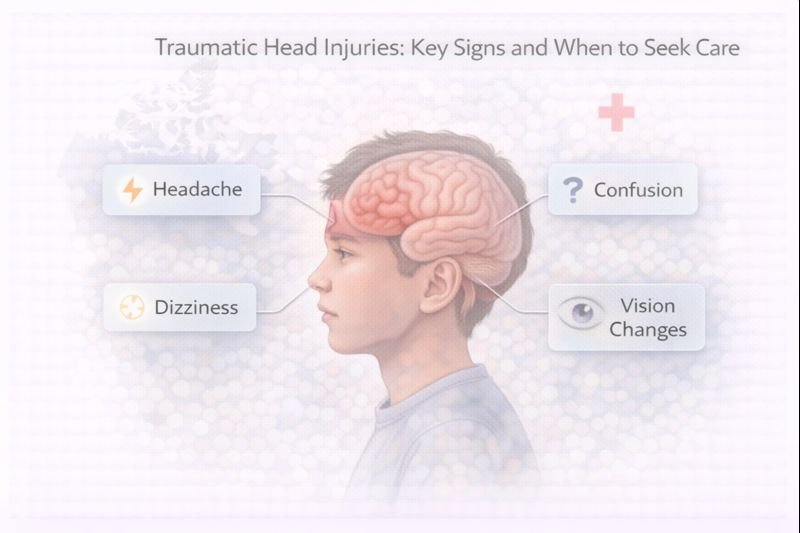
Traumatic Head Injuries: Key Signs, Severity & When to Seek Care

Head injuries are common across all age groups, particularly in sports, cycling, recreational falls and motor vehicle incidents. In Canada, thousands of assessments for traumatic brain injury (TBI) occur annually, with a portion requiring hospitalization and neurological monitoring. A head injury may involve an open injury (fracture of the skull) or a closed injury. In

Traumatic Head Injuries: Key Signs, Severity & When to Seek Care Read More »

caring through fever at night

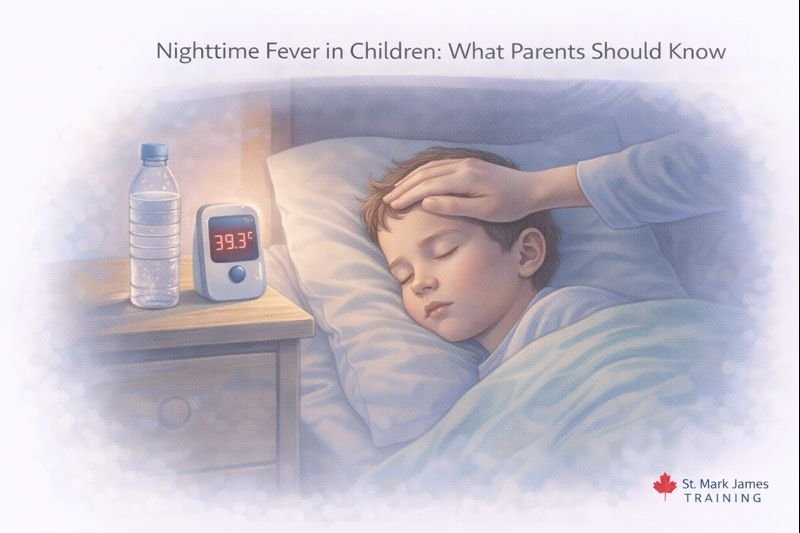
Nighttime Fever in Children: What Parents Should Know (Canada-Focused Guide)

Nighttime fever in children can be worrying for parents, especially when symptoms appear suddenly. In many cases, fever is caused by a viral infection, and rest, hydration, and monitoring are all that is required. Knowing when to observe at home versus when to seek care is an important confidence skill for caregivers across Canada. Educational

Nighttime Fever in Children: What Parents Should Know (Canada-Focused Guide) Read More »

Tennis forearm and wrist injury guide

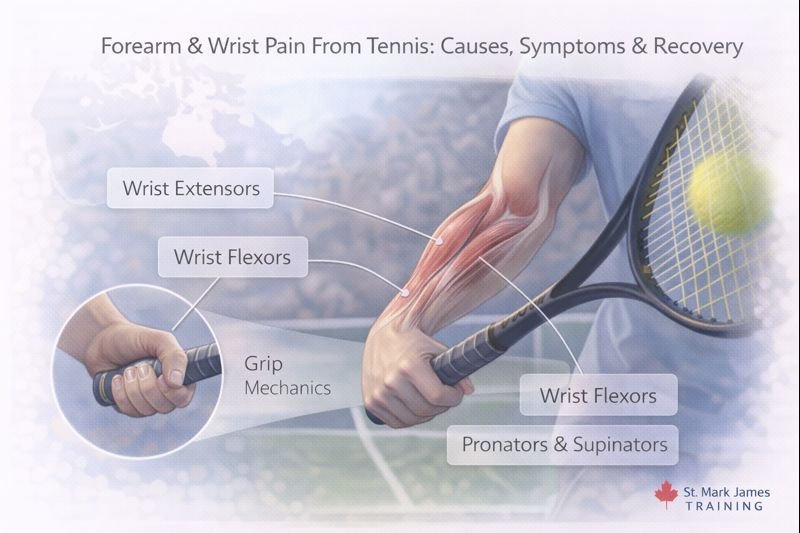
Forearm & Wrist Pain From Tennis: Causes, Symptoms & Recovery (Canada)

Forearm and wrist discomfort are common among recreational and competitive tennis players. How the racquet is gripped, how the forehand/backhand are performed, and the physical demands of the sport all influence the likelihood of overuse injuries. These injuries typically affect the tendons and muscles that stabilize the wrist and forearm. Although most cases can be

Forearm & Wrist Pain From Tennis: Causes, Symptoms & Recovery (Canada) Read More »

Distal biceps tendon rupture explained

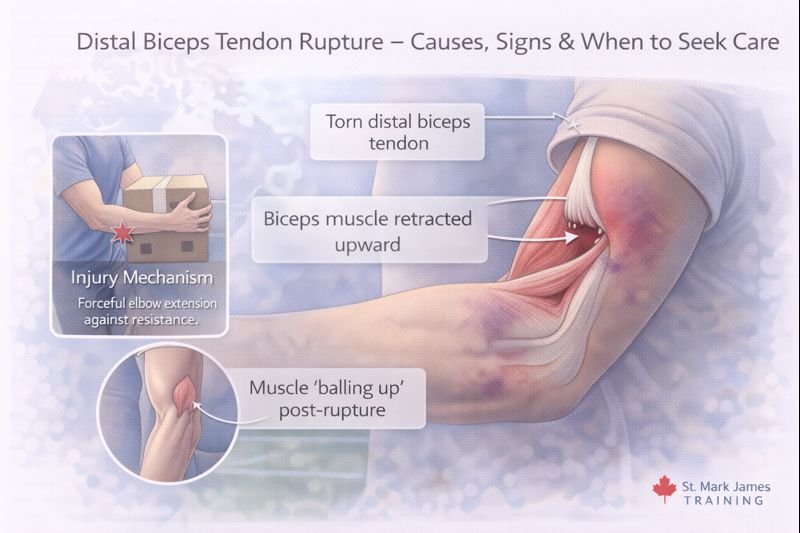
Distal Biceps Tendon Rupture — Causes, Signs & When to Seek Care (Canada)

The distal biceps tendon is a strong band of connective tissue that links the lower portion of the biceps muscle to the bones of the elbow. When the arm forcefully straightens against resistance—commonly during heavy lifting, catching a falling object, or intense sports—the tendon can partially or completely rupture. Although this injury is uncommon, it

Distal Biceps Tendon Rupture — Causes, Signs & When to Seek Care (Canada) Read More »

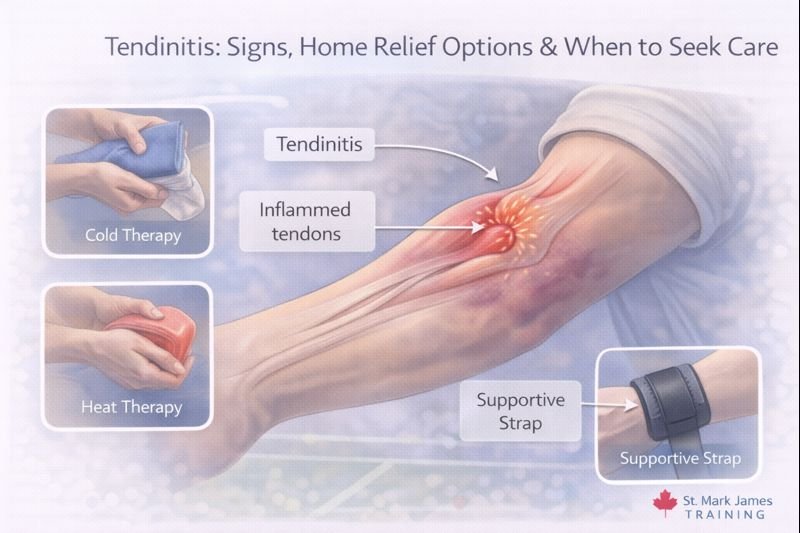
Tendinitis home relief options and treatments

Tendinitis: Signs, Home Relief Options & When to Seek Care (Canada)

Tendinitis occurs when a tendon (the connective tissue that links muscle to bone) becomes irritated or inflamed. Although almost any tendon can be affected, the most common areas include the shoulder, elbow, wrist, knee, ankle, and thumb. For many Canadians, tendinitis develops from repetitive work tasks, household activities, racquet sports, or strength training. Early recognition

Tendinitis: Signs, Home Relief Options & When to Seek Care (Canada) Read More »

Shopping Cart
Scroll to Top