Poisons

Botulism from canned foods infographic

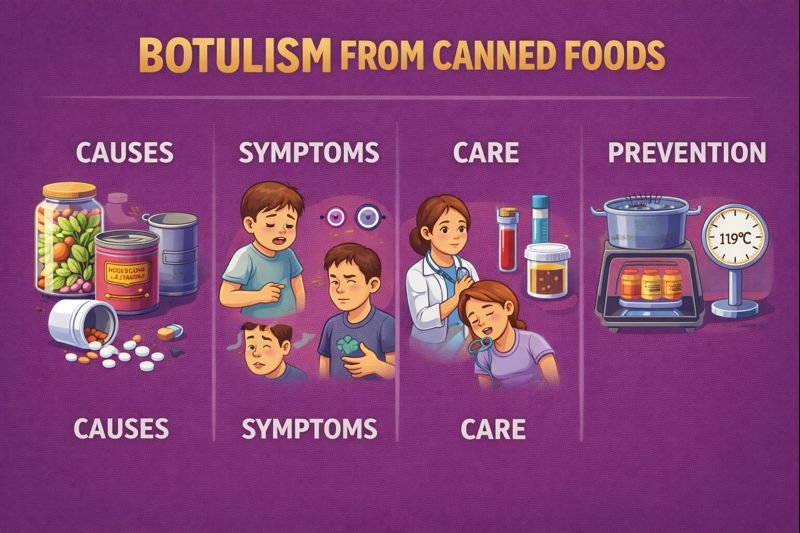
Botulism & Canned Food Safety: Symptoms, First Aid Awareness & Prevention (Canada)

Botulism is a rare but serious foodborne illness caused by toxins produced by Clostridium botulinum. Although many cases are linked with improperly processed canned or jarred foods, botulism can occur in a variety of settings where food is stored or handled without enough oxygen. Why it matters in Canada & food-handling workplaces Botulism is uncommon, […]

Botulism & Canned Food Safety: Symptoms, First Aid Awareness & Prevention (Canada) Read More »
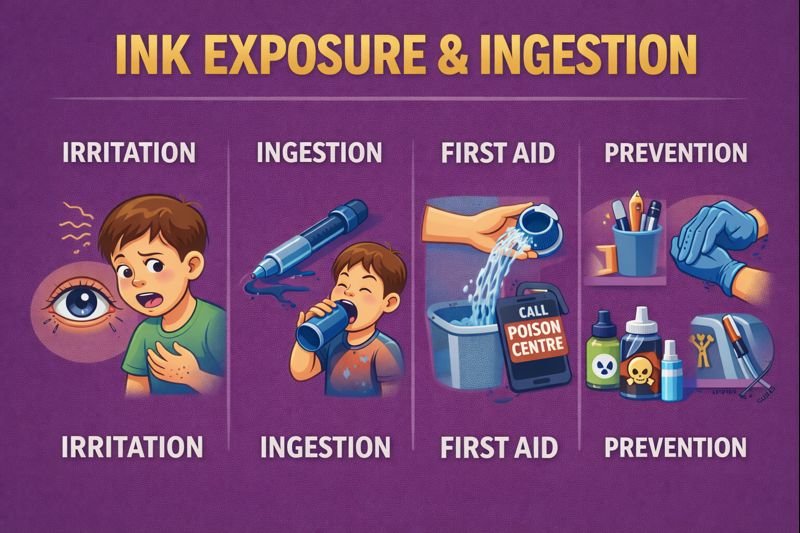
Ink exposure and ingestion safety tips

Ink Exposure & Ingestion: Irritation, First Aid Awareness & Safety Education (Canada)

Small amounts of household pen ink are generally considered low-risk. Most accidental ink exposures involve leaks from pens, markers, school supplies, or brief contact with the mouth or skin. In these situations, irritation is more common than poisoning. Relevance in Canadian homes & workplaces Ink exposure occurs in childcare, schools, offices, industrial settings, and long-term

Ink Exposure & Ingestion: Irritation, First Aid Awareness & Safety Education (Canada) Read More »

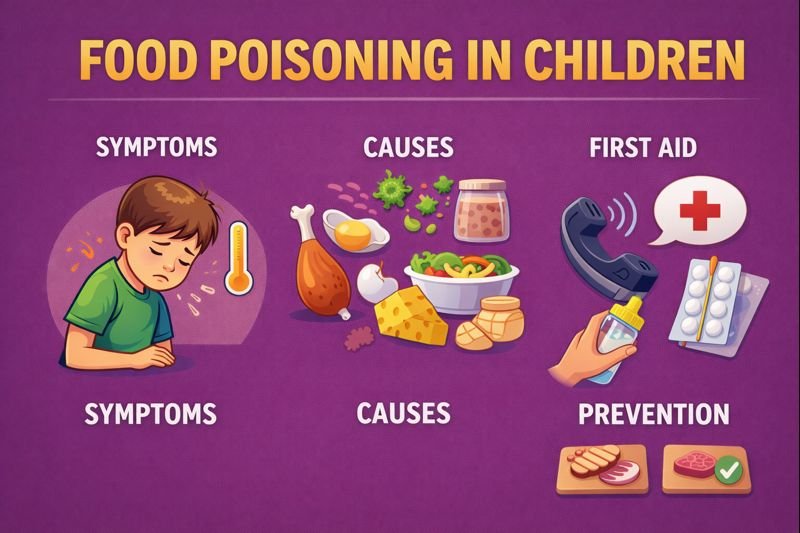
Food Poisoning in Young Children: Signs, First Aid Awareness & Prevention (Canada)

Food poisoning occurs when bacteria, viruses, or toxins contaminate food. While people of all ages can be affected, young children are more likely to become dehydrated or unwell because of their smaller body size and limited ability to explain symptoms. Why it matters in Canada & everyday settings Foodborne illnesses can occur at home, in

Food Poisoning in Young Children: Signs, First Aid Awareness & Prevention (Canada) Read More »
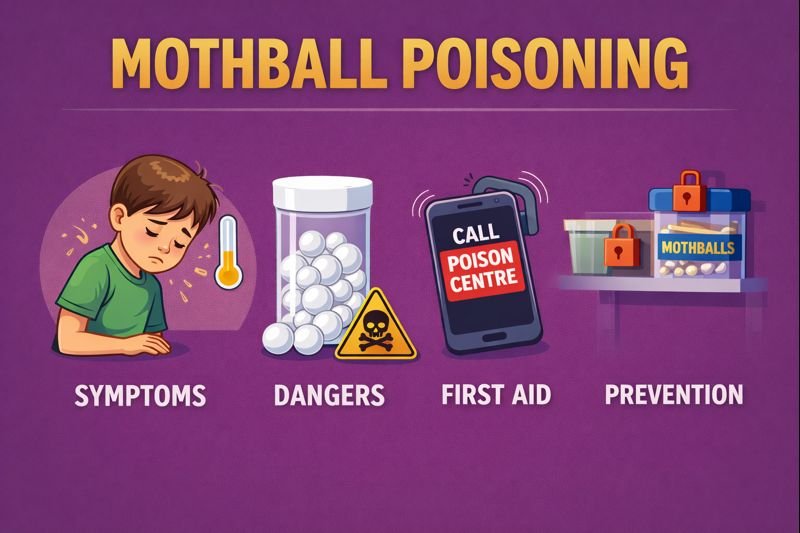
Mothball poisoning know the risks

Mothball Exposure and Accidental Ingestion: Signs, First Aid Awareness & Safety Education (Canada)

Mothballs are commonly used to protect fabrics from pests. They may contain chemicals such as naphthalene or paradichlorobenzene, both of which can be harmful if swallowed, inhaled, or handled in significant amounts. Accidental ingestion is most often reported among young children due to curiosity. Relevance to Canadian homes & workplaces Mothballs are found in homes,

Mothball Exposure and Accidental Ingestion: Signs, First Aid Awareness & Safety Education (Canada) Read More »

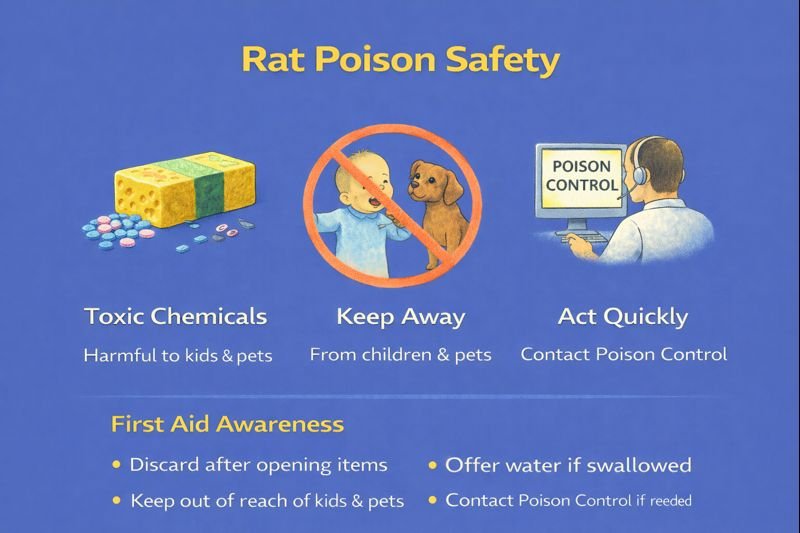
Rat poison safety tips infographic

Rat Poisons: Household Awareness, Risks & First Aid Context (Canada)

Rat poisons (rodenticides) are designed to kill rodents. Because they are toxic chemicals, accidental exposures involving children and pets are a significant concern. Understanding how these products work, why they are dangerous, and what actions are recommended in suspected exposures can improve household and workplace safety. First Aid & Household Relevance  Rodenticides are sometimes used

Rat Poisons: Household Awareness, Risks & First Aid Context (Canada) Read More »

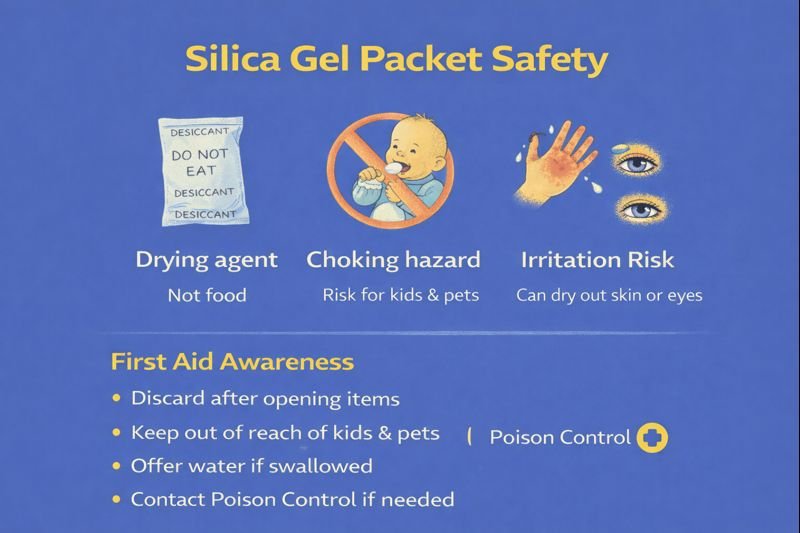
Silica gel packet safety guide

Silica Gel Packets: Safety, Exposure & First Aid Awareness (Canada)

Silica gel packets are commonly found in items such as shoes, bags, vitamins, electronics and packaged goods. Their purpose is to absorb moisture and protect products from damage due to humidity. Although silica gel is considered non-toxic, packets can still pose hazards—especially as choking risks for young children or pets. First Aid & Household Relevance

Silica Gel Packets: Safety, Exposure & First Aid Awareness (Canada) Read More »

food poisoning

Food poisoning signs and symptoms

When it comes to bacterial food poisoning, the signs and symptoms typically include digestive system complaints and usually start in just a few hours after eating the contaminated food. Nevertheless, it can also take up to a few days to start, depending on the bacteria present. Signs and symptoms These are the signs and symptoms

Food poisoning signs and symptoms Read More »

Household poisons and first aid tips

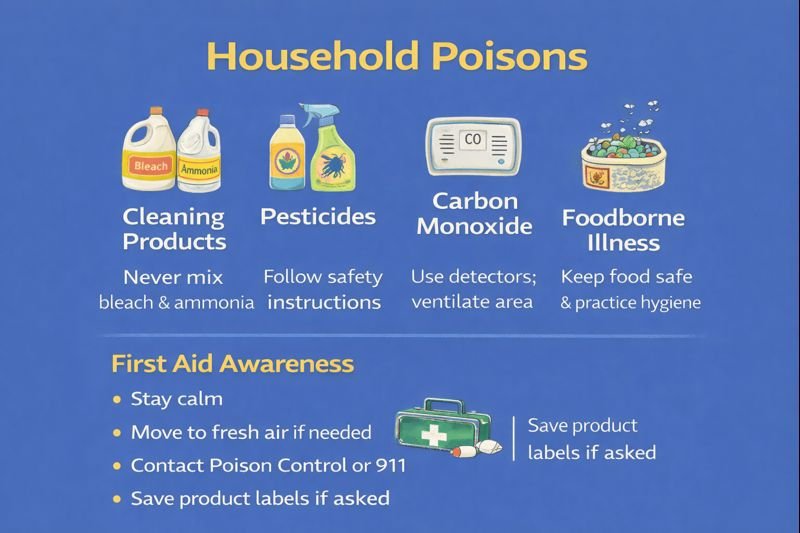
Common Household Poisons: Awareness, Safety & First Aid Considerations 

Many everyday products are useful when handled properly but harmful when misused, mixed, or inhaled. Awareness helps prevent accidental poisonings at home, in workplaces, and around children or pets. First Aid & Workplace Relevance Canadian homes, garages, workshops, and vehicles may store cleaning supplies, fuels, pesticides, and other chemicals. Workplaces—especially childcare settings, schools, salons, cleaning

Common Household Poisons: Awareness, Safety & First Aid Considerations  Read More »

Shopping Cart
Scroll to Top