First aid tips for cuts and wounds

First Aid Awareness for Cuts, Minor Wounds & Nosebleeds (Canada)

First Aid Awareness for Cuts, Minor Wounds & Nosebleeds (Canada) Small cuts, scrapes, punctures, and nosebleeds are common injuries at home, school, and in the workplace. Basic first aid awareness can help manage minor injuries and identify when professional care is needed. Why it matters in Canadian homes & workplaces Canadians experience minor injuries during […]

First Aid Awareness for Cuts, Minor Wounds & Nosebleeds (Canada) Read More »
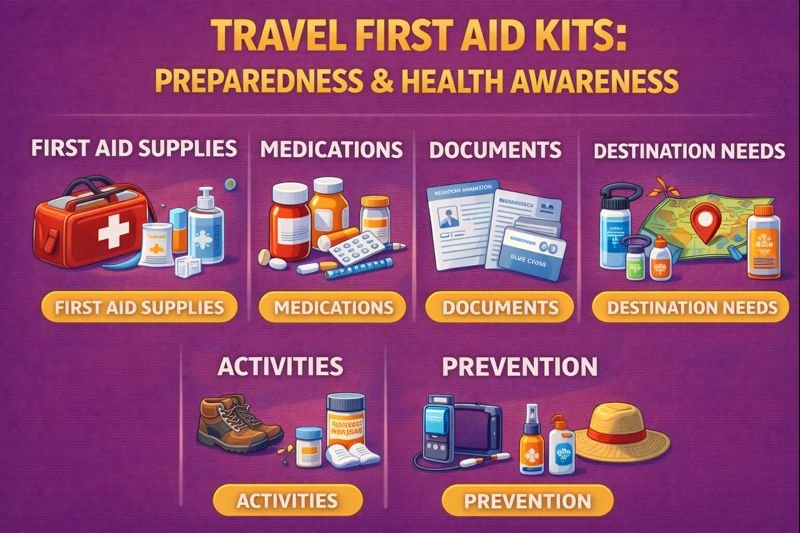
Travel first aid kit essentials

Travel First Aid Kits: Preparedness, Safety & Health Awareness (Canada)

Travel First Aid Kits: Preparedness, Safety & Health Awareness  Whether travelling across Canada or abroad, first aid awareness helps families respond to minor injuries and health concerns away from home. Travel adds variables such as climate, food changes, outdoor activities, limited supplies, and unfamiliar medical systems. A travel first aid kit helps you stay prepared

Travel First Aid Kits: Preparedness, Safety & Health Awareness (Canada) Read More »

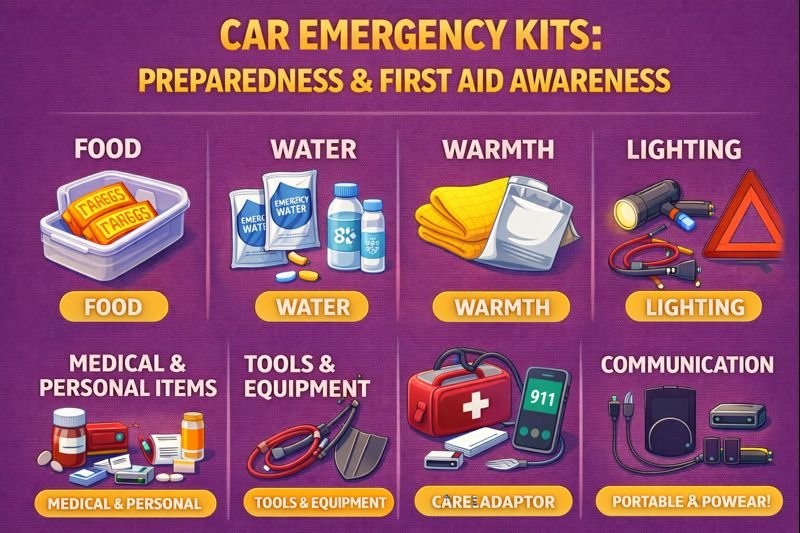
Emergency car kit essentials infographic

Car Emergency Kits: Preparedness, Safety & First Aid Awareness

Car Emergency Kits: Preparedness, Safety & First Aid Awareness  Being prepared on the road is an important part of first aid and safety. Even well-maintained vehicles can experience breakdowns, bad weather, or limited cell coverage. A car emergency kit helps support your comfort and safety until help arrives. Why it matters in Canada & workplaces

Car Emergency Kits: Preparedness, Safety & First Aid Awareness Read More »

Dehydration causes, symptoms and first aid

Dehydration: Causes, Symptoms, First Aid Awareness & Prevention (Canada)

Dehydration: Causes, Symptoms, First Aid Awareness & Prevention (Canada) Dehydration occurs when the body loses more fluids than it takes in. Water is essential for organs, tissues, and cells to function. When fluids are not replaced, dehydration can develop and range from mild to more serious. Why it matters in Canada & workplaces Dehydration can

Dehydration: Causes, Symptoms, First Aid Awareness & Prevention (Canada) Read More »

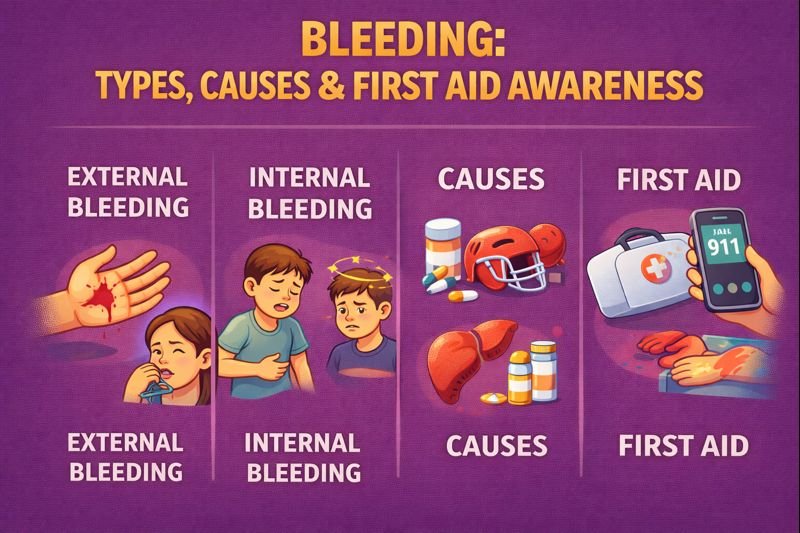
Bleeding types and first aid guide

Bleeding: Types, Causes, First Aid Awareness & When to Seek Help (Canada)

Bleeding: Types, Causes, First Aid Awareness & When to Seek Help (Canada) Bleeding refers to the loss of blood. It may occur externally (from an opening in the skin or natural body opening) or internally (when blood collects within tissues or body spaces due to damage to a vessel or organ). Mild bleeding from small

Bleeding: Types, Causes, First Aid Awareness & When to Seek Help (Canada) Read More »

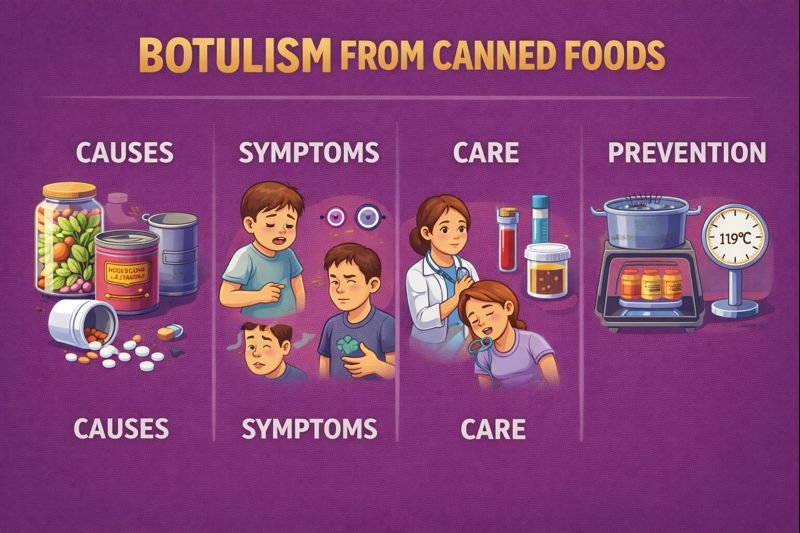
Botulism from canned foods infographic

Botulism & Canned Food Safety: Symptoms, First Aid Awareness & Prevention (Canada)

Botulism & Canned Food Safety: Symptoms, First Aid Awareness & Prevention (Canada) Botulism is a rare but serious foodborne illness caused by toxins produced by Clostridium botulinum. Although many cases are linked with improperly processed canned or jarred foods, botulism can occur in a variety of settings where food is stored or handled without enough

Botulism & Canned Food Safety: Symptoms, First Aid Awareness & Prevention (Canada) Read More »

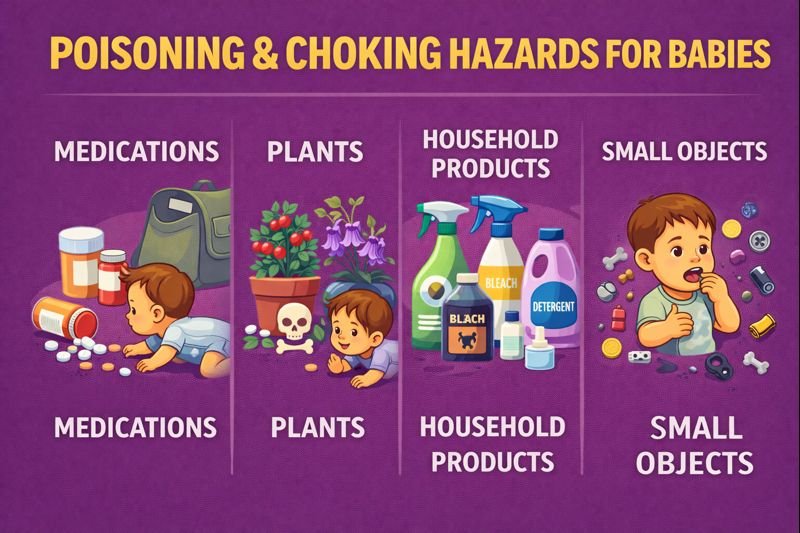
Poisoning & Choking Hazards for Babies: Household Safety Awareness (Canada)

Poisoning & Choking Hazards for Babies: Household Safety Awareness  Babies explore the world through touch and taste, and they often place objects in their mouths. As infants become mobile, they can access items on floors, tables, furniture, purses, and cupboards, increasing the risk of both poisoning and choking. Children under age three are at higher

Poisoning & Choking Hazards for Babies: Household Safety Awareness (Canada) Read More »

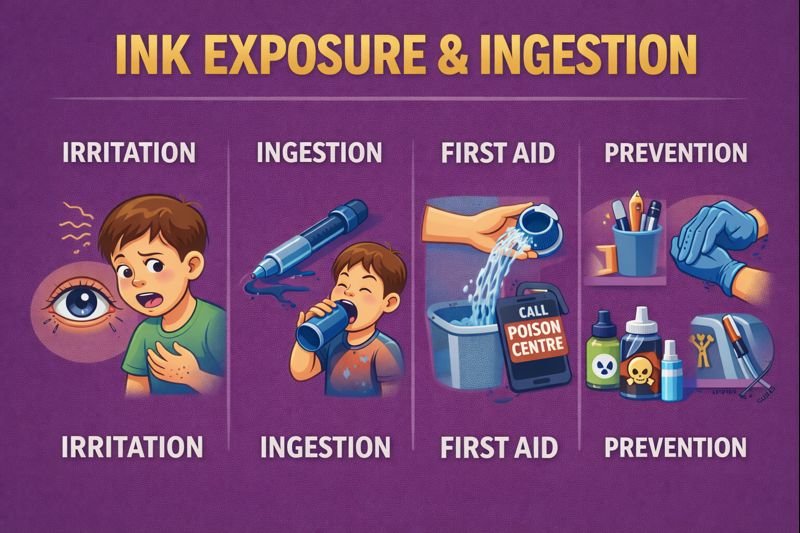
Ink exposure and ingestion safety tips

Ink Exposure & Ingestion: Irritation, First Aid Awareness & Safety Education (Canada)

Ink Exposure & Ingestion: Irritation, First Aid Awareness & Safety Education (Canada) Small amounts of household pen ink are generally considered low-risk. Most accidental ink exposures involve leaks from pens, markers, school supplies, or brief contact with the mouth or skin. In these situations, irritation is more common than poisoning. Relevance in Canadian homes &

Ink Exposure & Ingestion: Irritation, First Aid Awareness & Safety Education (Canada) Read More »

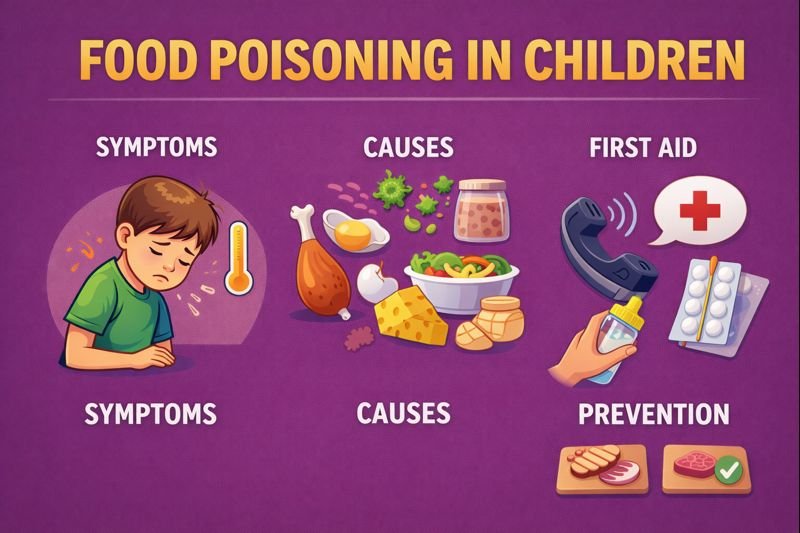
Food Poisoning in Young Children: Signs, First Aid Awareness & Prevention (Canada)

Food Poisoning in Young Children: Signs, First Aid Awareness & Prevention (Canada) Food poisoning occurs when bacteria, viruses, or toxins contaminate food. While people of all ages can be affected, young children are more likely to become dehydrated or unwell because of their smaller body size and limited ability to explain symptoms. Why it matters

Food Poisoning in Young Children: Signs, First Aid Awareness & Prevention (Canada) Read More »

Mothball poisoning know the risks

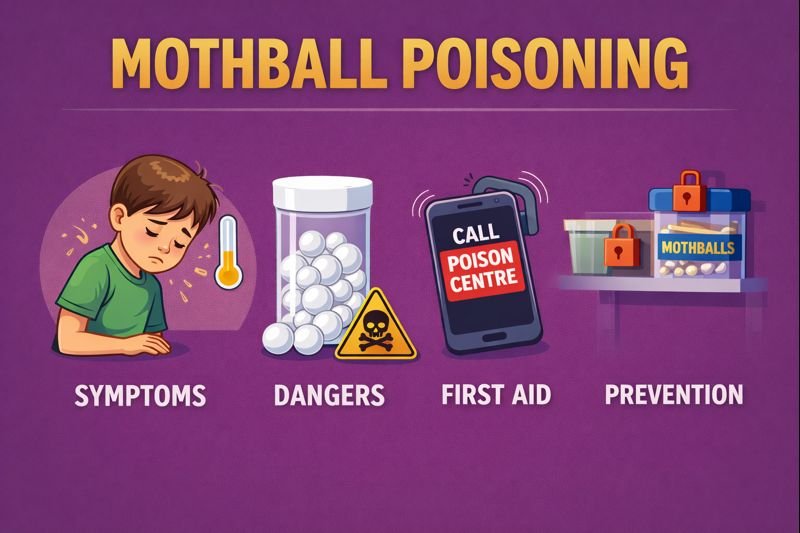
Mothball Exposure and Accidental Ingestion: Signs, First Aid Awareness & Safety Education (Canada)

Mothball Exposure and Accidental Ingestion: Signs, First Aid Awareness & Safety Education (Canada) Mothballs are commonly used to protect fabrics from pests. They may contain chemicals such as naphthalene or paradichlorobenzene, both of which can be harmful if swallowed, inhaled, or handled in significant amounts. Accidental ingestion is most often reported among young children due

Mothball Exposure and Accidental Ingestion: Signs, First Aid Awareness & Safety Education (Canada) Read More »

Shopping Cart
Scroll to Top