S. Black

Sam Black is an article writer specializing on various health and medical topics, specifically first aid and CPR. As a registered nurse with a few years of experience in the field, he eagerly shares his knowledge on first aid, CPR and other associated topics to others through his writing. Sharing basic and important facts on first aid care can keep others well-informed on what to do during emergencies. Whether at home, school or in the workplace, being familiar even with basic measures can make a difference. By spending several years on focusing on health-related topics, he is a good provider of health-related articles published in various websites.

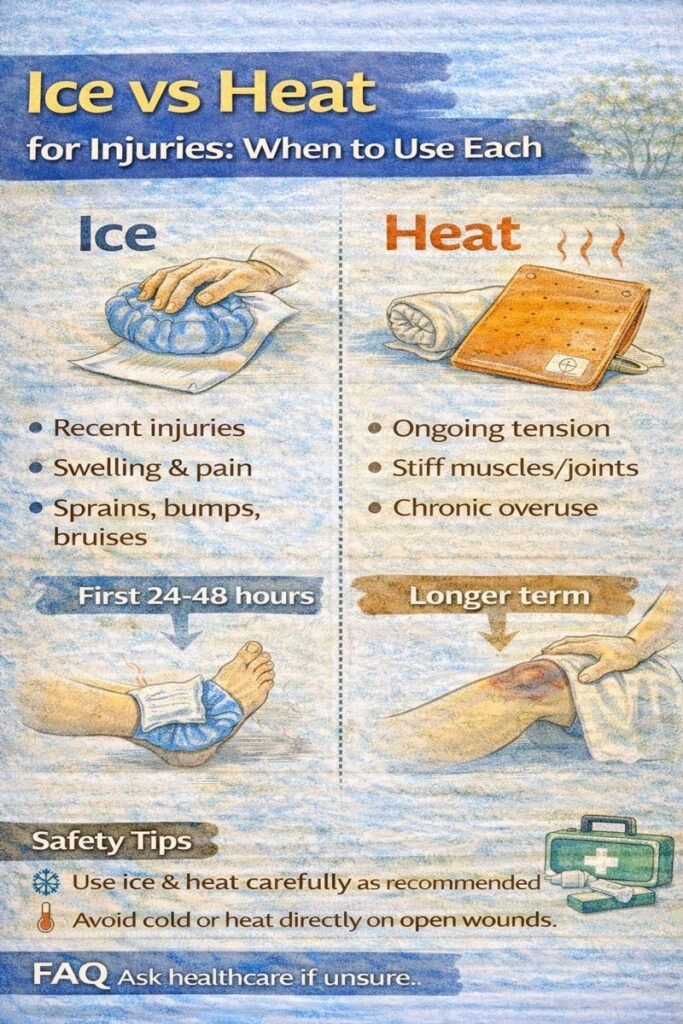
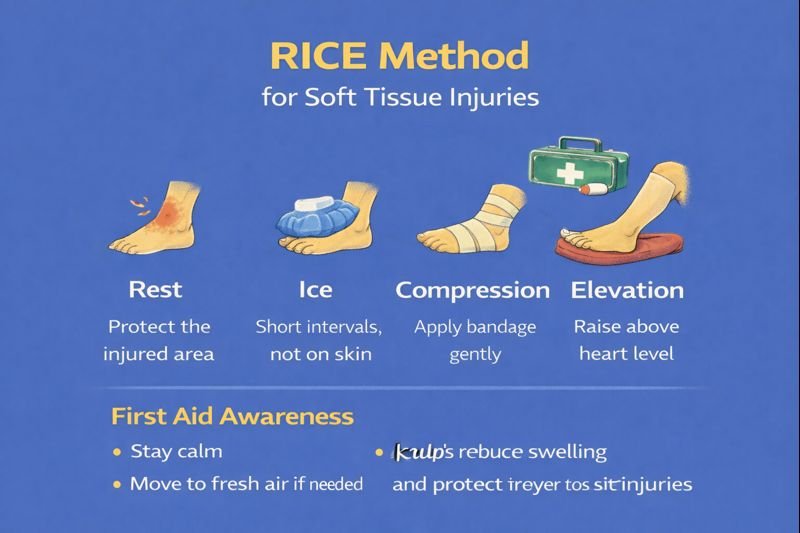
RICE method for soft tissue injuries

RICE Method for Soft Tissue Injuries: First Aid Awareness (Canada)

Soft tissue injuries such as sprains, strains, or bruises are common in daily activities, sports, and physical work. Early first aid can support comfort and help protect the injured area while the body begins to repair damaged tissue. First Aid & Workplace Relevance In schools, sports programs, and workplaces with physical tasks (construction, warehouses, recreation […]

RICE Method for Soft Tissue Injuries: First Aid Awareness (Canada) Read More »
Household poisons and first aid tips

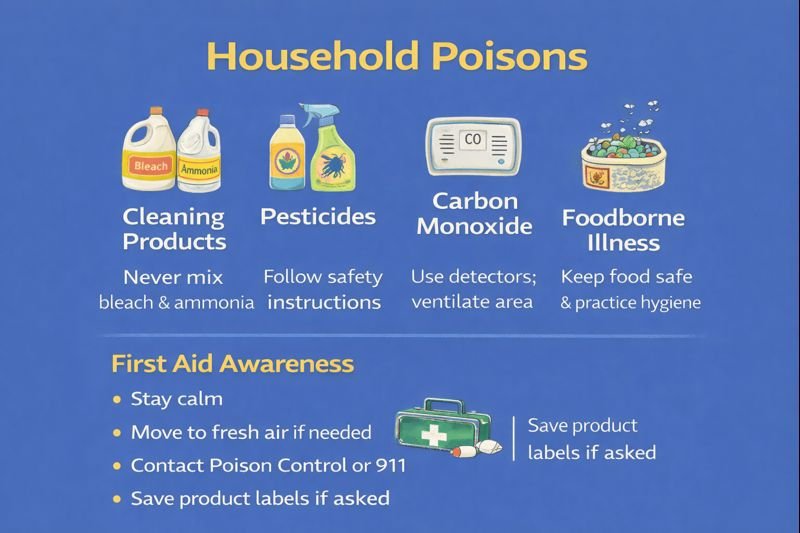
Common Household Poisons: Awareness, Safety & First Aid Considerations 

Many everyday products are useful when handled properly but harmful when misused, mixed, or inhaled. Awareness helps prevent accidental poisonings at home, in workplaces, and around children or pets. First Aid & Workplace Relevance Canadian homes, garages, workshops, and vehicles may store cleaning supplies, fuels, pesticides, and other chemicals. Workplaces—especially childcare settings, schools, salons, cleaning

Common Household Poisons: Awareness, Safety & First Aid Considerations  Read More »

Heart attack symptoms & first aid guide

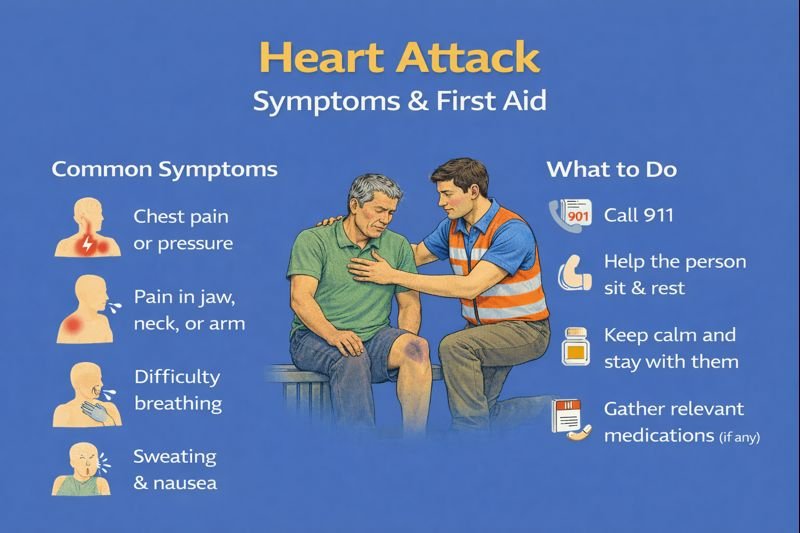
Heart Attacks: Recognizing Symptoms & First Aid Awareness (Canada)

Heart Attacks: Recognizing Symptoms & First Aid Awareness (Canada) A heart attack occurs when oxygen-rich blood to the heart becomes blocked, preventing the heart muscle from getting the oxygen it needs. Without rapid care, heart tissue can become damaged. Heart attacks are a major health concern worldwide, but survival improves greatly when symptoms are recognized

Heart Attacks: Recognizing Symptoms & First Aid Awareness (Canada) Read More »
Bruise care and healing guide

Bruises (Contusions): Types, First Aid Awareness & Healing Timeline (Canada)

A bruise (contusion) forms when tiny blood vessels under the skin break after an impact or injury, causing discoloration and tenderness. Bruises are common in sports, recreation, day-to-day bumps, and workplace activities involving injury, tools or equipment. First Aid & Workplace Relevance Bruises are frequent in sports programs, schools, physical jobs, and active households. Awareness

Bruises (Contusions): Types, First Aid Awareness & Healing Timeline (Canada) Read More »

Puncture wounds first aid guide

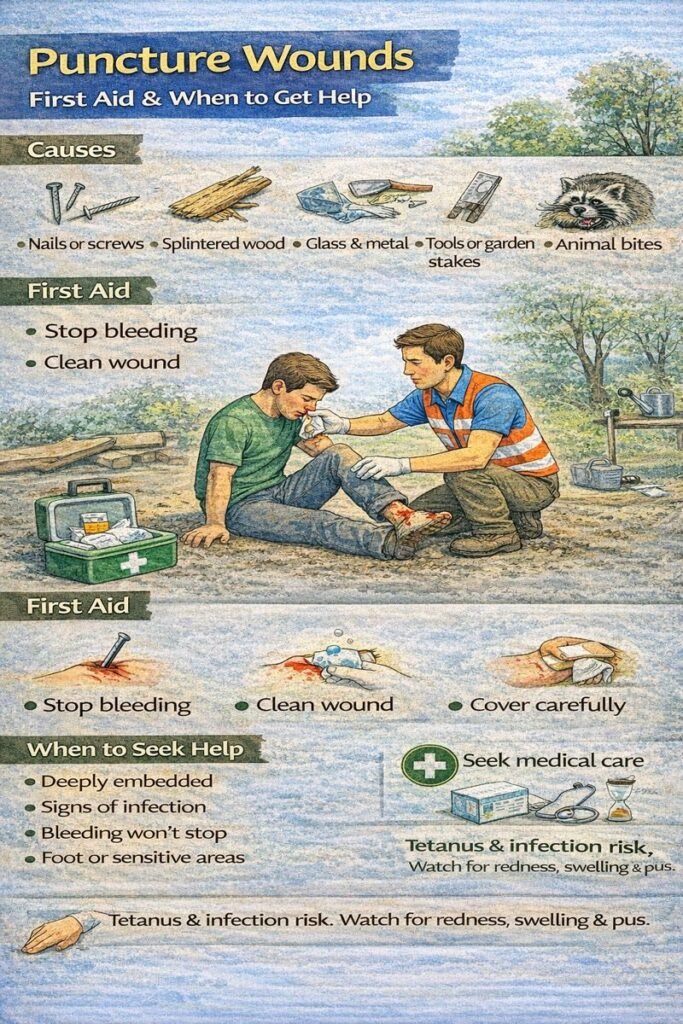
Puncture Wounds: First Aid Awareness, Infection Risk & When to Seek Care (Canada)

Puncture wounds occur when a sharp object pierces the skin, creating a small surface opening but sometimes a deeper pathway beneath. Even when they look minor, puncture wounds can carry dirt or bacteria into deeper tissues, making infection a key concern. First Aid & Workplace Relevance Puncture wounds are common in workplaces involving tools, timber,

Puncture Wounds: First Aid Awareness, Infection Risk & When to Seek Care (Canada) Read More »

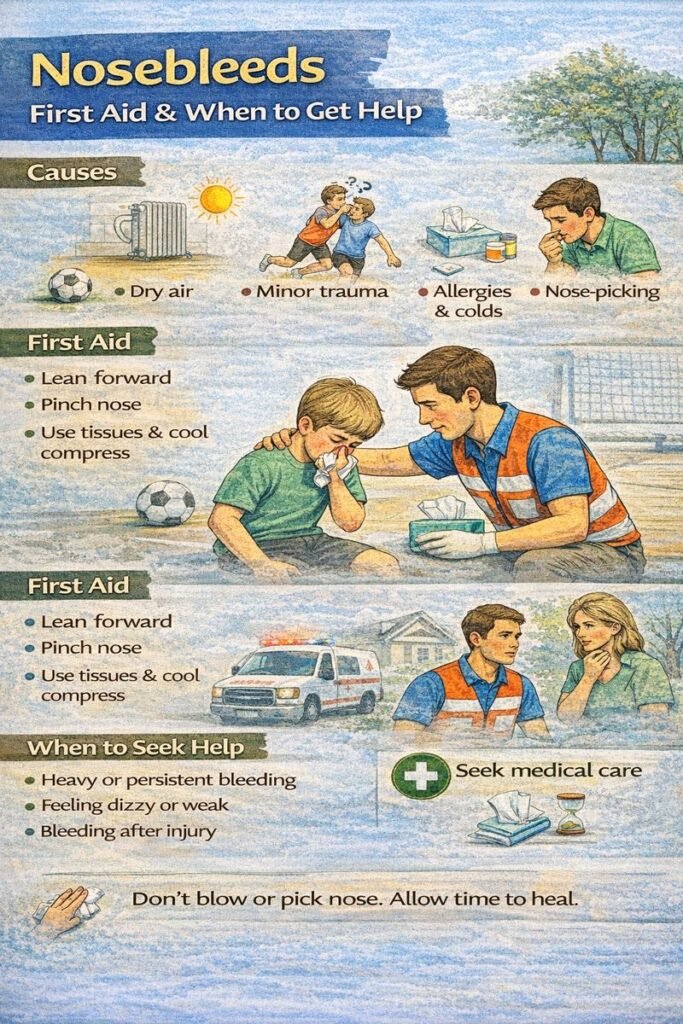
Nosebleeds (Epistaxis): Causes, First Aid Awareness & When to Seek Help (Canada)

A nosebleed (epistaxis) can look dramatic, especially in children, but most are minor and stop on their own. Dry air, allergies, nose-picking, colds, and minor bumps are common causes. In adults, frequent or unexplained nosebleeds may be tied to underlying medical conditions, so follow-up with a healthcare professional can be helpful. First Aid & Workplace

Nosebleeds (Epistaxis): Causes, First Aid Awareness & When to Seek Help (Canada) Read More »

Medical emergencies know when to call

Recognizing Medical Emergencies: When to Call for Help (Canada)

Many people hesitate to call for emergency assistance because they worry their symptoms are “not serious enough.” In reality, early action can prevent a condition from worsening. When faced with uncertainty, it is generally safer to seek help than to wait. First Aid & Workplace Relevance Canadian workplaces, schools, recreation centres, and public venues often

Recognizing Medical Emergencies: When to Call for Help (Canada) Read More »

Shopping Cart
Scroll to Top