Muscular Injuries

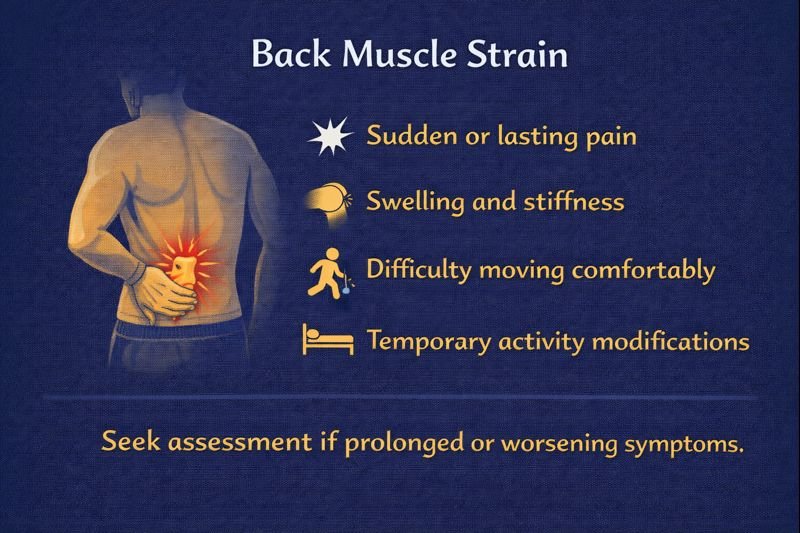
Back muscle strain symptoms explained

Back Muscle Strain: Awareness, Symptoms & Activity Considerations

Back Muscle Strain: Awareness, Symptoms & Activity Considerations A back muscle strain happens when muscles or tendons in the back are overstretched or irritated. Strains commonly affect the lower back and can temporarily interfere with work, school, sports, and daily activities. Most cases are mild to moderate, but some can cause prolonged discomfort or mobility […]

Back Muscle Strain: Awareness, Symptoms & Activity Considerations Read More »
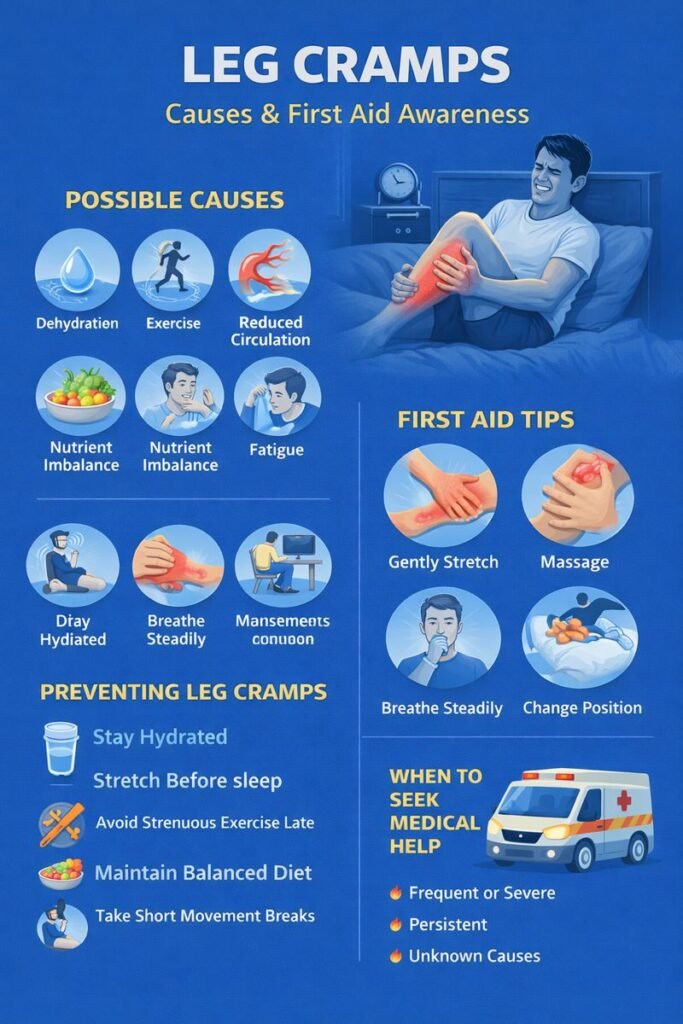
Leg cramps causes and prevention tips

Leg Cramps: Causes, Triggers, and First Aid Awareness

Leg Cramps: Causes, Triggers, and First Aid Awareness Leg cramps involve sudden, involuntary tightening of leg muscles—most often the calves, but sometimes the quadriceps or hamstrings. Cramps can last from a few seconds to several minutes and are often painful, especially when they occur during sleep. Everyday and workplace relevance (Canada) Leg cramps can affect

Leg Cramps: Causes, Triggers, and First Aid Awareness Read More »

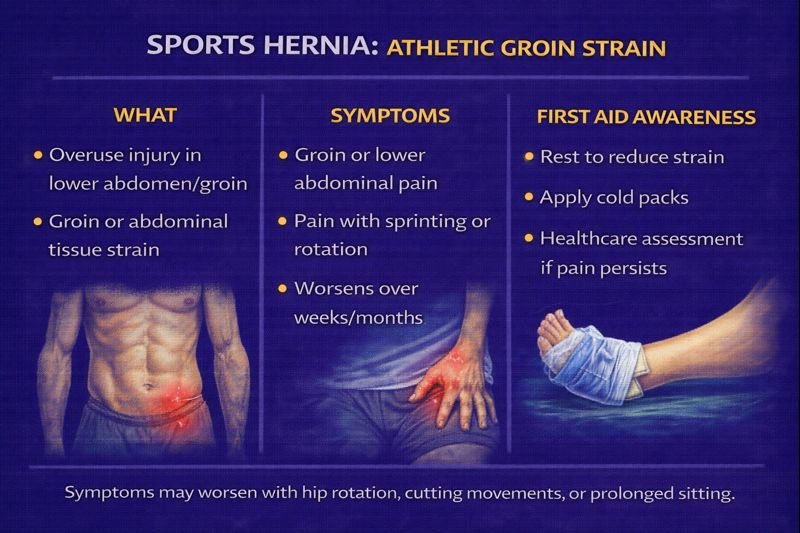
Sports hernia and athletic groin strain guide

Sports Hernia (Athletic Groin Strain): Symptoms, Causes & First Aid Awareness

Sports Hernia (Athletic Groin Strain): Symptoms, Causes & First Aid Awareness A sports hernia is a term used to describe pain in the lower abdomen or upper groin. Despite its name, it does not always involve a visible hernia. Instead, the injury often affects the deep tissues, muscles, and tendons in the pelvic and abdominal

Sports Hernia (Athletic Groin Strain): Symptoms, Causes & First Aid Awareness Read More »

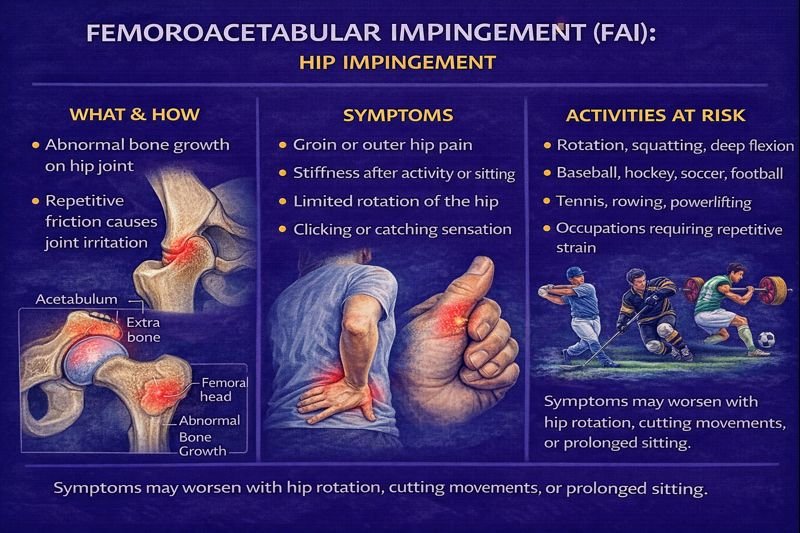
Hip impingement educational infographic

Femoroacetabular Impingement (FAI): Hip Impingement Awareness for Sports & Activity (Canada)

Femoroacetabular Impingement (FAI): Hip Impingement Awareness for Sports & Activity (Canada) What Is Femoroacetabular Impingement (FAI)? Femoroacetabular impingement (FAI), often called hip impingement, refers to abnormal contact between the ball (femoral head) and socket (acetabulum) of the hip joint. Over time, the repeated contact can irritate cartilage and the soft rim of the hip socket

Femoroacetabular Impingement (FAI): Hip Impingement Awareness for Sports & Activity (Canada) Read More »

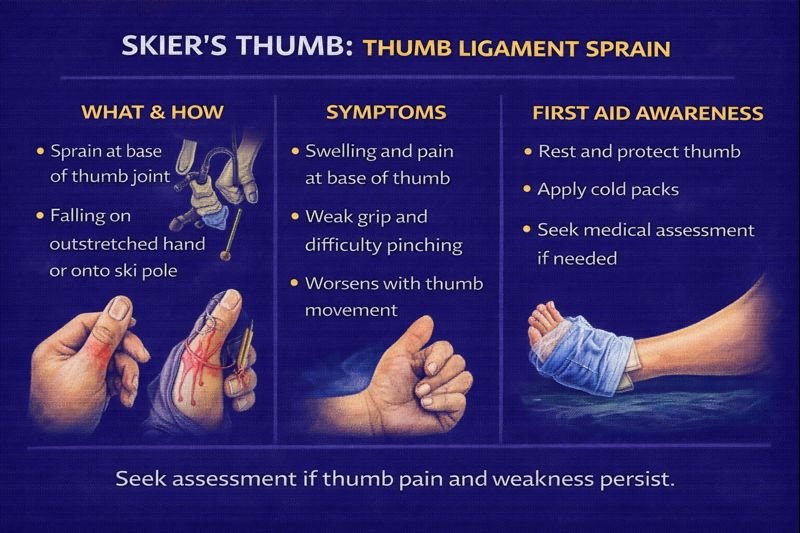
ski thumb

Skier’s Thumb: Ligament Sprain Awareness & First Aid Considerations (Canada)

Skier’s Thumb: Ligament Sprain Awareness & First Aid Considerations (Canada) What Is Skier’s Thumb? Skier’s thumb refers to a sprain of the ligament that stabilizes the thumb joint at the base of the thumb. This ligament plays an important role in gripping and pinching. The injury gained its name from downhill skiing but can occur

Skier’s Thumb: Ligament Sprain Awareness & First Aid Considerations (Canada) Read More »

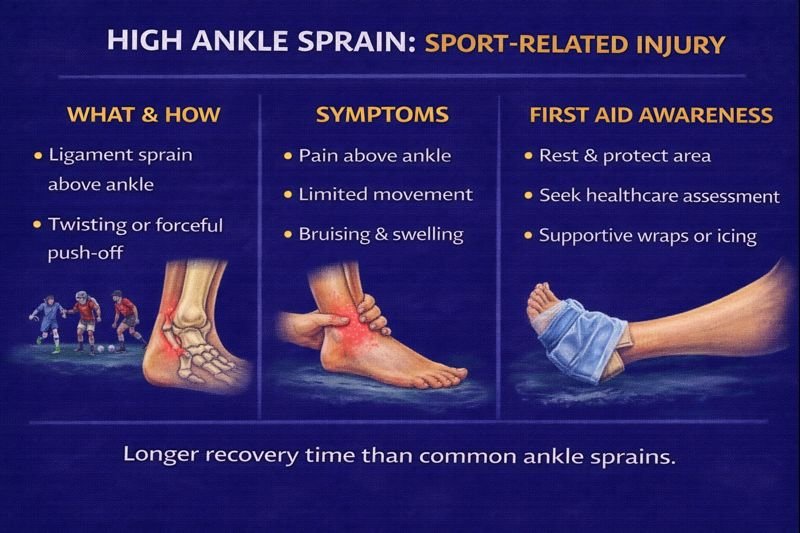
High ankle sprain educational guide

High Ankle Sprain: Sport-Related Injury Awareness & First Aid Considerations (Canada)

High Ankle Sprain: Sport-Related Injury Awareness & First Aid Considerations (Canada) What Is a High Ankle Sprain? A high ankle sprain involves the ligaments connecting the two long bones of the lower leg just above the ankle. These ligaments (the syndesmosis) help stabilize the ankle during running, pivoting, and jumping. Unlike the more common “low

High Ankle Sprain: Sport-Related Injury Awareness & First Aid Considerations (Canada) Read More »

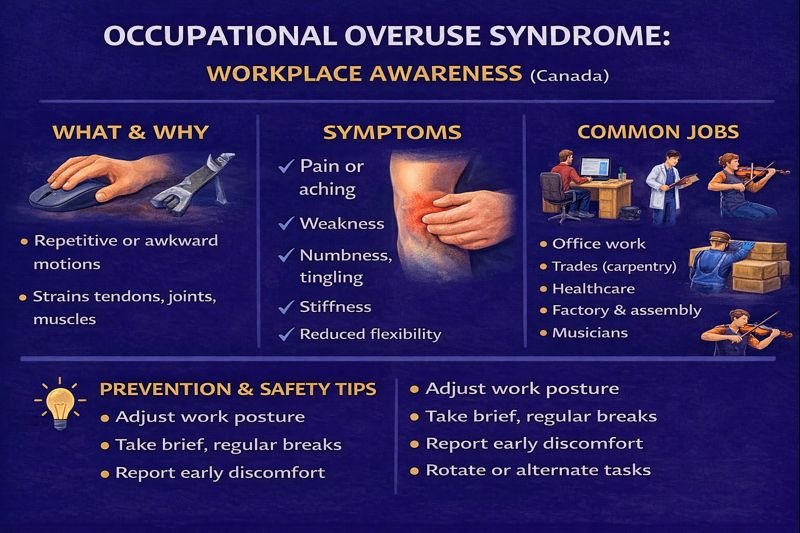
Occupational overuse syndrome prevention guide

Occupational Overuse Syndrome: Workplace Awareness & First Aid Considerations (Canada)

Occupational Overuse Syndrome: Workplace Awareness & First Aid Considerations (Canada) What Is Occupational Overuse Syndrome? Occupational overuse syndrome (sometimes called repetitive strain injury) refers to discomfort, irritation, or injury caused by repetitive movements, awkward postures, or prolonged positioning at work. It most commonly affects the hands, wrists, elbows, fingers, shoulders, and neck, but it can

Occupational Overuse Syndrome: Workplace Awareness & First Aid Considerations (Canada) Read More »

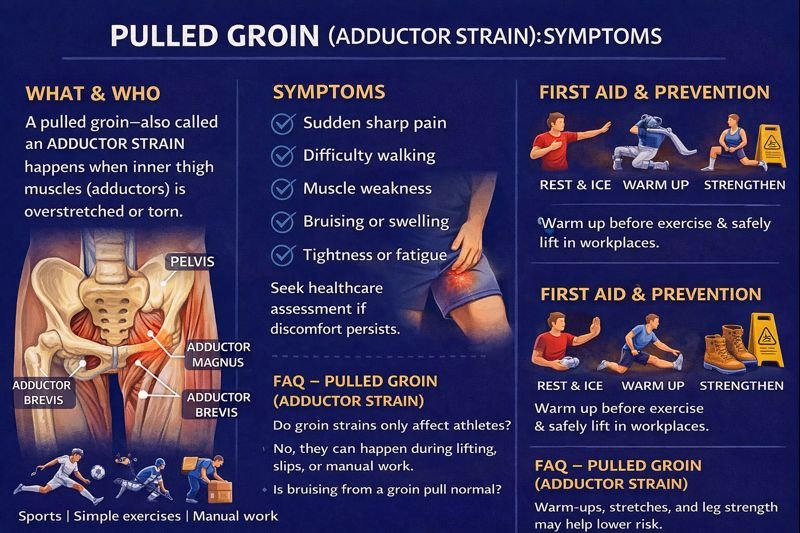
Pulled groin injury infographic

Pulled Groin (Adductor Strain): Symptoms, Causes & First Aid Awareness (Canada)

Pulled Groin (Adductor Strain): Symptoms, Causes & First Aid Awareness (Canada) What Is a Pulled Groin? A pulled groin—often called an adductor strain—happens when one of the muscles on the inner thigh (adductors) is overstretched or torn. These muscles connect the pelvis to the femur and help bring the legs together, stabilize the hips, and

Pulled Groin (Adductor Strain): Symptoms, Causes & First Aid Awareness (Canada) Read More »

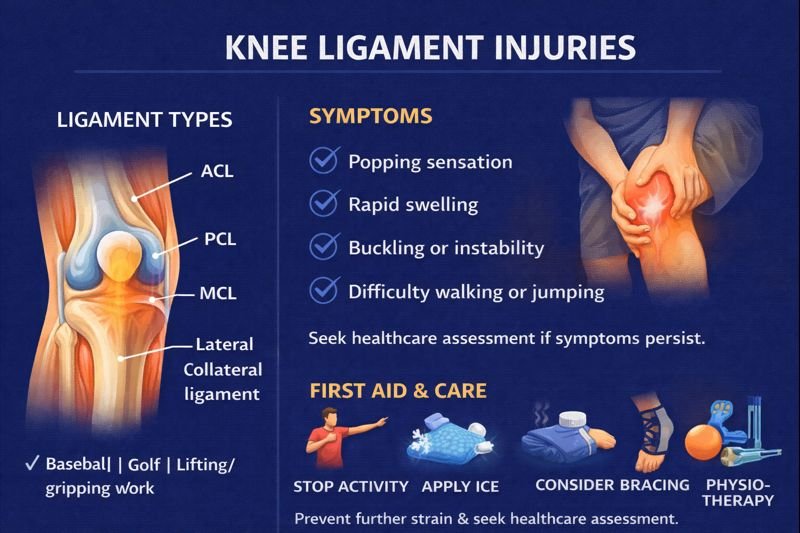
Knee ligament injuries symptoms and care

Symptoms of a torn knee ligament

Knee Ligament Injuries: Symptoms, Awareness & First Aid Considerations (Canada) What Are Knee Ligaments? The knee has four major ligaments that help keep it stable and allow controlled movement: Anterior Cruciate Ligament (ACL) Posterior Cruciate Ligament (PCL) Medial Collateral Ligament (MCL) Lateral Collateral Ligament (LCL) The cruciate ligaments (ACL & PCL) control forward-backward motion of

Symptoms of a torn knee ligament Read More »

Pitcher’s Elbow (Medial Epicondylitis): Symptoms, Causes & First Aid Awareness (Canada)

Pitcher’s Elbow (Medial Epicondylitis): Symptoms, Causes & First Aid Awareness (Canada) What Is Pitcher’s Elbow? Pitcher’s elbow—also called medial epicondylitis—is irritation of the tendons on the inside (medial side) of the elbow. These tendons help bend the wrist toward the palm. When stressed by repetitive activities or forceful motions, discomfort can develop and travel down

Pitcher’s Elbow (Medial Epicondylitis): Symptoms, Causes & First Aid Awareness (Canada) Read More »

Shopping Cart
Scroll to Top