Muscular Injuries

Canada Muscle Spasms

Muscle Spasms (Cramps) in Everyday Life: Causes, First Aid & Prevention for Canadians

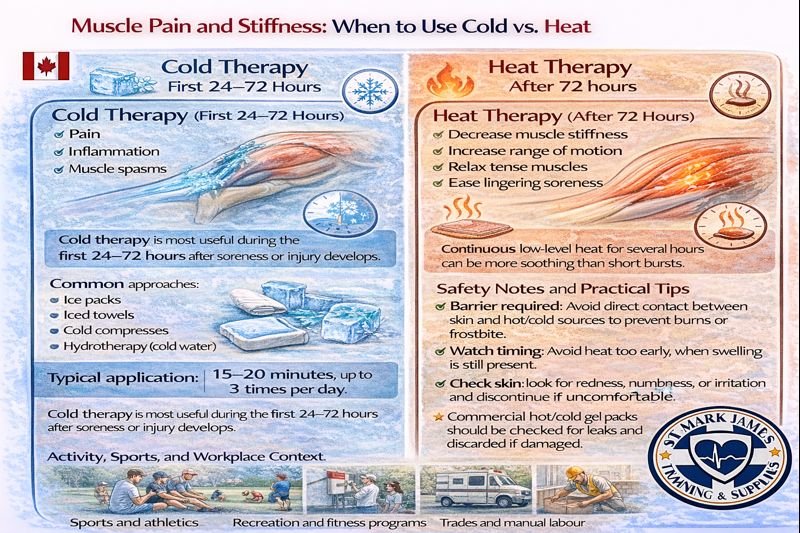
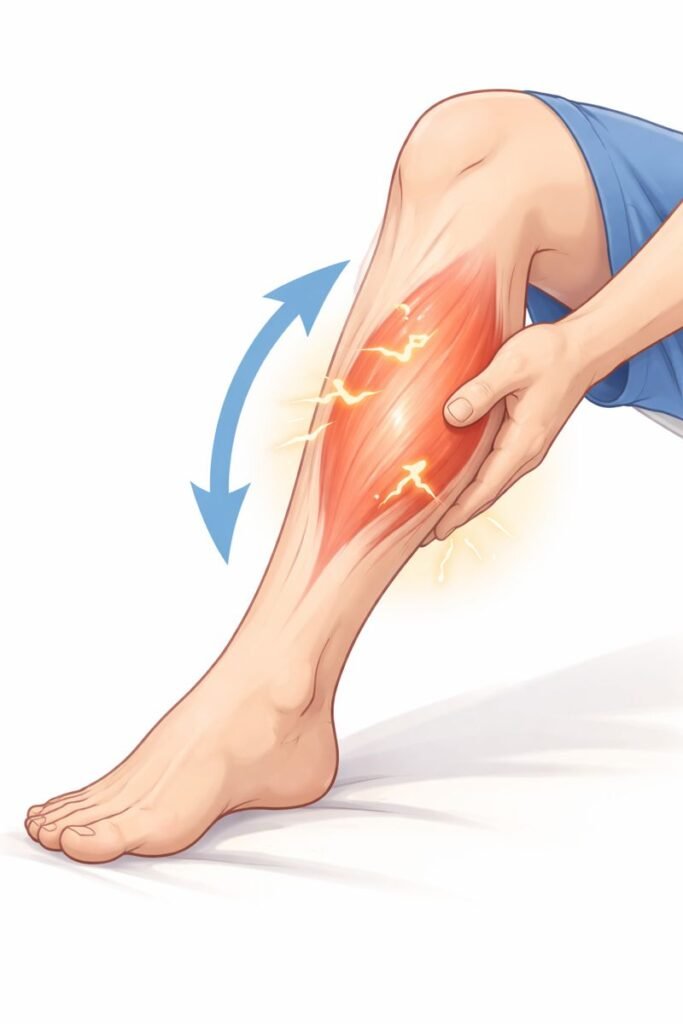
Muscle spasms — often called cramps — occur when muscles contract involuntarily and cannot relax immediately. They can appear during exercise, work, sleep, or rest, and range from small twitches to sudden tightness. Common areas include the calves, thighs, feet, hands, abdomen, ribcage, and arms. For many Canadians, cramps are temporary, but they can interrupt […]

Muscle Spasms (Cramps) in Everyday Life: Causes, First Aid & Prevention for Canadians Read More »
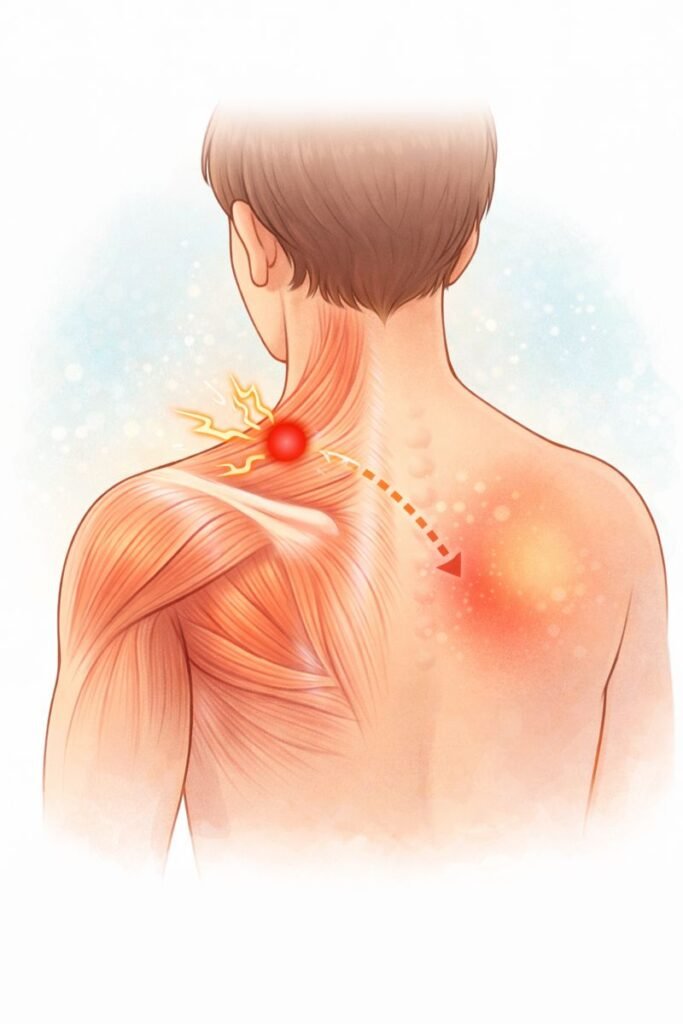
Myofascial pain and referred pain mapping

What is myofascial pain syndrome?

Myofascial pain syndrome is a chronic condition involving discomfort, sensitivity, and inflammation in the soft tissues of the body — especially muscles and the fascia that surrounds them. Pain may occur in one area or across multiple muscle groups. A key feature of this condition is referred pain. Pain felt in one part of the

What is myofascial pain syndrome? Read More »

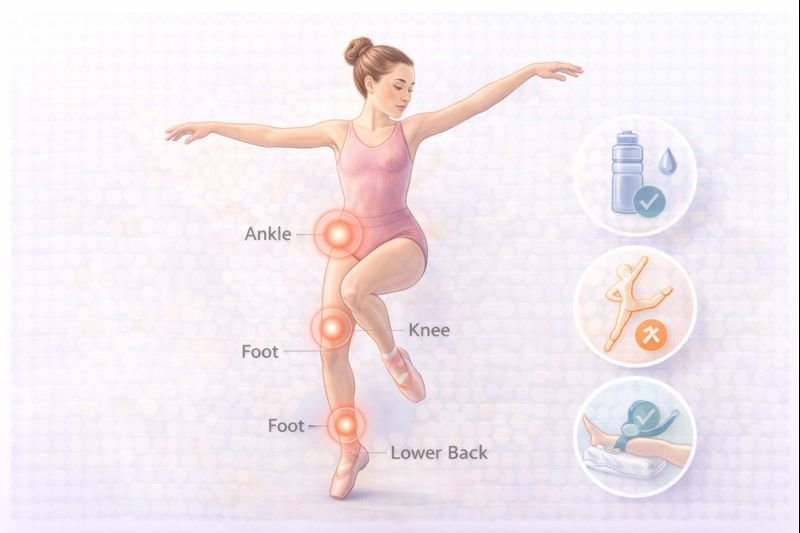
Dance injury prevention in action

Dance Injuries: Recognizing Risks, Prevention, and Early Management

Dance may not always be viewed as a sport, but the physical demands on the body are significant. Dancers—especially those who begin training at a young age—perform repetitive movements that require strength, flexibility, balance, endurance, and coordination. Like martial arts, gymnastics, or figure skating, dance carries a real risk of overuse musculoskeletal injuries. Educational Note:

Dance Injuries: Recognizing Risks, Prevention, and Early Management Read More »

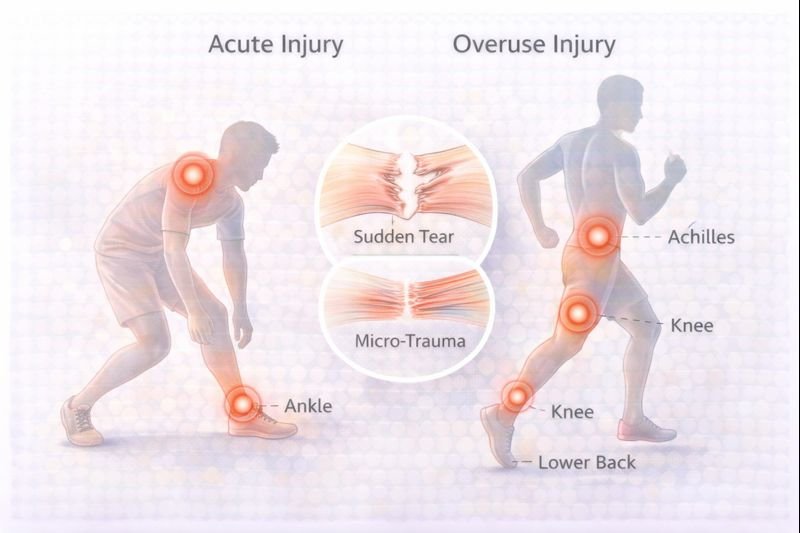
Acute vs. overuse injuries explained

Overuse vs. Acute Injuries: What Canadians Should Know

Musculoskeletal injuries are common in physical activity, recreation, and even the workplace. Two major categories are recognized: Acute injuries These occur suddenly—often during a fall, collision, or awkward movement. Examples include: Wrist fractures Ankle sprains Shoulder dislocations Hamstring tears Overuse injuries These develop gradually due to repeated stress on muscles, bones, and connective tissue. They

Overuse vs. Acute Injuries: What Canadians Should Know Read More »

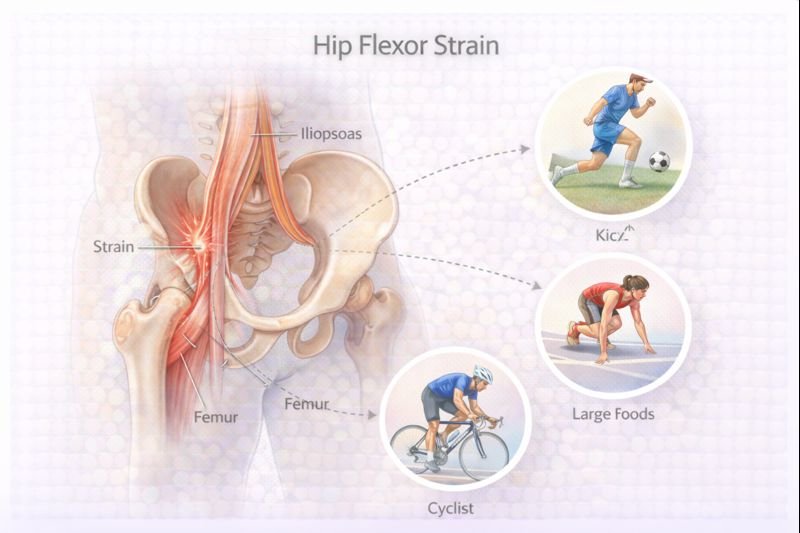
Hip flexor strain and common activities

Hip Flexor Strains: Symptoms, Recovery, and Prevention in Active Canadians

Hip flexor strains are a relatively common injury in recreation, athletics, and workplace physical activity. The severity can range from a minor stretch (Grade 1) to a complete muscle or tendon tear (Grade 3). More significant injuries may involve an avulsion fracture, where the tendon pulls a small piece of bone away from its attachment.

Hip Flexor Strains: Symptoms, Recovery, and Prevention in Active Canadians Read More »

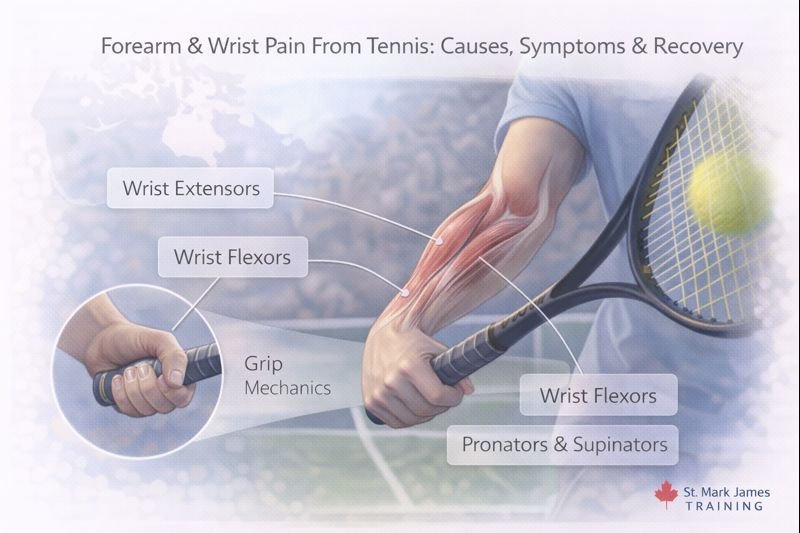
Tennis forearm and wrist injury guide

Forearm & Wrist Pain From Tennis: Causes, Symptoms & Recovery (Canada)

Forearm and wrist discomfort are common among recreational and competitive tennis players. How the racquet is gripped, how the forehand/backhand are performed, and the physical demands of the sport all influence the likelihood of overuse injuries. These injuries typically affect the tendons and muscles that stabilize the wrist and forearm. Although most cases can be

Forearm & Wrist Pain From Tennis: Causes, Symptoms & Recovery (Canada) Read More »

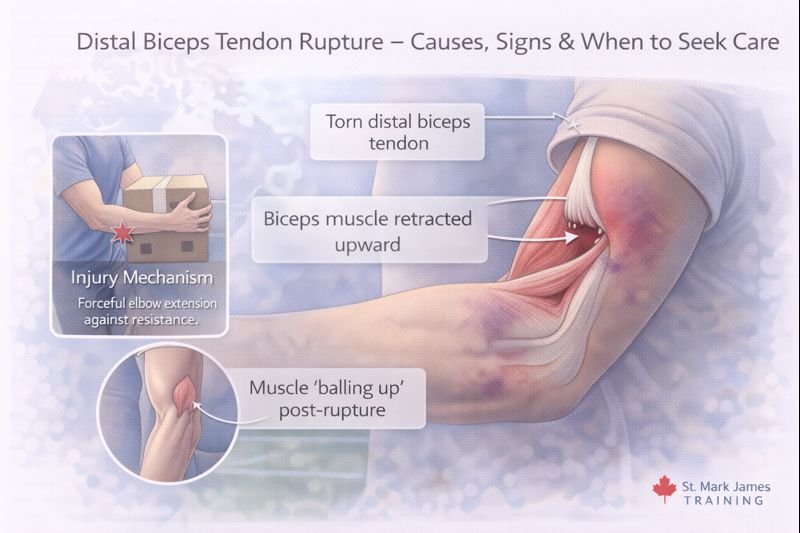
Distal biceps tendon rupture explained

Distal Biceps Tendon Rupture — Causes, Signs & When to Seek Care (Canada)

The distal biceps tendon is a strong band of connective tissue that links the lower portion of the biceps muscle to the bones of the elbow. When the arm forcefully straightens against resistance—commonly during heavy lifting, catching a falling object, or intense sports—the tendon can partially or completely rupture. Although this injury is uncommon, it

Distal Biceps Tendon Rupture — Causes, Signs & When to Seek Care (Canada) Read More »

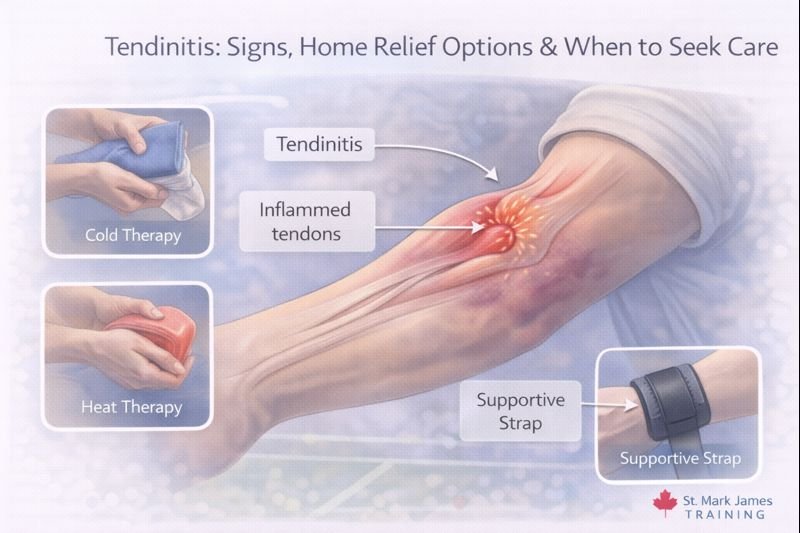
Tendinitis home relief options and treatments

Tendinitis: Signs, Home Relief Options & When to Seek Care (Canada)

Tendinitis occurs when a tendon (the connective tissue that links muscle to bone) becomes irritated or inflamed. Although almost any tendon can be affected, the most common areas include the shoulder, elbow, wrist, knee, ankle, and thumb. For many Canadians, tendinitis develops from repetitive work tasks, household activities, racquet sports, or strength training. Early recognition

Tendinitis: Signs, Home Relief Options & When to Seek Care (Canada) Read More »

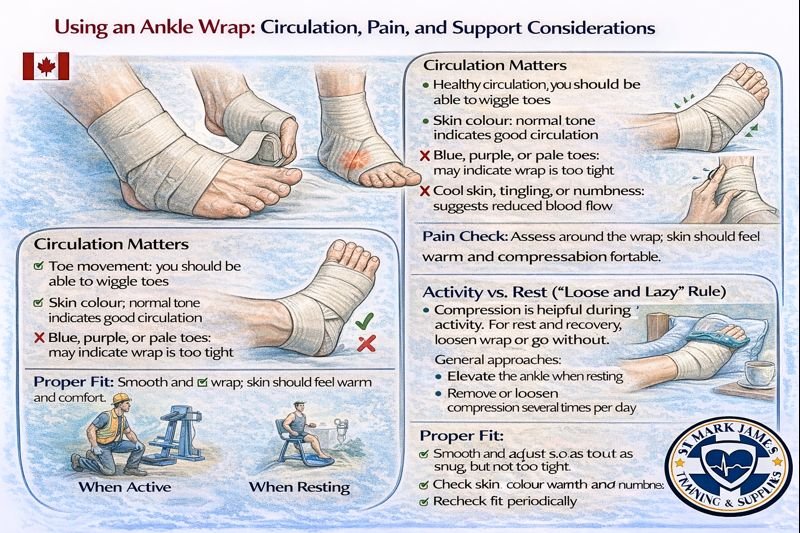
Ankle wrap guide circulation, pain, support

Using an Ankle Wrap: Circulation, Pain, and Support Considerations

Ankle wraps are commonly used after sprains or minor ankle injuries to provide compression, reduce swelling, and support movement during early recovery. Proper wrapping promotes circulation and comfort, while improper wrapping may restrict blood flow or increase discomfort. Knowing how to assess circulation and adjust compression helps many Canadians manage ankle sprains at home while

Using an Ankle Wrap: Circulation, Pain, and Support Considerations Read More »

Shopping Cart
Scroll to Top