First aid kits contents and tips

First Aid Kits: What to Include & Where to Store Them (Canada)

First Aid Kits: What to Include & Where to Store Them (Canada) A well-prepared first aid kit makes it easier to respond to both minor injuries and more serious emergencies. Kits don’t need to be large, but they should be organized, portable, and accessible. Many households and workplaces benefit from having more than one kit—for […]

First Aid Kits: What to Include & Where to Store Them (Canada) Read More »
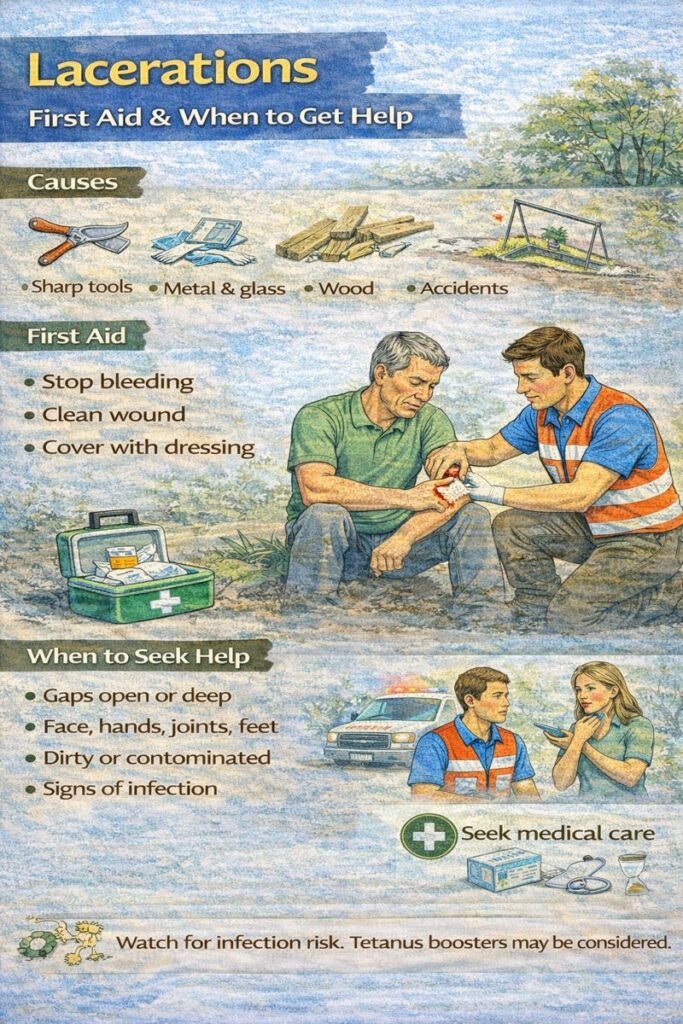
Laceration First Aid

Lacerations: First Aid Awareness, Infection Risk & When to Seek Care (Canada)

Lacerations: First Aid Awareness, Infection Risk & When to Seek Care (Canada) A laceration is an irregular tear in the skin caused by a sharp object or force. Lacerations can look jagged, may bleed heavily, and can carry debris or bacteria into the wound. Small lacerations may heal with basic first aid, while deeper or

Lacerations: First Aid Awareness, Infection Risk & When to Seek Care (Canada) Read More »

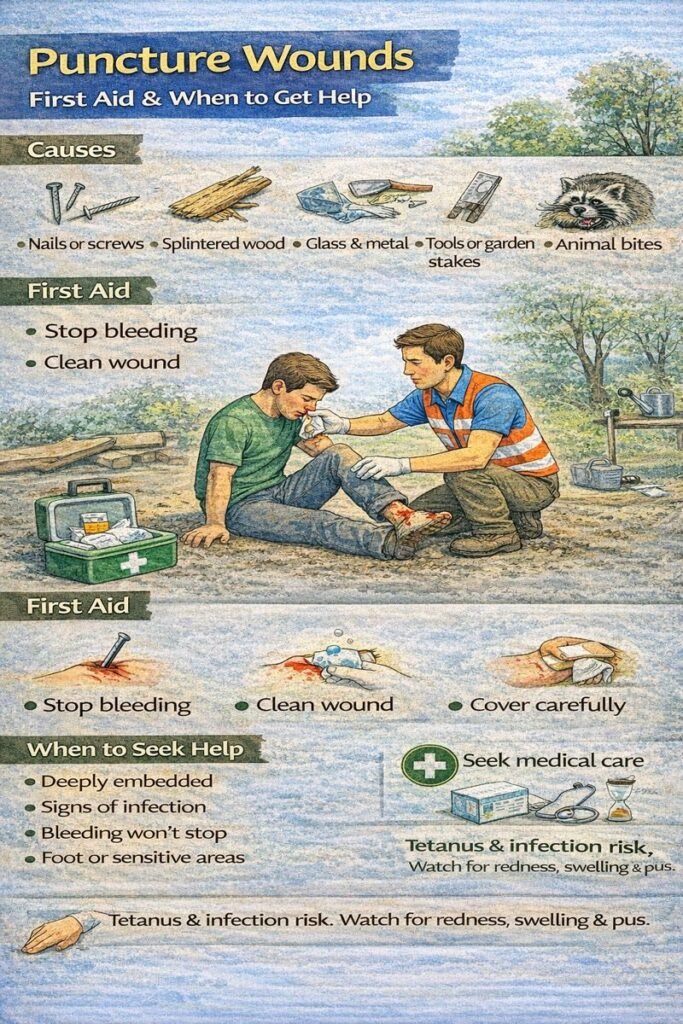
Puncture wounds first aid guide

Puncture Wounds: First Aid Awareness, Infection Risk & When to Seek Care (Canada)

Puncture Wounds: First Aid Awareness, Infection Risk & When to Seek Care (Canada) Puncture wounds occur when a sharp object pierces the skin, creating a small surface opening but sometimes a deeper pathway beneath. Even when they look minor, puncture wounds can carry dirt or bacteria into deeper tissues, making infection a key concern. First

Puncture Wounds: First Aid Awareness, Infection Risk & When to Seek Care (Canada) Read More »

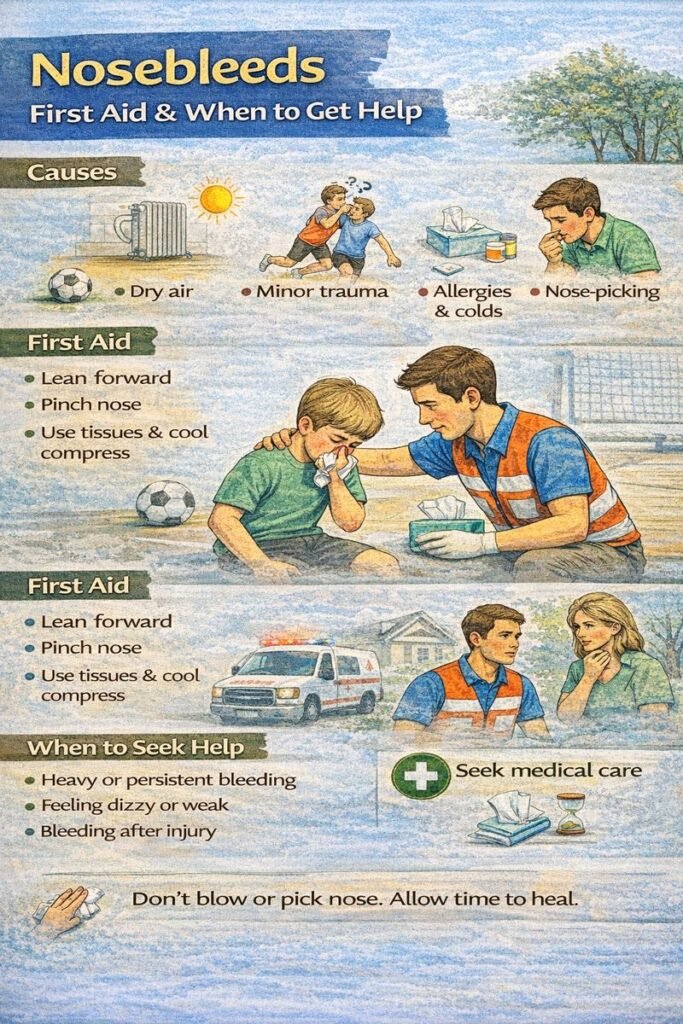
Nosebleeds (Epistaxis): Causes, First Aid Awareness & When to Seek Help (Canada)

Nosebleeds (Epistaxis): Causes, First Aid Awareness & When to Seek Help (Canada) A nosebleed (epistaxis) can look dramatic, especially in children, but most are minor and stop on their own. Dry air, allergies, nose-picking, colds, and minor bumps are common causes. In adults, frequent or unexplained nosebleeds may be tied to underlying medical conditions, so

Nosebleeds (Epistaxis): Causes, First Aid Awareness & When to Seek Help (Canada) Read More »

Medical emergencies know when to call

Recognizing Medical Emergencies: When to Call for Help (Canada)

Recognizing Medical Emergencies: When to Call for Help Many people hesitate to call for emergency assistance because they worry their symptoms are “not serious enough.” In reality, early action can prevent a condition from worsening. When faced with uncertainty, it is generally safer to seek help than to wait. First Aid & Workplace Relevance Canadian

Recognizing Medical Emergencies: When to Call for Help (Canada) Read More »

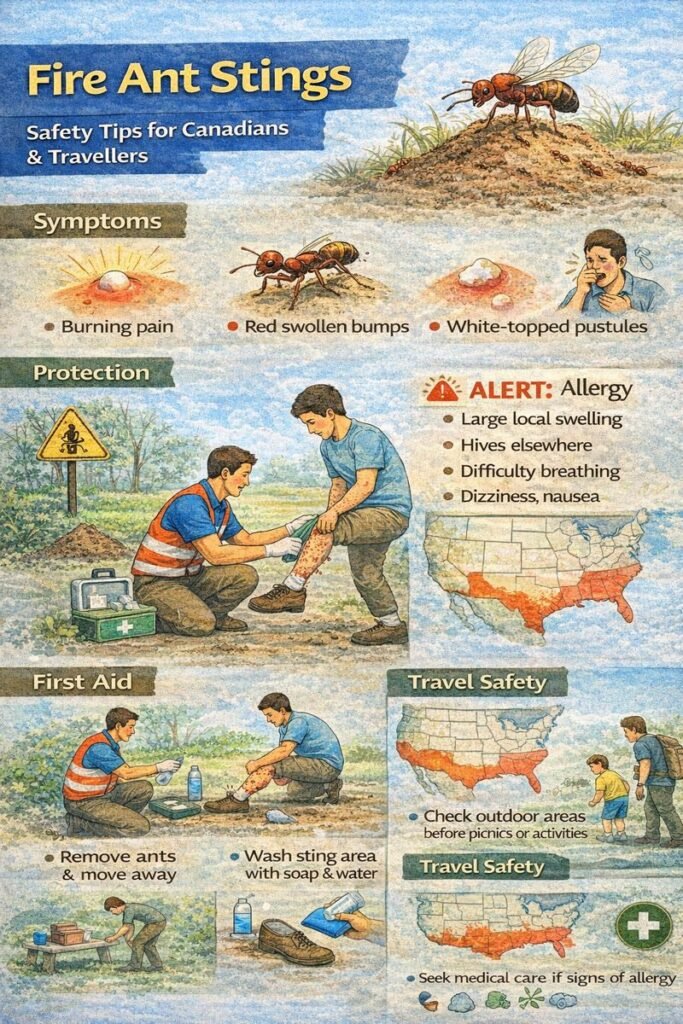
Fire Ant Stings: Symptoms, Prevention & First Aid Awareness (Canada & Travel Context)

Fire Ant Stings: Symptoms, Prevention & First Aid Awareness  Fire ants are aggressive insects that can bite and sting. Their venom can cause burning pain and distinct skin reactions. Most stings are localized, but multiple stings or venom allergies can lead to more serious reactions. Fire ants are not widespread in Canada, but Canadians may

Fire Ant Stings: Symptoms, Prevention & First Aid Awareness (Canada & Travel Context) Read More »

Bee and wasp sting safety tips

Bee, Wasp & Hornet Stings: Symptoms, First Aid Awareness & Allergy Considerations (Canada)

Bee, Wasp & Hornet Stings: Symptoms, First Aid Awareness & Allergy Considerations (Canada) Bee stings are painful and can cause localized redness and swelling in most people. For individuals allergic to insect venom, stings may lead to a more serious reaction, including anaphylaxis. Wasps and hornets can also trigger allergic reactions and can sting more

Bee, Wasp & Hornet Stings: Symptoms, First Aid Awareness & Allergy Considerations (Canada) Read More »

EpiPens and anaphylaxis safety tips

EpiPen & Anaphylaxis: Public Awareness, First Aid Context & Safe Handling (Canada)

EpiPen & Anaphylaxis: Public Awareness, First Aid Context & Safe Handling (Canada) Epinephrine is the recommended first-line medication for anaphylaxis, a serious type of allergic reaction that can involve breathing difficulty, swelling, or circulatory changes. Many people with allergies carry an autoinjector such as an EpiPen for their own use as prescribed by a healthcare

EpiPen & Anaphylaxis: Public Awareness, First Aid Context & Safe Handling (Canada) Read More »

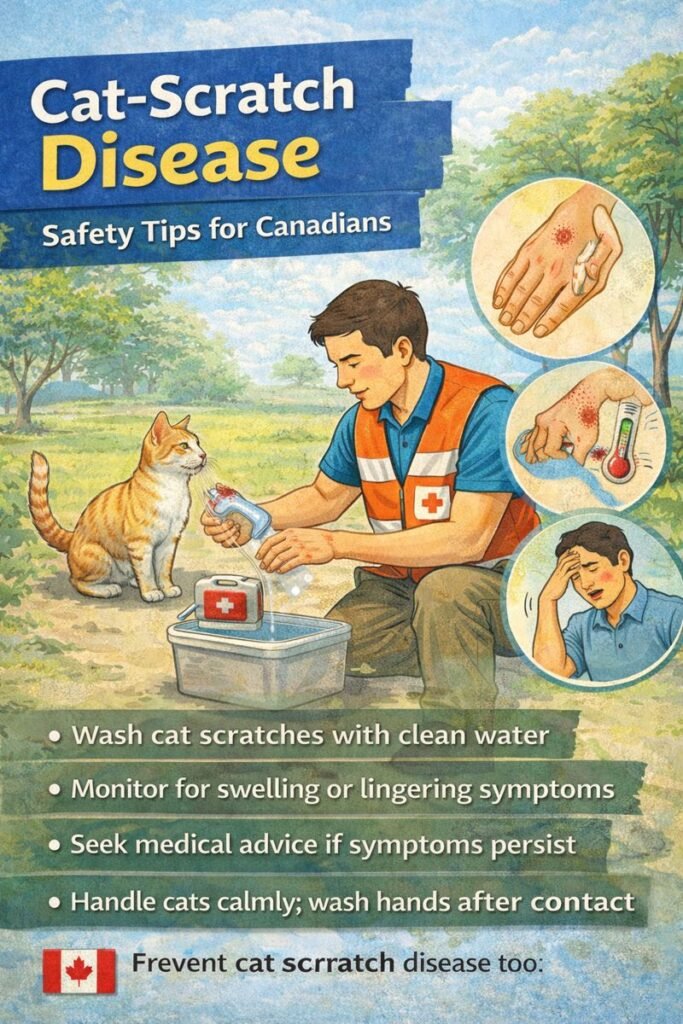
Cat-Scratch Disease: Symptoms, Prevention & First Aid Awareness for Canadians

Cat-Scratch Disease: Symptoms, Prevention & First Aid Awareness for Canadians Cat-scratch disease (sometimes called cat-scratch fever) is an infection caused by bacteria found in the saliva of cats. Cats can carry the bacteria without appearing sick, and researchers believe fleas play a role in how cats become infected. Most healthy people recover well, but the

Cat-Scratch Disease: Symptoms, Prevention & First Aid Awareness for Canadians Read More »

Shellfish Allergy: Symptoms, Awareness & Prevention for Canadians

Shellfish Allergy: Symptoms, Awareness & Prevention for Canadians A shellfish allergy is an immune response to proteins found in many marine foods such as shrimp, crab, lobster, clams, mussels, squid, and octopus. Some people react to only certain shellfish, while others react to many. Shellfish allergy is among the more common food allergies worldwide and

Shellfish Allergy: Symptoms, Awareness & Prevention for Canadians Read More »

Shopping Cart
Scroll to Top