March 2015

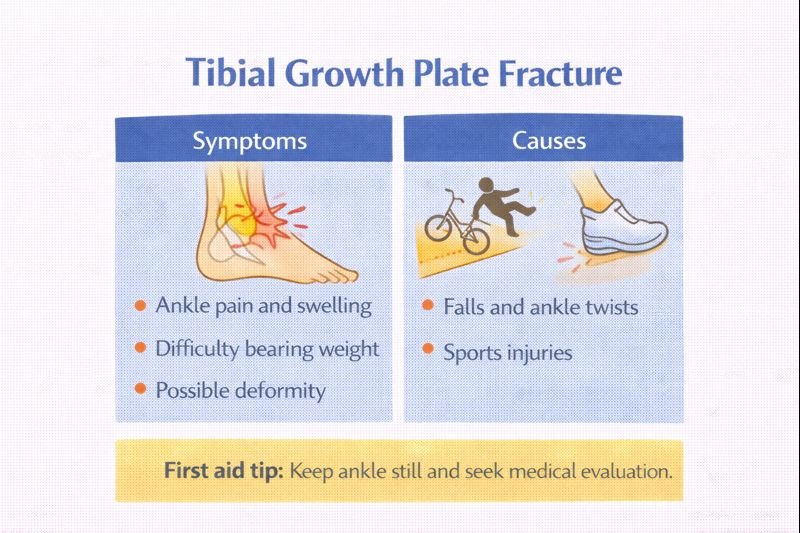
Tibial growth plate fracture information

Tibial Growth Plate Fracture (Ankle): Symptoms, Causes, and First Aid Awareness in Canada

What Is a Tibial Growth Plate Fracture? A tibial growth plate fracture occurs when there is a break at the growth plate near the ankle end of the tibia (shin bone). Growth plates are areas of developing cartilage found in children and adolescents. Because these areas have not yet fully hardened into bone, they are […]
Tibial Growth Plate Fracture (Ankle): Symptoms, Causes, and First Aid Awareness in Canada Read More »

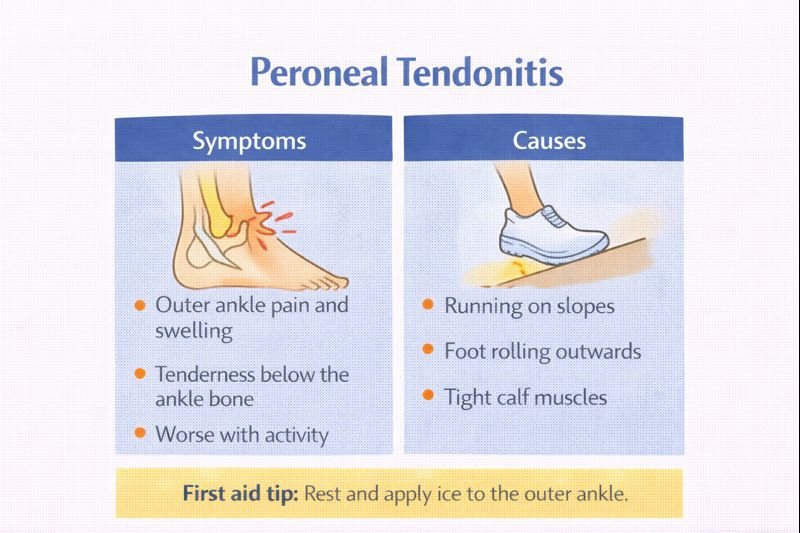
Peroneal tendonitis infographic overview

Peroneal Tendonitis: Outer Ankle Pain, Causes, and First Aid Awareness in Canada

What Is Peroneal Tendonitis? Peroneal tendonitis is a condition involving irritation and inflammation of the peroneal tendons, which run along the outside of the lower leg and pass behind the outer ankle bone (lateral malleolus). When these tendons become overworked or repeatedly stressed, pain and swelling can develop on the outer side of the ankle.

Peroneal Tendonitis: Outer Ankle Pain, Causes, and First Aid Awareness in Canada Read More »

Herniated disc injury

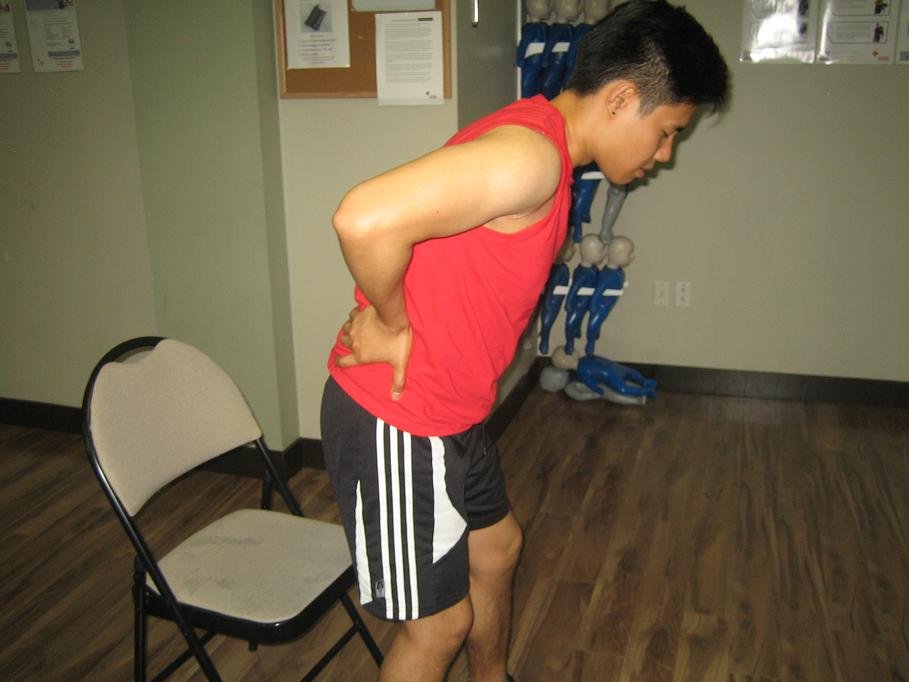
Lower Back Muscle Strain: Symptoms, Severity, and First Aid Awareness in Canada

What Is a Lower Back Muscle Strain? A lower back muscle strain occurs when the muscles or tendons in the lower back are overstretched or torn. These injuries can happen suddenly or develop gradually over time. The lower back is particularly vulnerable because it supports body weight and is involved in lifting, twisting, and prolonged

Lower Back Muscle Strain: Symptoms, Severity, and First Aid Awareness in Canada Read More »

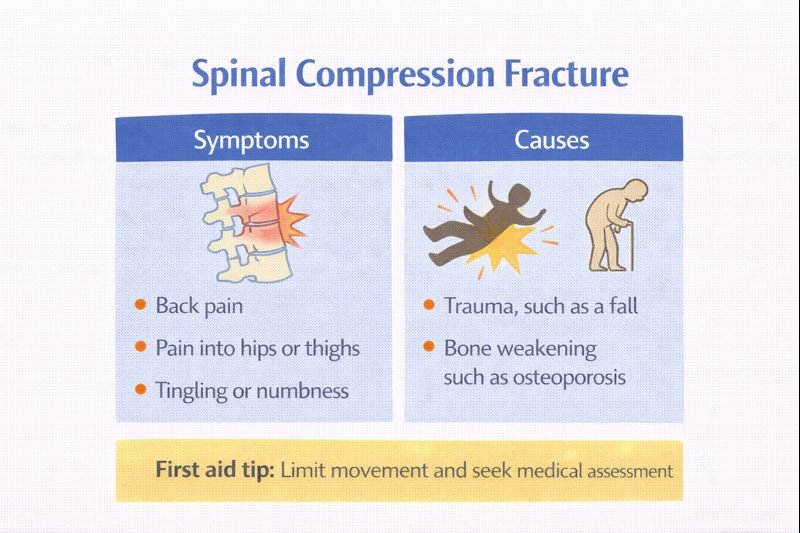
Spinal compression fracture overview

Spinal Compression Fracture: Symptoms, Causes, and First Aid Awareness in Canada

What Is a Compression Fracture of the Spine? A compression fracture of the spine occurs when one of the vertebrae (the bones that make up the spine) collapses or cracks due to compressive force. These fractures most commonly affect the lower back (lumbar spine), where the vertebrae carry the greatest load. Compression fractures can develop

Spinal Compression Fracture: Symptoms, Causes, and First Aid Awareness in Canada Read More »

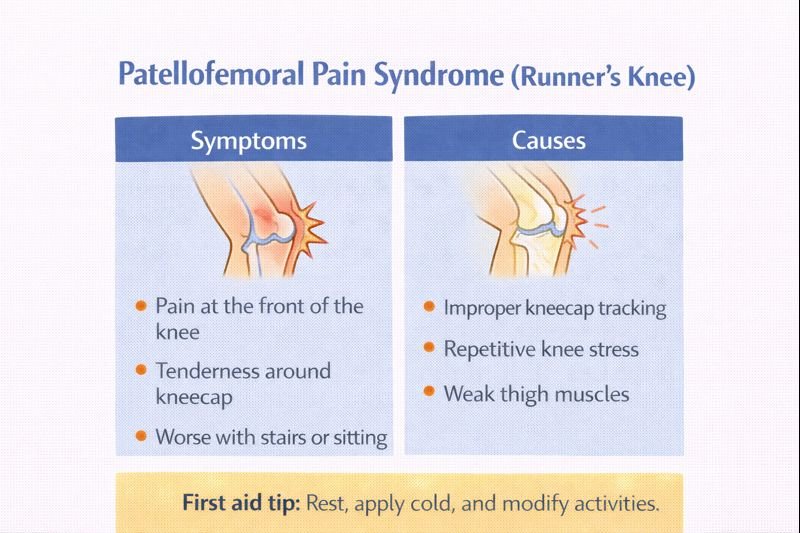
Patellofemoral Pain Syndrome infographic

Patellofemoral Pain Syndrome (Runner’s Knee): Symptoms, Causes, and First Aid Awareness in Canada

What Is Patellofemoral Pain Syndrome? Patellofemoral pain syndrome (PFPS)—often called runner’s knee—is a common condition that causes pain at the front of the knee, around or behind the kneecap (patella). It is especially common in people who are physically active, including runners, athletes, and adolescents, but it can also affect individuals whose work involves frequent

Patellofemoral Pain Syndrome (Runner’s Knee): Symptoms, Causes, and First Aid Awareness in Canada Read More »

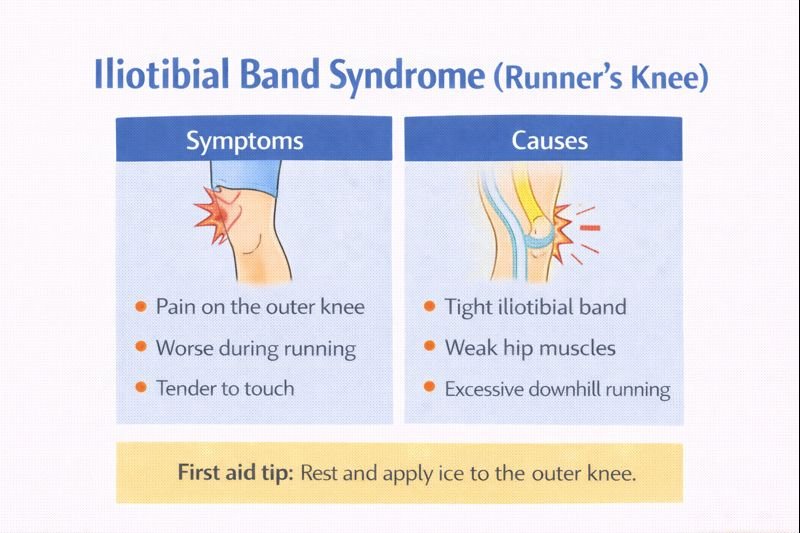
Iliotibial Band Syndrome overview

Iliotibial Band Syndrome (Runner’s Knee): Symptoms, Causes, and First Aid Awareness in Canada

What Is Iliotibial Band Syndrome? Iliotibial band syndrome (ITB syndrome) is a common overuse injury that causes pain on the outside of the knee. It occurs when the iliotibial band—a thick band of connective tissue running from the hip down the outer thigh to the knee—repeatedly rubs against the outer knee during movement. This condition

Iliotibial Band Syndrome (Runner’s Knee): Symptoms, Causes, and First Aid Awareness in Canada Read More »

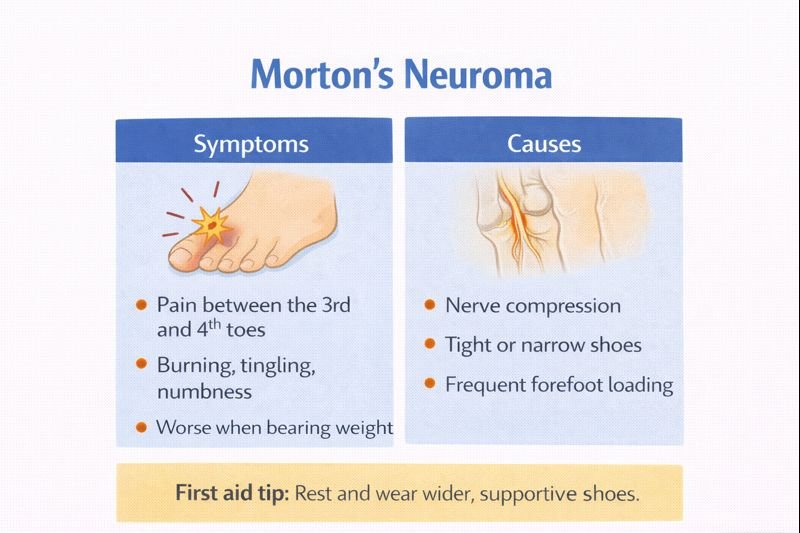
Understanding Morton's Neuroma symptoms and causes

Morton’s Neuroma: Forefoot Nerve Pain and First Aid Awareness in Canada

What Is Morton’s Neuroma? Morton’s neuroma is a condition that causes nerve-related pain in the forefoot, most commonly between the third and fourth toes. It develops when a nerve that runs between the metatarsal bones becomes compressed or irritated, leading to pain and altered sensation in the toes. Although the term includes “neuroma,” the condition

Morton’s Neuroma: Forefoot Nerve Pain and First Aid Awareness in Canada Read More »

Shopping Cart
Scroll to Top