February 2014

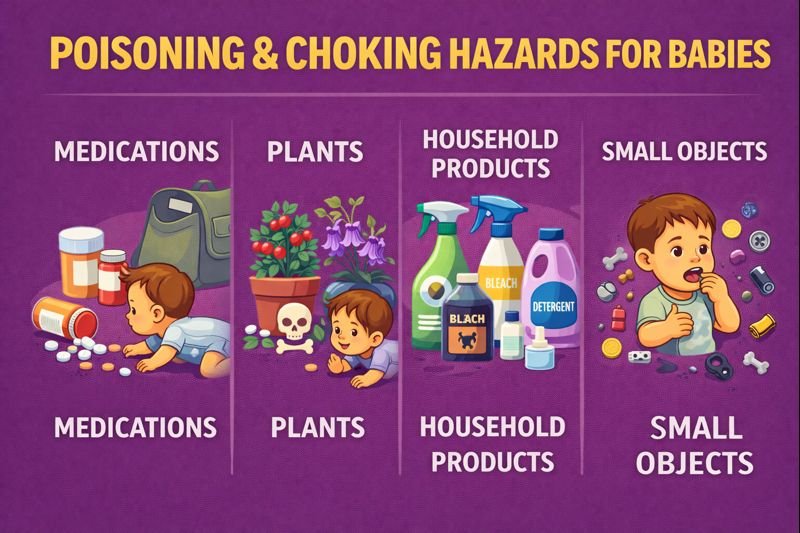
Poisoning & Choking Hazards for Babies: Household Safety Awareness (Canada)

Poisoning & Choking Hazards for Babies: Household Safety Awareness  Babies explore the world through touch and taste, and they often place objects in their mouths. As infants become mobile, they can access items on floors, tables, furniture, purses, and cupboards, increasing the risk of both poisoning and choking. Children under age three are at higher […]

Poisoning & Choking Hazards for Babies: Household Safety Awareness (Canada) Read More »
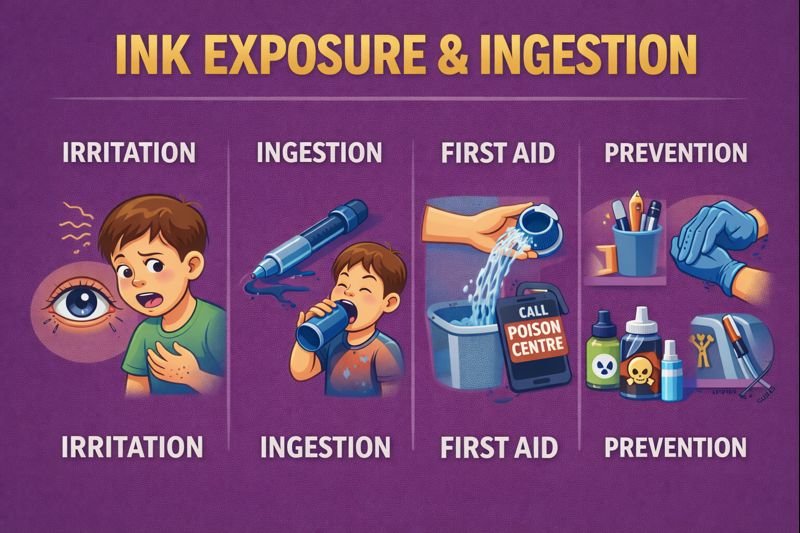
Ink exposure and ingestion safety tips

Ink Exposure & Ingestion: Irritation, First Aid Awareness & Safety Education (Canada)

Ink Exposure & Ingestion: Irritation, First Aid Awareness & Safety Education (Canada) Small amounts of household pen ink are generally considered low-risk. Most accidental ink exposures involve leaks from pens, markers, school supplies, or brief contact with the mouth or skin. In these situations, irritation is more common than poisoning. Relevance in Canadian homes &

Ink Exposure & Ingestion: Irritation, First Aid Awareness & Safety Education (Canada) Read More »

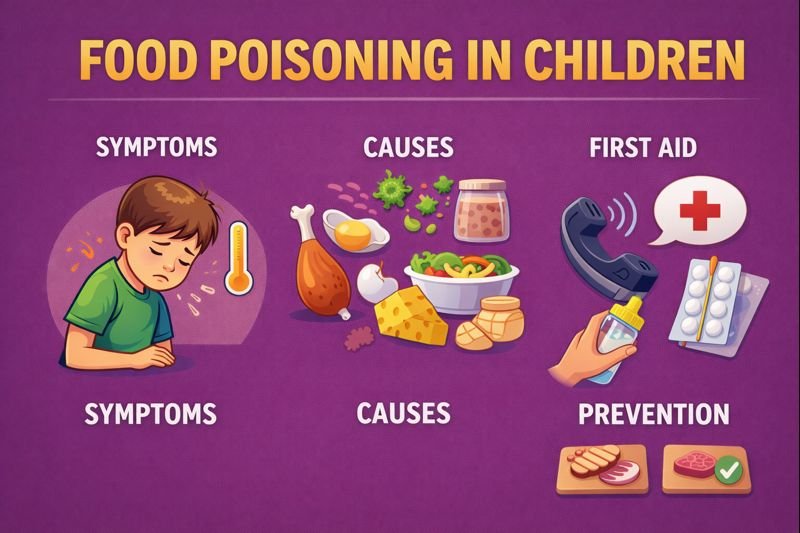
Food Poisoning in Young Children: Signs, First Aid Awareness & Prevention (Canada)

Food Poisoning in Young Children: Signs, First Aid Awareness & Prevention (Canada) Food poisoning occurs when bacteria, viruses, or toxins contaminate food. While people of all ages can be affected, young children are more likely to become dehydrated or unwell because of their smaller body size and limited ability to explain symptoms. Why it matters

Food Poisoning in Young Children: Signs, First Aid Awareness & Prevention (Canada) Read More »

Mothball poisoning know the risks

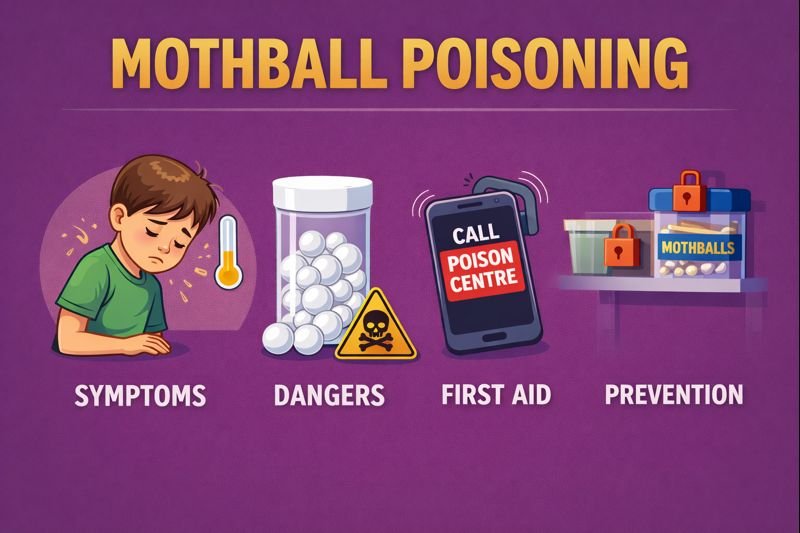
Mothball Exposure and Accidental Ingestion: Signs, First Aid Awareness & Safety Education (Canada)

Mothball Exposure and Accidental Ingestion: Signs, First Aid Awareness & Safety Education (Canada) Mothballs are commonly used to protect fabrics from pests. They may contain chemicals such as naphthalene or paradichlorobenzene, both of which can be harmful if swallowed, inhaled, or handled in significant amounts. Accidental ingestion is most often reported among young children due

Mothball Exposure and Accidental Ingestion: Signs, First Aid Awareness & Safety Education (Canada) Read More »

Electrical burns hazards, symptoms, aid, prevention

Electrical Burns: Understanding Risks, First Aid Awareness & Workplace Safety

Electrical Burns: Understanding Risks, First Aid Awareness & Workplace Safety Electrical burns occur when electric current passes through the body after contact with a live source. Unlike many surface burns, electrical burns may involve deeper tissues and may not show obvious external damage at first. Why it matters in Canada and the workplace Electrical injuries

Electrical Burns: Understanding Risks, First Aid Awareness & Workplace Safety Read More »

First aid during a lightning storm

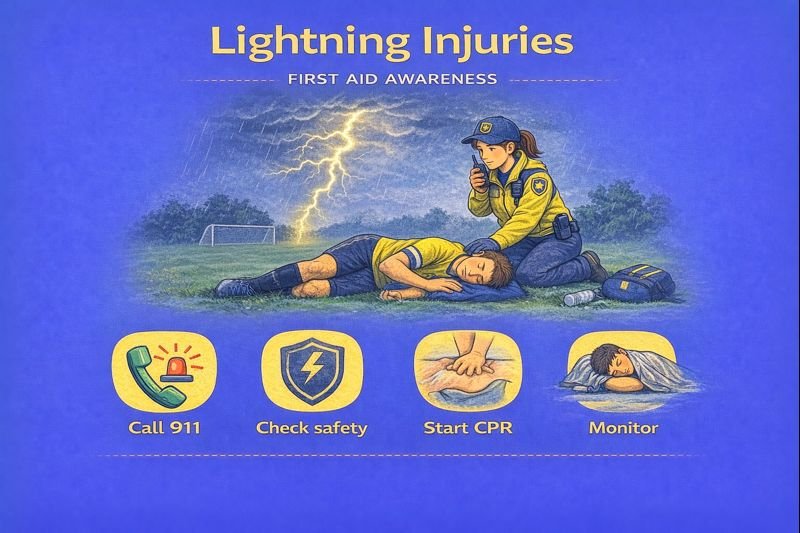
Lightning Injuries & First Aid Awareness

Lightning Injuries & First Aid Awareness Lightning strikes are rare but can cause sudden injury. During thunderstorms, the safest place is indoors or inside a hard-topped vehicle. Lightning can injure a person directly or through ground currents, and effects may vary from brief confusion to more serious injuries. First Aid & Workplace Relevance Lightning-related incidents

Lightning Injuries & First Aid Awareness Read More »

Hypoglycemia first aid infographic

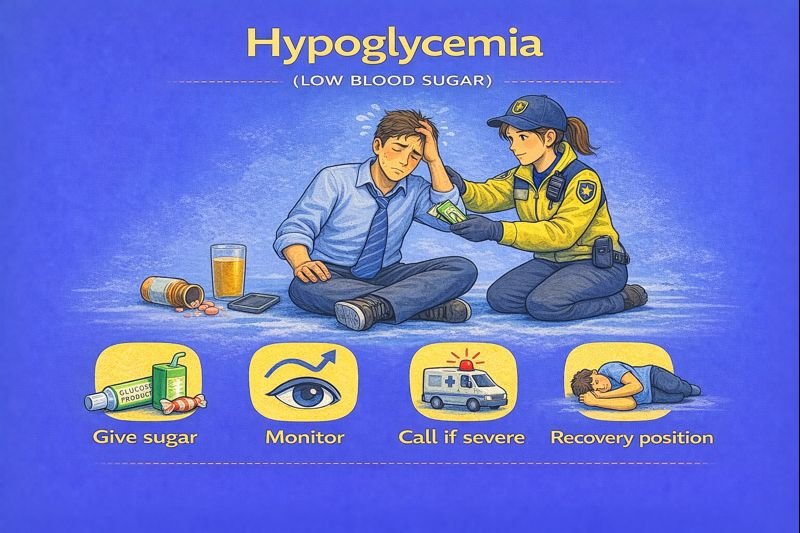
Hypoglycemia (Low Blood Sugar): First Aid Awareness

Hypoglycemia (Low Blood Sugar): First Aid Awareness Hypoglycemia refers to blood glucose levels dropping too low for the body to function normally. It is commonly associated with diabetes, but may also occur during illness, exertion, or after extended periods without eating. Workplace & Canadian Relevance Low blood sugar emergencies can occur in classrooms, workplaces, fitness

Hypoglycemia (Low Blood Sugar): First Aid Awareness Read More »

Hypothermia Prevention and first aid guide

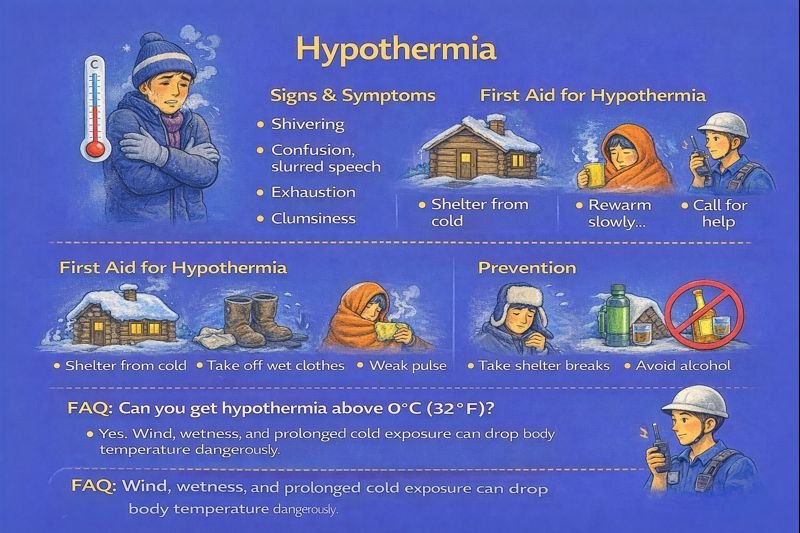
Hypothermia: Signs, First Aid Awareness & Cold-Weather Safety (Canada)

Hypothermia: Signs, First Aid Awareness & Cold-Weather Safety (Canada) Hypothermia occurs when the body loses heat faster than it can produce it, causing the core temperature to drop below about 35°C (95°F). It can start with mild shivering and progress to serious changes in thinking, movement, and consciousness if not addressed. In Canada, where cold

Hypothermia: Signs, First Aid Awareness & Cold-Weather Safety (Canada) Read More »

Sunburn guide for prevention and care

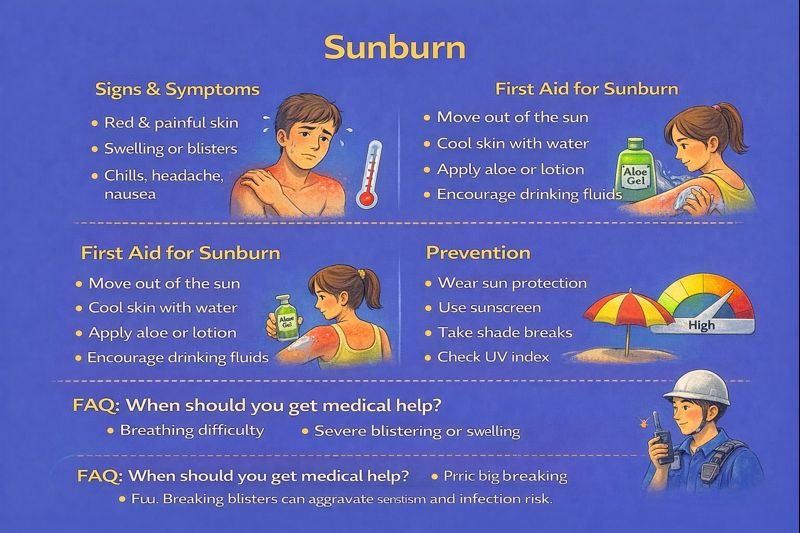
Sunburn: Prevention, Symptoms & First Aid Awareness

Sunburn: Prevention, Symptoms & First Aid Awareness Sunburn occurs when skin is exposed to ultraviolet (UV) radiation from the sun for longer than it can tolerate. Sunburn can be uncomfortable and may increase sensitivity, swelling, or blistering depending on the severity. Public awareness and prevention help reduce skin damage and discomfort. First Aid & Workplace

Sunburn: Prevention, Symptoms & First Aid Awareness Read More »

Shopping Cart
Scroll to Top

  • All stmarkjamestraining.ca content is reviewed by a medical professional and / sourced to ensure as much factual accuracy as possible.

  • We have strict sourcing guidelines and only link to reputable websites, academic research institutions and medical articles.

  • If you feel that any of our content is inaccurate, out-of-date, or otherwise questionable, please contact us through our contact us page.

The information posted on this page is for educational purposes only.
If you need medical advice or help with a diagnosis contact a medical professional