 What Is Occupational Overuse Syndrome?
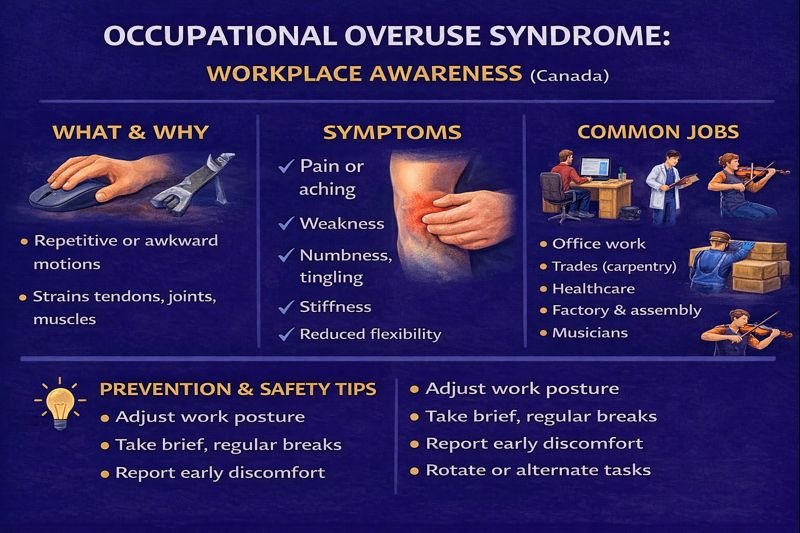
Occupational overuse syndrome (sometimes called repetitive strain injury) refers to discomfort, irritation, or injury caused by repetitive movements, awkward postures, or prolonged positioning at work. It most commonly affects the hands, wrists, elbows, fingers, shoulders, and neck, but it can involve other regions depending on the task.
Why This Matters for First Aid & Workplaces
Modern workplaces—from offices and healthcare to trades and manufacturing—rely heavily on repetitive motions, fine motor tasks, and static postures. Early awareness supports comfort, injury prevention, and productivity, and aligns with Canadian occupational health and safety goals.
Scenario: Mild & Realistic
A data-entry employee began noticing stiffness in the wrist and forearm toward the end of the day. Their supervisor encouraged micro-breaks, checked workstation height, and recommended reporting ongoing discomfort to the Joint Health and Safety Committee. Small ergonomic changes reduced symptoms over the following weeks.
Symptoms of Overuse Injuries
Symptoms vary by person and job task, and may appear gradually. Common signs include:
-
Dull or aching discomfort
-
Stiffness or reduced flexibility
-
Weakness or reduced grip strength
-
Swelling or sensitivity in the affected region
-
Numbness or tingling
-
Difficulty performing repetitive tasks
Some individuals only feel discomfort during work activities; others may notice symptoms even at rest if the irritation progresses.
Common Occupations & Tasks Involved
Repetitive stress can occur anywhere repetitive or precision movements are required, including:
-
Office and clerical work (typing, mouse use, data processing)
-
Trades (carpentry, electrical work, bricklaying)
-
Assembly and packing lines
-
Hairdressing or esthetics
-
Musical performance
-
Food service and cashiering
-
Laboratory and medical tasks
-
Shipping, stocking, and warehouse roles
Risk Factors & Contributing Elements
Overuse is often associated with workplace design and task demands such as:
-
Awkward wrist or posture positioning
-
Fast-paced repetitive manual work
-
Tools that do not fit the hand comfortably
-
Fixed postures without variation
-
Work surfaces that are too high, low, or far away
-
Limited rest breaks due to deadlines or task design
-
Vibrating tools or conveyor systems
-
High task frequency without rotation
First Aid Awareness & Early Considerations
Public first aid training highlights the importance of:
-
Resting irritated areas when possible
-
Avoiding forceful gripping or repetitive movements during discomfort
-
Adjusting posture or workstation configuration
-
Rotating tasks to reduce monotony
-
Taking brief micro-breaks throughout the day
-
Reporting early signs of overuse in workplace settings
Healthcare professionals can assess persistent symptoms and advise on safe return to full activity or ergonomic improvements.
Prevention & Workplace Strategies
Strains linked to repetitive motion can often be reduced by:
-
Ergonomic workstation adjustments
-
Proper seating and equipment height
-
Using tools that fit body size and hand strength
-
Alternating tasks to avoid overloading one region
-
Warming up before high-repetition work or musical practice
-
Encouraging regular breaks
-
Early reporting and accommodation
Employers and safety committees may play a key role in identifying job-related hazards.
FAQ — Occupational Overuse Syndrome
1. Does overuse only affect office workers?
No. Trades, healthcare, food service, manufacturing, music, and recreation can all involve repetitive strain.
2. Can overuse injuries develop gradually?
Yes. Many people notice symptoms slowly over weeks or months.
3. Do keyboards and mouse devices cause strain?
They can contribute when posture, repetition, or break frequency are factors.
4. Are overuse injuries permanent?
Early awareness and ergonomic adjustments can help reduce symptoms, but persistent discomfort should be assessed by a healthcare professional.
5. Can teens or youth experience overuse?
Yes. Activities such as gaming, music, sports, and mobile device use are repetitive and can cause strain.
Educational Note
This article supports public understanding of repetitive strain, injury prevention, workplace ergonomics, and first aid awareness. Healthcare professionals provide diagnosis, treatment advice, and rehabilitation plans when needed.
About The Author

Mark Kascha
Certified First Aid Instructor Trainer with 30+ years of real-world experience, including lifeguarding, workplace emergency response, and first aid program development across Canada. Has worked with WorkSafeBC, WSIB, and Manitoba Health.
👉 [View full credentials]🔗 View LinkedIn Profile
Last reviewed: March 2026