 Wasps, bees, and ants can sting to defend their nests or territory. Common wasp species include yellowjackets, bald-faced hornets, and paper wasps. A sting delivers venom into the skin, causing sharp pain, redness, and swelling. Most reactions are mild, but some people may experience more serious allergic responses.
Outdoor, workplace & first aid relevance (Canada)
Stings are common in gardens, parks, outdoor worksites, food service patios, and construction areas. Workers handling outdoor waste, vegetation, or stored materials may encounter nests or foraging insects. First aid awareness helps identify typical sting reactions, recognize allergy symptoms, and determine when to seek urgent care.
Scenario story
While restocking outdoor seating at a café, Ava accidentally disturbed a wasp near a planter. The sting caused quick pain and redness. A co-worker helped wash the site with soap and water and apply a clean dressing. The discomfort eased over several hours, and Ava avoided the planter until maintenance removed the small nest.
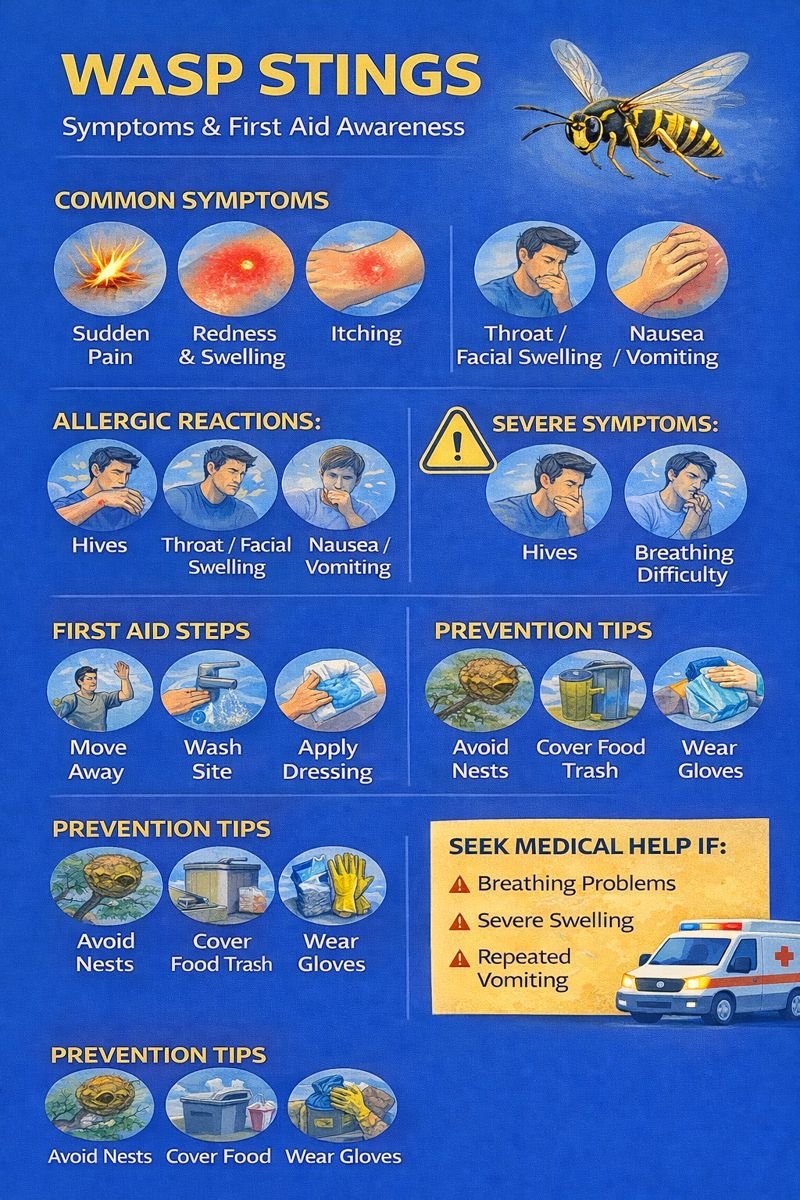
Typical sting symptoms
Most people experience:
-
Sudden sharp pain or stinging sensation
-
Redness or warmth around the sting site
-
Mild swelling
-
Itching or tenderness
Red areas can expand for several hours before settling down.
Allergic reactions
Some people are sensitive to venom and may experience more significant reactions. Signs of a possible allergic response may include:
-
Widespread hives or severe itching
-
Swelling involving lips, face, throat, or mouth
-
Nausea or vomiting
-
Lightheadedness or faintness
-
Breathing difficulty or wheezing
Stings in the mouth or throat can cause swelling that affects breathing and require emergency care. Severe allergic reactions (anaphylaxis) can develop quickly and require rapid medical attention.
Non-allergic reactions
Most stings do not involve allergy and remain localized to the skin. Pain, itching, and swelling can be bothersome for a day or two. Stings to sensitive areas or multiple stings at once can cause more discomfort. Rarely, larger local reactions may take longer to settle.
First aid awareness for wasp stings
General steps may include:
-
Moving away from the stinging insect or nest
-
Washing the area with soap and water
-
Avoiding scratching or rubbing
-
Applying a clean dressing to protect irritated skin
-
Using cool compresses for comfort
People with a history of severe sting allergies may carry prescribed emergency medication; bystanders should not administer medicines unless trained and permitted to do so.
Infection considerations
Any break in the skin can become infected. Signs of possible infection include:
-
Increasing redness or swelling after the first day
-
Yellowish fluid or crusting
-
Fever or feeling unwell
Seek medical assessment if concerned or if symptoms worsen over time.
Prevention and safety
-
Avoid disturbing nests or hives
-
Keep outdoor eating areas clean and covered
-
Wear gloves when working in gardens or landscaping
-
Check equipment and storage areas before handling
-
Use sealed bins to reduce wasp attraction to food waste
Outdoor workers may benefit from seasonal awareness training regarding insects and stinging hazards.
FAQ
Why do wasps sting?
Wasps defend their nests and may sting if surprised or threatened.
Are wasp stings poisonous?
The venom can cause localized pain and swelling. Only some individuals develop allergic reactions.
Do multiple stings increase risk?
Multiple stings can increase discomfort and may contribute to more intense symptoms, regardless of allergy status.
Can wasp stings lead to infection?
Yes. Scratching or prolonged swelling may increase risk of infection.
When should someone seek medical care?
Breathing difficulty, widespread hives, swelling of the face or throat, repeated vomiting, faintness, or uncertain symptoms should be evaluated urgently.
Educational note
This information supports public health and first aid awareness and does not replace emergency care or clinical evaluation when needed.
About The Author

Mark Kascha
Certified First Aid Instructor Trainer with 30+ years of real-world experience, including lifeguarding, workplace emergency response, and first aid program development across Canada. Has worked with WorkSafeBC, WSIB, and Manitoba Health.
👉 [View full credentials]🔗 View LinkedIn Profile
Last reviewed: March 2026