Rye is a grain used in breads, cereals, crackers, and some baked goods. While less common than wheat allergy, some people experience allergic reactions or respiratory sensitivity to rye, especially in environments with airborne flour.
Public & workplace relevance (Canada)
Food allergies matter in homes, schools, restaurants, and workplace cafeterias. Rye also appears in environments where flour is handled, such as bakeries, food-service areas, breweries, and grain mills. Ingredient awareness and clear communication can support those with grain-related allergies or sensitivities.
Scenario story
During a bakery workshop at work, Eli sampled rye bread and noticed itching around the mouth and a mild rash later that afternoon. The reaction settled on its own. Eli later shared the episode with a healthcare provider to explore whether rye, wheat, or another grain was the trigger.
Possible symptoms of rye allergy
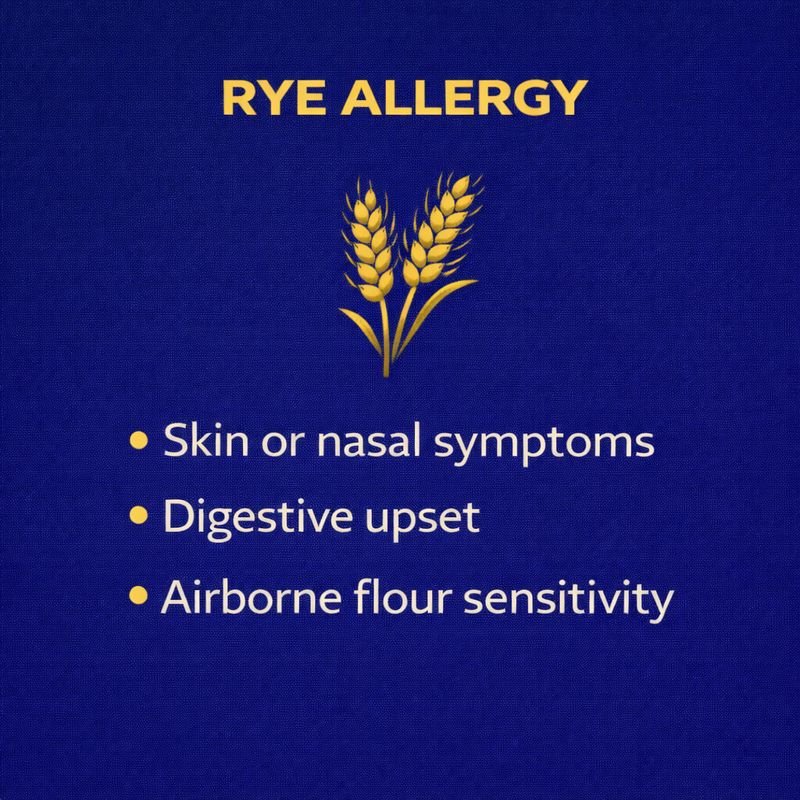 Like other food allergies, symptoms can vary by individual and may affect the skin, digestive system, or respiratory system.
Skin-related symptoms
-
Red or itchy patches
-
Hives or localized swelling
-
Mild eczema-type irritation in some individuals
Mouth, nose & throat symptoms
-
Itching around the lips or inside the mouth
-
Sneezing or nasal congestion
-
Scratchy throat sensation
Respiratory symptoms
-
Coughing or wheezing
-
Breathing discomfort in more significant reactions
Airborne flour in bakeries or food-production areas may irritate the airway in sensitized individuals.
Digestive symptoms
-
Nausea or stomach discomfort
-
Bloating or gas
-
Vomiting or loose stools in some cases
Headache & general symptoms
Some individuals report headache, tiredness, or reduced appetite after grain exposure, though these symptoms can have many causes and are not unique to rye.
Cross-reactivity & grain considerations
Rye belongs to the same family as wheat and barley. Some individuals react to one grain but tolerate others, while others react to several. Healthcare professionals can help clarify whether symptoms relate to allergy, gluten-related conditions, or non-allergic sensitivities.
Prevention & ingredient awareness
People who react to rye may:
-
Read ingredient labels for grain composition
-
Ask about flour types in baked goods and breads
-
Watch for airborne flour exposure in workplace or bakery settings
-
Choose alternative grains if advised by healthcare professionals
When reactions may be more serious
Significant breathing difficulty, widespread swelling, or rapidly progressing symptoms may indicate anaphylaxis, a medical emergency requiring urgent care. Individuals with known food allergies often develop personal management plans with healthcare teams.
FAQ
Is rye allergy the same as wheat allergy?
Not always. Some people react to rye but not wheat, or vice versa.
Does rye contain gluten?
Yes. Rye contains gluten and may affect individuals with gluten-related disorders.
Can airborne rye flour cause symptoms?
Yes. In bakeries and grain-handling workplaces, airborne flour can trigger respiratory irritation or allergic symptoms in sensitive individuals.
Is rye allergy common?
Less common than peanut, wheat, or shellfish allergies but still recognized in allergy clinics.
Can children outgrow grain allergies?
Patterns vary. Some improve over time, while others persist into adulthood.
Educational note
This resource promotes food allergy and workplace sensitivity awareness and does not replace clinical evaluation, testing, or individualized dietary advice.
About The Author

Mark Kascha
Certified First Aid Instructor Trainer with 30+ years of real-world experience, including lifeguarding, workplace emergency response, and first aid program development across Canada. Has worked with WorkSafeBC, WSIB, and Manitoba Health.
👉 [View full credentials]🔗 View LinkedIn Profile
Last reviewed: March 2026