
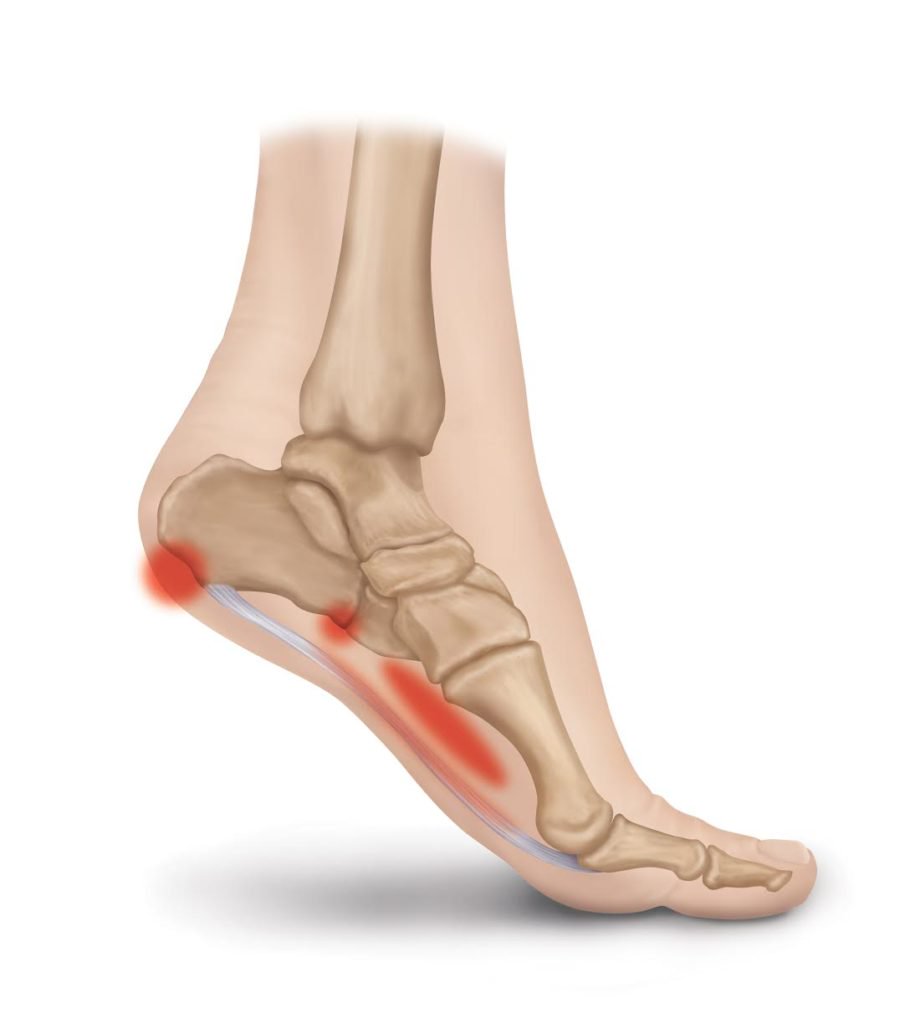
Plantar fasciosis is a painful foot condition that affects the plantar fascia, a thick band of connective tissue running from the heel bone to the toes. Unlike plantar fasciitis, this condition is caused by repetitive strain and degeneration of the tissue rather than active inflammation.
Plantar fasciosis can develop in individuals who:
-
Live a sedentary lifestyle and suddenly increase activity
-
Have very high or very low foot arches
-
Wear unsupportive footwear or high heels
-
Have tight calf muscles or a taut Achilles tendon
In Canada, this condition is commonly seen in runners, dancers, healthcare workers, warehouse staff, and construction workers, especially those who stand or walk on hard surfaces for extended periods.
Signs and Symptoms of Plantar Fasciosis
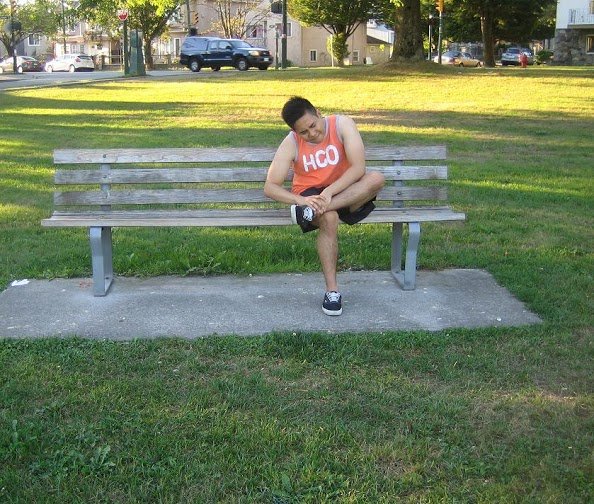
Pain can occur anywhere along the plantar fascia but is most often felt where the fascia attaches to the heel bone.
Common symptoms include:
-
Sharp or aching heel pain
-
Significant pain when taking the first steps in the morning
-
Pain after long periods of rest
-
Pain that eases after 5–10 minutes of movement but returns later in the day
-
Worsening discomfort when pushing off the heel
Some individuals experience burning pain along the inner sole or pain that radiates from the heel toward the toes during walking.
Management and Treatment Options
Treatment focuses on reducing strain, supporting the foot, and restoring flexibility.
Initial Management
-
Take shorter steps and avoid walking barefoot
-
Avoid high-impact activities such as running or jumping
-
Wear supportive footwear with proper arch support
-
Use orthotics or heel cushions to reduce stress on the fascia
Rehabilitation and Pain Relief
-
Stretching exercises for the calf muscles and plantar fascia
-
Physical therapy programs
-
Night splints to keep the foot gently stretched during sleep
-
Cold massage (such as rolling the foot over a frozen bottle)
-
Non-steroidal anti-inflammatory drugs (NSAIDs) for pain relief
Advanced Treatment
-
Adhesive strapping or arch-support wraps
-
Corticosteroid injections for severe pain
-
Temporary casting in persistent cases
If conservative treatment fails, surgical intervention may be considered to partially release the plantar fascia and remove heel spurs if they contribute to symptoms.
Why This Matters in First Aid & Workplace Safety
Plantar fasciosis can significantly affect mobility, balance, and work performance, increasing the risk of slips and falls. First aid and workplace safety training help Canadians recognize overuse injuries early, adjust activity safely, and seek appropriate care before long-term disability develops.
Important Disclaimer
For Educational Purposes Only
This content is provided for first aid education and injury awareness in Canada. It does not replace professional medical advice or diagnosis. Individuals experiencing persistent heel or foot pain should consult a qualified healthcare provider.
About The Author

Mark Kascha
Certified First Aid Instructor Trainer with 30+ years of real-world experience, including lifeguarding, workplace emergency response, and first aid program development across Canada. Has worked with WorkSafeBC, WSIB, and Manitoba Health.
👉 [View full credentials]🔗 View LinkedIn Profile
Last reviewed: March 2026