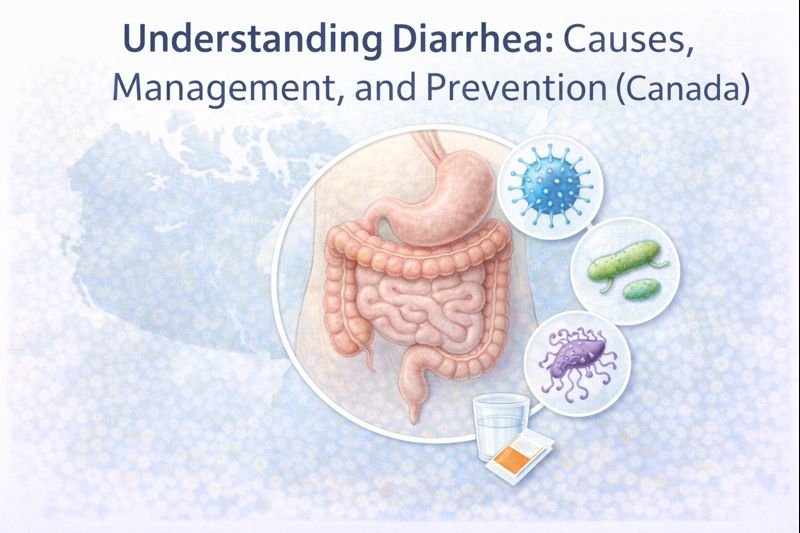
 Diarrhea refers to loose, watery, or unusually frequent bowel movements. It’s common in both children and adults and often resolves within a few days to a week. Although most cases are mild, diarrhea can still be uncomfortable and increase the risk of dehydration.
Common Causes
The most common cause is gastroenteritis, an infection of the digestive system. It may be caused by:
-
Viruses (e.g., norovirus, rotavirus)
-
Bacteria (e.g., E. coli, Campylobacter, Salmonella)
-
Parasites (e.g., Giardia from contaminated water)
Diarrhea can also occur due to medication side effects, food intolerances, anxiety, or long-term conditions such as irritable bowel syndrome (IBS). Infections are more likely when travelling to regions with limited sanitation or untreated water.
Caring for Diarrhea at Home
Most cases improve without treatment. Supportive care includes:
-
Hydration: drink fluids regularly; oral rehydration solutions may help replace electrolytes
-
Feeding: continue regular feeding for infants; offer solid food as tolerated
-
Preventing spread: remain home for 48 hours after the last episode of diarrhea if infectious
-
Symptom relief: medications like loperamide are not required in most cases and should not be given to children unless advised by a clinician
Infants, older adults, and individuals with chronic illness face a higher risk of dehydration.
When to See a Doctor
Seek medical advice if diarrhea:
-
Lasts several days
-
Recurs frequently
-
Contains blood or appears black/tarry
-
Is accompanied by vomiting, fever, or weight loss
-
Causes severe abdominal pain
-
Shows signs of dehydration (dizziness, reduced urination, drowsiness)
Children with persistent diarrhea should be assessed to rule out more serious causes.
Prevention & Hygiene
Infectious diarrhea spreads easily. Prevention includes:
-
Handwashing with warm water and soap after bathroom use and before eating
-
Cleaning toilets and shared surfaces during illness
-
Avoiding shared utensils, towels, or personal items
-
Practicing food and water safety when travelling (avoid untreated water and undercooked food)
Educational Disclaimer
This post is for educational purposes only and should not be used to diagnose or treat medical conditions. For personal health concerns, hydration issues, or persistent symptoms, consult a qualified healthcare professional.
About The Author

Mark Kascha
Certified First Aid Instructor Trainer with 30+ years of real-world experience, including lifeguarding, workplace emergency response, and first aid program development across Canada. Has worked with WorkSafeBC, WSIB, and Manitoba Health.
👉 [View full credentials]🔗 View LinkedIn Profile
Last reviewed: March 2026