
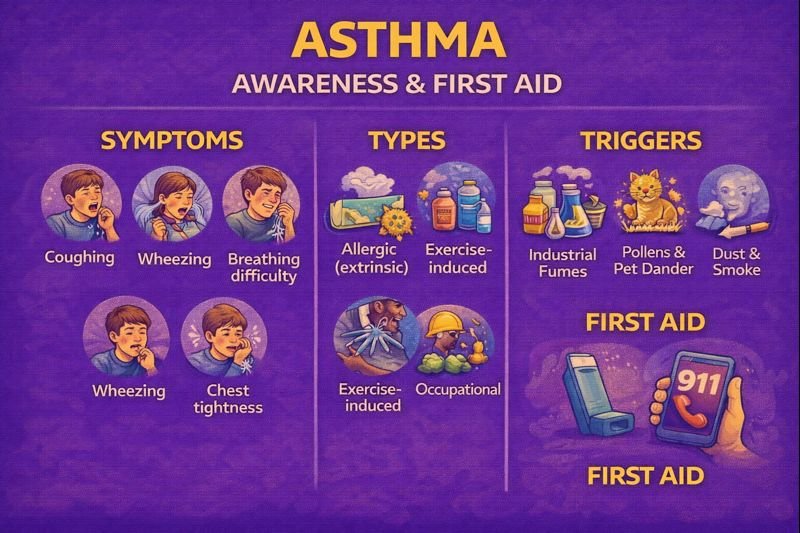
 Asthma is a chronic inflammatory condition that affects the airways of the lungs. During an asthma flare-up, the muscles around the airway tighten, the lining becomes inflamed, and excess mucus may narrow the passages. This combination can make breathing more difficult and trigger coughing, wheezing, or chest discomfort.
Why this matters in Canada (home, school & workplace)
Asthma affects children and adults and can appear in homes, schools, sports settings, industrial workplaces, or during travel. Awareness helps by supporting early recognition of symptoms, reducing exposure to triggers, and knowing when to seek emergency medical care.
Scenario (mild, realistic, non-alarmist)
At a community gym session, a participant began coughing and became short of breath after warm-up exercises. A coach asked if they had a known history of asthma and encouraged them to rest while monitoring asthma symptoms. The participant used their prescribed inhaler and resumed activities later at a slower pace.
Common symptoms of asthma
Symptoms vary by person and may change over time. Possible symptoms include:
Coughing
A persistent cough—dry or wet—is one of the most common symptoms. Some people only experience chronic coughing without other classic symptoms, often called cough-variant asthma.
Wheezing
A whistling or musical sound during breathing, especially on exhalation, can indicate airway narrowing. Wheezing may also appear in other lung conditions, so it is not always specific to asthma.
Chest tightness
Tightness or discomfort can occur when airway muscles constrict. Some individuals describe a heavy or squeezing sensation.
Breathing difficulties
Shortness of breath or difficulty catching breath may occur with airway inflammation and excess mucus. These sensations can increase anxiety, which may further affect breathing patterns.
Types of asthma
Asthma can be classified based on what triggers symptoms or when they commonly occur:
-
Childhood asthma – symptoms appear early in life.
-
Adult-onset asthma – symptoms first appear in adulthood.
-
Allergic (extrinsic) – associated with allergens such as pollen, pets, dust, or seasonal changes.
-
Non-allergic (intrinsic) – triggered by irritants not related to allergies, such as cigarette smoke or air pollution.
-
Exercise-induced – symptoms during or after physical exertion.
-
Cough-variant – persistent dry cough without other classic symptoms.
-
Occupational – triggered by workplace exposures (e.g., dust, fumes, chemicals, latex).
-
Nocturnal – symptoms that noticeably worsen at night.
Triggers & workplace relevance
Asthma symptoms may be influenced by:
-
Cold or dry air
-
Respiratory infections
-
Dust, dander, or pollen
-
Cleaning agents or industrial fumes
-
Perfumes or aerosols
-
Smoke exposure
-
Physical activity
-
Weather or seasonal changes
Canadian workplaces often include asthma and respiratory awareness within health and safety programs, particularly where air quality, dust, or volatile chemicals are present.
First aid & emergency awareness
Public first aid focuses on:
-
Recognizing when breathing appears laboured or unusually difficult
-
Asking if the person has a known asthma plan or prescribed inhaler
-
Calling emergency services if symptoms are severe, rapidly worsening, or not improving
Healthcare teams may provide additional treatments based on assessment.
Those diagnosed with asthma may work with healthcare professionals to develop personalized management or action plans.
Prevention & lifestyle considerations
Strategies may include:
-
Reducing exposure to known triggers when possible
-
Proper ventilation at home and work
-
Environmental control for allergens (dust, dander, mould)
-
Air quality monitoring for sports and outdoor activities
FAQ
Can asthma develop later in life?
Yes. Adult-onset asthma can appear after age 20, sometimes linked to allergens, workplace exposures, or respiratory infections.
Is asthma the same for every person?
No. Triggers, symptom patterns, and severity vary widely and can change over time.
Does exercise make asthma worse?
Exercise may trigger symptoms in some people, but many athletes manage asthma successfully with guidance from health professionals.
Can asthma disappear?
Some children experience fewer symptoms as they grow, while others continue into adulthood or develop symptoms later in life.
When should asthma symptoms be considered serious?
Breathing difficulty, trouble speaking, or rapidly worsening symptoms require urgent medical attention.
Educational note
This article supports public first aid awareness for asthma, including recognition of symptoms and triggers. For diagnosis, medication decisions, or personalized care plans, individuals consult healthcare professionals.
About The Author

Mark Kascha
Certified First Aid Instructor Trainer with 30+ years of real-world experience, including lifeguarding, workplace emergency response, and first aid program development across Canada. Has worked with WorkSafeBC, WSIB, and Manitoba Health.
👉 [View full credentials]🔗 View LinkedIn Profile
Last reviewed: March 2026