
Viral eye infections occur when viruses infect different parts of the eye, leading to redness, irritation, and discomfort. Some viral eye infections may also affect vision temporarily, causing blurriness or light sensitivity. Depending on the type and severity, these infections may resolve on their own with supportive care rather than specific medication.
Understanding the common types of viral eye infections helps support early recognition, reduce spread, and promote appropriate first aid awareness.
First Aid & Workplace Relevance (Canada)
Viral eye infections are common in Canadian workplaces, schools, childcare centres, healthcare settings, and other environments where close contact and shared surfaces are unavoidable. Eye discomfort or vision changes can interfere with reading, screen use, driving, and task safety.
First aid awareness emphasizes early recognition, hygiene practices, and knowing when eye symptoms should be medically assessed.
Scenario: Preventing Spread Through Early Awareness
An office employee arrived at work with a red, irritated eye and watery discharge. A coworker trained in first aid awareness recognized the signs as possible viral conjunctivitis and encouraged the employee to avoid touching their eyes and seek medical advice. Prompt action helped reduce discomfort and limited spread in the workplace.
Viral Conjunctivitis (Pink Eye)
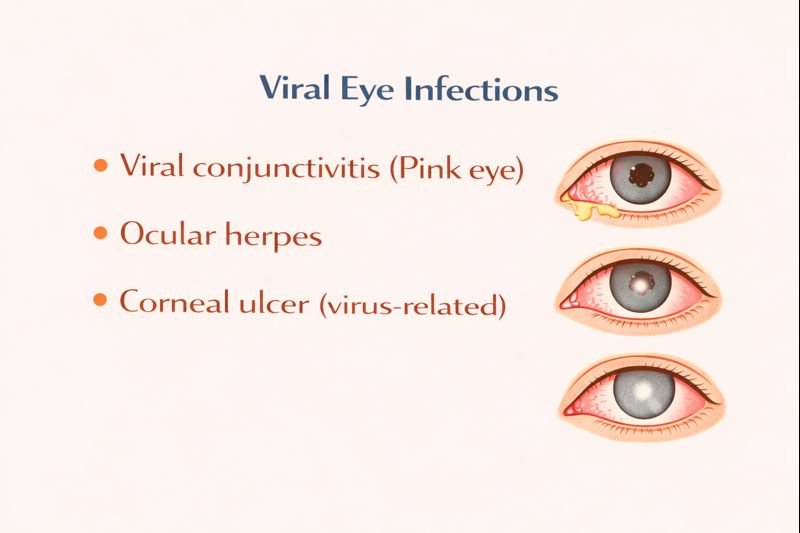 Viral conjunctivitis occurs when a virus infects the conjunctiva, the thin, clear tissue covering the white part of the eye and lining the eyelids. This infection is commonly associated with viruses that also cause colds.
Common features include:
-
Redness of the white part of the eye
-
Itching or irritation
-
Watery or mild discharge
-
Swollen eyelids
-
Sensitivity to light
Viral conjunctivitis spreads easily through hand-to-eye contact or contaminated surfaces. Symptoms often improve as the viral illness resolves.
Ocular Herpes
Ocular herpes is caused by the herpes simplex virus, which can also cause cold sores around the mouth. When this virus affects the eye, it most often involves the cornea, the clear front surface of the eye.
Possible symptoms include:
-
Eye pain or discomfort
-
Redness
-
Blurred or altered vision
-
Light sensitivity
If deeper layers of the cornea are affected, scarring may occur, which can affect vision. Because symptoms can resemble other eye conditions, medical assessment is essential.
Corneal Ulcer (Virus-Related)
A corneal ulcer is an open sore on the surface of the cornea. Viral infections, including ocular herpes, may contribute to ulcer formation, especially if the eye has been previously injured.
Signs and symptoms may include:
-
Eye pain or irritation
-
Excessive tearing
-
Light sensitivity
-
Blurred vision
-
A visible cloudy or white spot on the cornea
Corneal ulcers require prompt medical evaluation to prevent complications.
First Aid Awareness and General Eye Care
From a first aid education perspective, managing viral eye infections focuses on comfort, hygiene, and monitoring, not treatment.
Key awareness points include:
-
Avoiding touching or rubbing the eyes
-
Washing hands frequently
-
Avoiding sharing towels, cosmetics, or eye products
-
Not using contact lenses if eye irritation is present
-
Seeking medical assessment if vision is affected or symptoms worsen
Eye symptoms that persist, worsen, or affect vision should always be evaluated by a healthcare professional.
Preventing the Spread of Viral Eye Infections
General prevention strategies include:
-
Practicing good hand hygiene
-
Avoiding close contact with others when eye symptoms are present
-
Cleaning shared surfaces regularly
-
Replacing or disinfecting eye makeup and lenses after infection
These steps are especially important in group settings.
Frequently Asked Questions
Are viral eye infections contagious?
Yes. Many viral eye infections spread easily through contact with hands or contaminated surfaces.
Do viral eye infections always need medication?
Not always. Some resolve on their own with supportive care, though medical assessment may still be required.
Can viral eye infections affect vision?
Some can cause temporary vision changes, and certain infections may pose a risk to vision if untreated.
Should contact lenses be worn during an eye infection?
Contact lenses are usually avoided until symptoms fully resolve and guidance is provided.
When should eye symptoms be checked?
If pain, vision changes, or worsening symptoms occur, medical assessment is recommended.
Educational Note
This article is intended for general public education and first aid awareness. It does not provide medical diagnosis or treatment advice. First aid training focuses on recognizing eye infection symptoms, preventing spread, and understanding when professional eye care may be needed.
About The Author

Mark Kascha
Certified First Aid Instructor Trainer with 30+ years of real-world experience, including lifeguarding, workplace emergency response, and first aid program development across Canada. Has worked with WorkSafeBC, WSIB, and Manitoba Health.
Last reviewed: March 2026