 What is asthma?
Asthma is a chronic respiratory condition in which the airways become inflamed and narrowed from time to time. During flare-ups, this narrowing can lead to wheezing, coughing, chest tightness, and shortness of breath.
Canadian first aid & daily-life relevance
Asthma affects many children across Canada and is commonly encountered in homes, schools, childcare centres, sports programs, and workplaces. Understanding common asthma triggers helps caregivers, educators, and coworkers support safer environments and respond appropriately when symptoms appear.
Scenario: School gym class exposure
During an indoor gym class, a child began coughing and breathing more rapidly after activities stirred up dust. The teacher paused the activity and followed the child’s asthma action plan. Symptoms eased once exposure was reduced.
Common asthma triggers (educational overview)
Asthma triggers vary from person to person. One child may react strongly to a specific trigger while another may not react at all.
Food allergies and preservatives
Some children with asthma also have food allergies. In certain cases, food additives such as sulfites may trigger breathing symptoms.
Sulfites may be present in:
-
Some processed foods
-
Certain beverages
-
Some medications
Not every child with asthma reacts to food-related triggers, but awareness is important for caregivers and schools.
Environmental allergies
Allergy-related asthma is common in children. Inhaling substances the child is allergic to can trigger symptoms.
Common environmental triggers include:
-
Pollen
-
Dust mites
-
Mold
Animal-related triggers
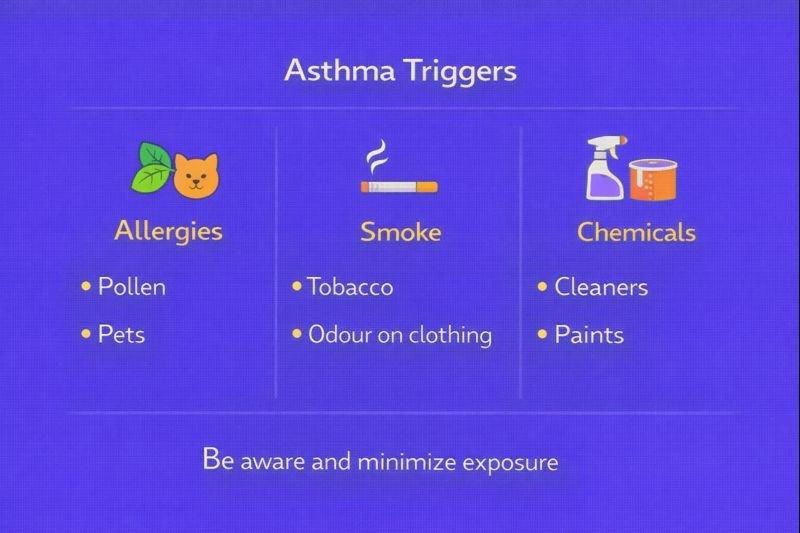
Pet allergens come from skin flakes, saliva, and urine — not fur itself. Cats, dogs, birds, rodents, and cockroaches are recognized triggers for some children.
Tobacco smoke
Tobacco smoke is a strong airway irritant and a well-known asthma trigger. Even residual smoke on clothing or surfaces can cause symptoms in sensitive children.
Medications
Some medications may worsen asthma symptoms in certain individuals. This does not affect everyone with asthma and varies by person. Medication-related concerns are addressed by healthcare professionals.
Indoor air irritants and chemicals
Everyday indoor exposures can trigger asthma symptoms, including:
-
Cleaning products
-
Air fresheners and scented candles
-
Perfumes and fragrances
-
Cooking fumes
-
Paints, glues, and solvents
Combustion sources such as gas stoves, fireplaces, or heaters may also affect indoor air quality.
Stress and strong emotions
Emotional stress, anxiety, or excitement can influence breathing patterns and trigger asthma symptoms in some children. Physical and emotional stress often interact.
Occupational and environmental exposures
In older children and adolescents, workplace or training environments may expose them to irritants such as:
-
Dusts
-
Solvents
-
Cleaning chemicals
-
Wood or metal particles
These exposures are considered when evaluating asthma symptoms.
Recognizing early signs of an asthma flare
Early symptoms may include:
-
Increased coughing
-
Wheezing
-
Shortness of breath
-
Chest tightness
-
Reduced activity tolerance
Early recognition allows caregivers to follow the child’s asthma management plan.
When to seek medical care
Medical assessment is important if:
-
Symptoms worsen or do not improve
-
Breathing becomes difficult
-
A child has trouble speaking due to breathlessness
-
Asthma symptoms interfere with normal activity or sleep
Severe breathing difficulty is a medical emergency.
FAQ
Do all children with asthma have the same triggers?
No. Triggers vary widely between individuals.
Are allergies always involved in asthma?
No. Some children have allergy-related asthma, while others do not.
Can stress really trigger asthma?
Yes. Emotional stress can contribute to symptoms in some children.
Is avoiding triggers enough to control asthma?
Trigger awareness helps reduce flare-ups, but asthma management plans are individualized and guided by healthcare professionals.
Educational note
This article provides general asthma trigger awareness for public health and first aid education. Asthma diagnosis and management plans are developed with healthcare professionals.
About The Author

Mark Kascha
Certified First Aid Instructor Trainer with 30+ years of real-world experience, including lifeguarding, workplace emergency response, and first aid program development across Canada. Has worked with WorkSafeBC, WSIB, and Manitoba Health.
👉 [View full credentials]🔗 View LinkedIn Profile
Last reviewed: March 2026