 What Is Scabies?
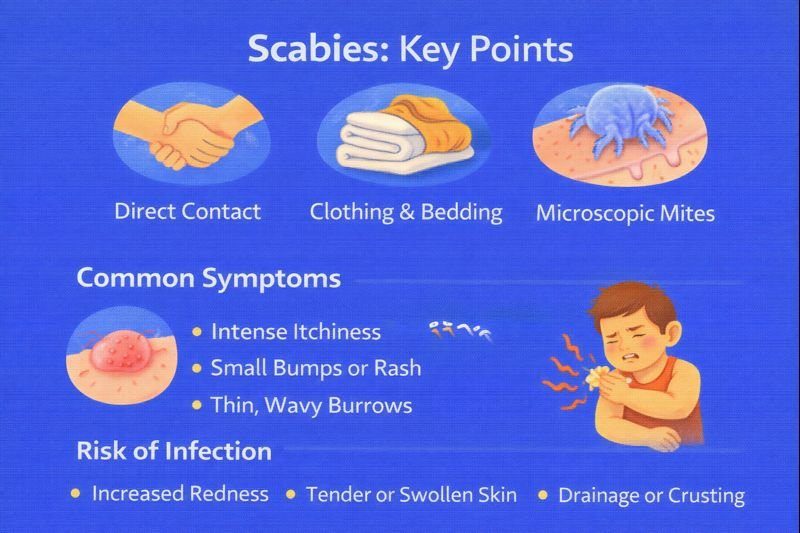
Scabies is a contagious skin condition caused by microscopic mites that burrow just beneath the surface of the skin. The body reacts to the presence of these mites with intense itching and irritation. Scabies occurs worldwide and can affect people of all ages, regardless of hygiene or lifestyle.
Why Scabies Awareness Matters in Canadian Homes, Schools, and Workplaces
In Canada, scabies awareness is especially important in environments where people share close contact or personal items—such as childcare centres, schools, long-term care facilities, shelters, and households. First aid awareness focuses on recognizing early skin changes, reducing spread, and encouraging timely follow-up, rather than diagnosing or prescribing treatment.
A Simple, Realistic Scenario
A daycare worker notices a child repeatedly scratching their wrists and fingers during nap time. Remembering basic skin-health awareness training, the worker informs the supervisor and the child’s caregiver so the symptoms can be checked and shared items such as blankets are cleaned promptly.
Common Signs and Symptoms of Scabies
Intense Itching
-
Often worse at night or after a warm shower or bath
-
Caused by the body’s reaction to the mites under the skin
-
Scratching may lead to small cuts or sores if persistent
Skin Rashes or Bumps
-
Small red or pink bumps that may resemble hives or pimples
-
Can contain clear fluid and may crust over if scratched repeatedly
-
Ongoing irritation can lead to thicker or scaly patches of skin
Thin, Wavy Lines on the Skin
-
Short, faint lines where mites have burrowed
-
Commonly noticed between fingers, on wrists, or around elbows
Common Body Locations
Scabies tends to appear in warm skin folds or areas with close skin contact, including:
-
Between fingers and on wrists
-
Around the waistline or navel
-
Elbows, ankles, or soles of the feet
-
Underarms or behind the knees
-
In some cases, chest or groin areas
Risk of Secondary Skin Infection
Frequent scratching can break the skin, creating openings where bacteria may enter. Signs that the skin may be irritated or infected include:
-
Increased redness or swelling
-
Warmth or tenderness around scratched areas
-
Drainage or crusting from open sores
Early awareness and reducing scratching help lower the chance of additional skin irritation.
First Aid Awareness and General Management
From a public-education perspective, the emphasis is on comfort, hygiene, and limiting spread:
-
Avoid sharing clothing, towels, bedding, or personal items
-
Wash hands regularly and keep fingernails short to reduce skin damage
-
Launder recently used clothing and linens in hot water when possible
-
Encourage gentle skin care and avoid harsh scrubbing
-
Inform caregivers, supervisors, or facility managers if symptoms are noticed
First aid awareness supports early recognition and cleanliness rather than medical treatment.
Prevention and Community Considerations in Canada
-
Promote regular handwashing and personal-item hygiene in shared spaces
-
Clean and dry bedding, clothing, and soft furnishings thoroughly
-
Encourage prompt reporting of persistent itching or rashes in childcare or group settings
-
Maintain clear communication in schools or workplaces if multiple cases are suspected
These steps help reduce the likelihood of ongoing spread in communal environments.
Frequently Asked Questions About Scabies
Is scabies caused by poor hygiene?
No. Scabies can affect anyone and is related to close contact rather than cleanliness.
Why is itching worse at night?
Warmth and stillness can make skin sensations more noticeable during rest.
Can scabies spread through shared items?
Yes. Clothing, bedding, or towels used by an affected person can contribute to spread if not cleaned.
Where do symptoms usually appear first?
Common early areas include the wrists, between fingers, and around the waistline.
When should persistent itching be checked further?
If itching or rashes continue, worsen, or spread to others in close contact, further assessment is important.
Educational Note
This article is intended for general public and workplace education in Canada. It supports awareness of contagious skin conditions and first aid recognition but does not replace evaluation or care from qualified healthcare professionals.
About The Author

Mark Kascha
Certified First Aid Instructor Trainer with 30+ years of real-world experience, including lifeguarding, workplace emergency response, and first aid program development across Canada. Has worked with WorkSafeBC, WSIB, and Manitoba Health.
👉 [View full credentials]🔗 View LinkedIn Profile
Last reviewed: March 2026