Rotator cuff injuries are a common cause of shoulder pain and account for millions of healthcare visits each year. The rotator cuff is a group of muscles and tendons that stabilize the shoulder joint and allow a wide range of arm movements, including lifting, reaching, and rotating the arm.
Because the shoulder is the most mobile joint in the body, the rotator cuff is especially vulnerable to strain, overuse, and injury.
First Aid & Workplace Relevance (Canada)
Rotator cuff issues are highly relevant in Canadian workplaces involving repetitive arm movements, overhead tasks, lifting, or manual labour. They are also common in office environments where poor posture and prolonged positioning place ongoing stress on the shoulders.
First aid awareness helps workers and supervisors recognize early warning signs, reduce strain-related risks, and encourage early assessment before symptoms worsen.
Scenario: Early Awareness Prevents Worsening Injury
A warehouse employee noticed increasing shoulder discomfort and weakness when lifting boxes overhead. A supervisor familiar with first aid awareness recognized the pattern as a possible rotator cuff issue and encouraged modified duties and medical assessment. Early action helped prevent further strain and prolonged injury.
Understanding the Rotator Cuff
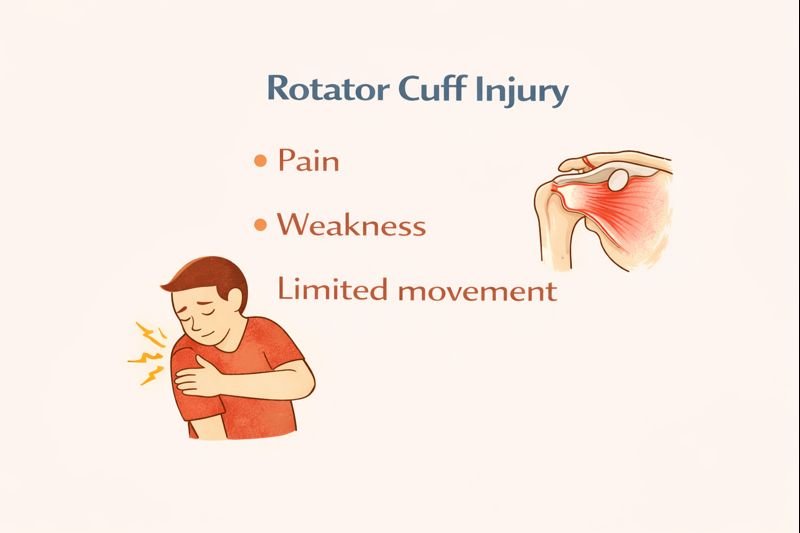 The rotator cuff is made up of muscles and tendons that:
-
Keep the upper arm bone securely positioned in the shoulder socket
-
Connect the upper arm to the shoulder blade
-
Allow smooth, controlled arm movement
Damage can range from mild inflammation to partial or complete tears of the tendons or muscles.
Common Symptoms of Rotator Cuff Issues
Shoulder Pain
Pain is the most common symptom. It may appear when:
-
Raising the arm above shoulder level
-
Reaching behind the back
-
Lifting or carrying objects
Pain may start gradually or appear suddenly after an injury.
Weakness
Reduced strength in the arm or shoulder may develop due to:
-
Muscle or tendon damage
-
Long-term overuse
-
Age-related muscle changes
Weakness can make everyday tasks, such as lifting or reaching, difficult.
Discomfort and Limited Movement
Overuse injuries often cause:
-
Tenderness around the shoulder
-
Discomfort during routine movements
-
Gradual loss of range of motion
Chronic pressure, such as repeatedly sleeping on the same shoulder, may also contribute to long-term wear.
Possible Causes of Rotator Cuff Injuries
Rotator cuff problems can develop in several ways, including:
-
Repetitive overhead movements, such as throwing, lifting, or reaching
-
Sports and physical activities, including golf, baseball, or swimming
-
Falls, where the arms are used instinctively to break the impact
-
Heavy lifting, especially with poor technique
-
Poor posture, which alters shoulder alignment and increases strain
-
Age-related wear and tear, as tendons lose elasticity over time
These factors may act alone or together.
First Aid Awareness and General Management
From a first aid education perspective, managing rotator cuff concerns focuses on early recognition and activity awareness, not diagnosis or treatment.
Key awareness points include:
-
Not ignoring persistent shoulder pain or weakness
-
Avoiding movements that repeatedly worsen symptoms
-
Recognizing that gradual discomfort can still signal injury
-
Understanding that early assessment may prevent further damage
Sudden, severe pain following an injury should be medically evaluated promptly.
Prevention and Workplace Considerations
Reducing shoulder strain in daily activities and workplaces may include:
-
Using proper lifting techniques
-
Avoiding prolonged overhead work when possible
-
Supporting good posture during desk work
-
Alternating tasks to reduce repetitive strain
-
Encouraging early reporting of shoulder discomfort
These steps support long-term shoulder health and workplace safety.
Frequently Asked Questions
Are rotator cuff injuries always caused by accidents?
No. Many develop gradually due to overuse, repetitive movements, or age-related changes.
Can shoulder pain appear without a specific injury?
Yes. Wear and tear over time can cause symptoms without a single noticeable event.
Is weakness a common symptom?
Yes. Loss of strength is a frequent sign of rotator cuff involvement.
Can poor posture affect the rotator cuff?
Yes. Poor posture can alter shoulder mechanics and increase strain on the tendons.
When should shoulder pain be assessed?
If pain or weakness persists, worsens, or limits daily activities, medical assessment is recommended.
Educational Note
This article is intended for general public education and first aid awareness. It does not provide medical diagnosis or treatment advice. First aid training focuses on recognizing injury patterns, reducing strain, and understanding when professional assessment may be appropriate.
About The Author

Mark Kascha
Certified First Aid Instructor Trainer with 30+ years of real-world experience, including lifeguarding, workplace emergency response, and first aid program development across Canada. Has worked with WorkSafeBC, WSIB, and Manitoba Health.
👉 [View full credentials]🔗 View LinkedIn Profile
Last reviewed: March 2026