What Is a Cocoa Allergy?
A cocoa allergy is a rare food allergy in which the immune system reacts to proteins found in cocoa, the main ingredient used to make chocolate. More commonly, people react to other ingredients in chocolate products—such as milk, nuts, or flavourings—rather than cocoa itself. Still, true cocoa sensitivity can occur, so awareness and label reading are important.
Why Awareness Matters in Canadian Homes, Schools, and Workplaces
Chocolate appears in snacks, desserts, beverages, and even seasonal gift baskets across Canada. First aid awareness focuses on recognizing early reaction signs, checking ingredient labels, and communicating known allergies in shared environments like offices, classrooms, and community events. The goal is prevention and early recognition—not diagnosis.
A Simple, Realistic Scenario
During a workplace birthday celebration, an employee who avoids chocolate notices mild lip itching after tasting a dessert. Remembering basic allergy awareness, they stop eating, drink water, and check the ingredient list before choosing a different snack.
Common Sources of Cocoa
 Chocolate Products
-
Dark chocolate and milk chocolate bars
-
Hot chocolate and chocolate-flavoured drinks
-
Candies, cookies, cakes, brownies, and pastries
Desserts and Frozen Treats
-
Ice cream, gelato, and chocolate syrups
-
Chocolate chips or cookie-dough mix-ins
-
Pancake or dessert toppings that may include cocoa
Less Obvious Sources
-
Some specialty sauces (for example, certain savoury chocolate-infused sauces)
-
Flavoured liqueurs or coffee beverages
-
Coatings or flavourings in vitamins, supplements, or children’s chewables
-
Cocoa butter used in some foods, lip balms, and cosmetics
Reading labels carefully helps identify cocoa or chocolate derivatives.
Possible Signs and Symptoms
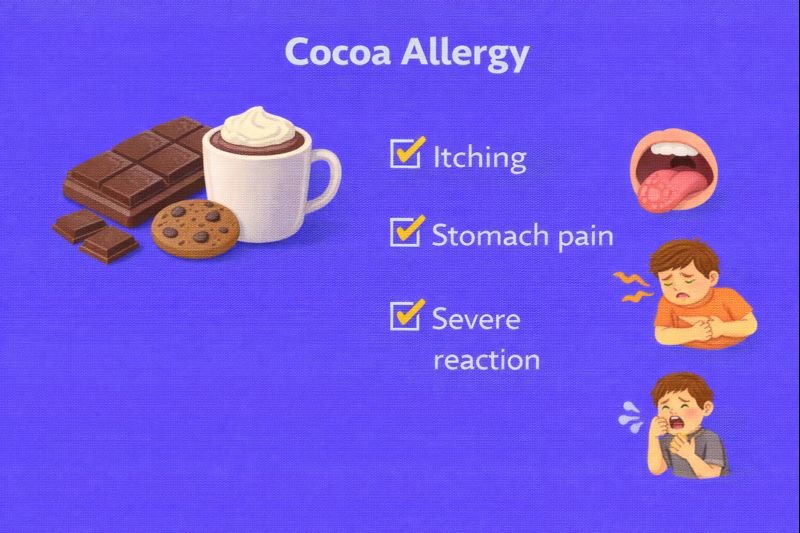
Reactions vary from mild to more intense and can include:
-
Itchy skin or hives
-
Tingling of the lips, tongue, or throat
-
Stomach discomfort, nausea, or cramps
-
Headache or cough
-
Nasal congestion or watery eyes
Severe Allergic Reaction (Anaphylaxis)
A rapid, serious reaction may involve:
-
Difficulty breathing or wheezing
-
Throat tightness or trouble swallowing
-
Dizziness or faintness
-
Widespread swelling or intense hives
These signs require immediate emergency assistance.
First Aid Awareness and General Safety Measures
From a public-education perspective, the emphasis is on avoidance, observation, and communication:
-
Stop eating the suspected food right away if symptoms appear
-
Rinse the mouth and sip water for mild irritation
-
Check ingredient lists on packaged foods and bakery items
-
Inform friends, coworkers, or teachers about known allergies
-
Keep emergency contact details accessible
-
Recognize urgent signs—breathing difficulty, rapid swelling, or faintness—and call emergency services immediately
These steps support early recognition and calm response rather than medical diagnosis.
Prevention and Everyday Considerations in Canada
-
Label shared foods at workplace or school events
-
Use separate utensils when preparing desserts for mixed groups
-
Wash hands and surfaces after handling chocolate products
-
Encourage open discussion about food allergies in community settings
-
Maintain general wellness habits—adequate sleep, balanced meals, and hydration
Frequently Asked Questions
Is cocoa allergy common?
No. It is considered uncommon; many reactions to chocolate relate to other ingredients.
Can touching chocolate cause irritation?
Some individuals may notice mild skin redness or itching after contact.
Why do symptoms differ between products?
Recipes and added ingredients vary widely by brand and preparation method.
Do labels always list cocoa clearly?
Most packaged foods list cocoa or chocolate, but checking carefully is still important.
When should urgent help be sought?
If there is difficulty breathing, throat tightness, rapid swelling, or faintness, emergency assistance is required immediately.
Educational Note
This article is intended for general public and workplace education in Canada. It promotes food-allergy awareness and first aid recognition but does not replace evaluation or care from qualified healthcare professionals.
About The Author

Mark Kascha
Certified First Aid Instructor Trainer with 30+ years of real-world experience, including lifeguarding, workplace emergency response, and first aid program development across Canada. Has worked with WorkSafeBC, WSIB, and Manitoba Health.
👉 [View full credentials]🔗 View LinkedIn Profile
Last reviewed: March 2026