
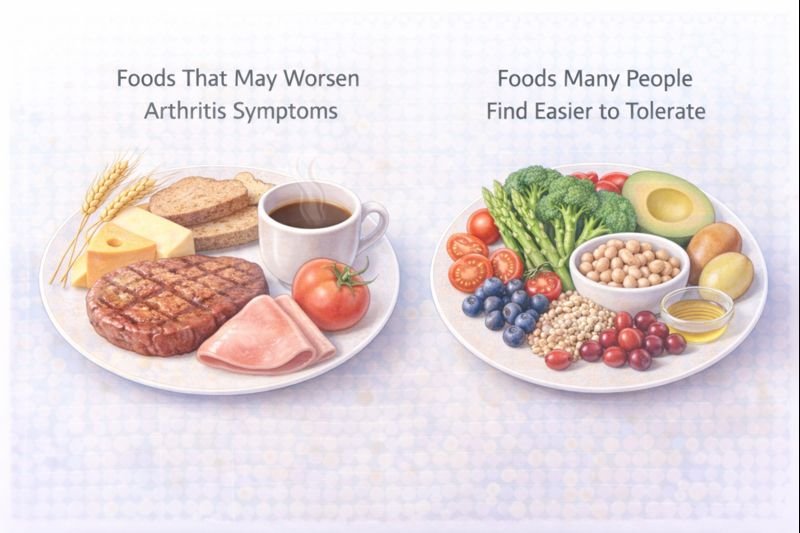
 Arthritis is one of the most common chronic conditions affecting adults in Canada. Symptoms such as joint pain, swelling, stiffness, and fatigue can interfere with mobility, work tasks, recreation, and everyday activities. Although arthritis cannot be cured through diet alone, evidence suggests that certain foods may contribute to flare-ups for some individuals while others may offer symptom relief.
Important note: This content is for public education only and is not medical or dietary advice, and should not replace assessment by a qualified health professional.
Types of Arthritis
There are more than 100 forms of arthritis, but two appear most often in Canada:
• Osteoarthritis (OA) — linked to gradual cartilage wear, commonly affecting knees, hips, spine, and hands.
• Rheumatoid Arthritis (RA) — an autoimmune form where the immune system attacks joint tissues, often leading to swelling, heat, and long-term joint damage.
Diet may interact differently with OA and RA symptoms, and responses vary widely between individuals.
Foods Some People Report as Triggers
While research continues, several categories of foods are frequently reported to worsen inflammation or discomfort for some individuals:
-
Red meat and processed meats
-
High-fat dairy products
-
Foods high in added sugars or salt
-
Coffee and caffeinated beverages
-
Nightshade vegetables such as tomatoes, eggplant, and potatoes (not universal, varies greatly)
-
Gluten-containing grains (wheat, rye, barley) in some cases
-
Highly processed foods
Not everyone with arthritis reacts the same way. Triggers can be inconsistent and may relate to the form of arthritis, other health conditions, and gut sensitivity.
Plant-Based & Gluten-Free Patterns
Some studies suggest potential improvements in RA symptoms when individuals adopt dietary approaches such as:
-
Plant-forward or vegetarian diets
-
Vegan diets
-
Gluten-free diets, particularly when gluten sensitivity or celiac disease is present
These approaches may reduce inflammatory markers for some people, although nutritional adequacy and protein intake must be considered.
Bigger Picture: Lifestyle, Movement & Work Function
Food is only one component of arthritis management. Other strategies supported in Canadian public health and workplace safety environments include:
-
Regular, low-impact physical activity
-
Strengthening exercises
-
Adequate sleep and stress reduction
-
Ergonomic supports at workstations
-
Safe lifting, pushing, and tool-handling techniques to reduce strain
For Canadians working in physically demanding or repetitive jobs, workplace safety training and joint-protection strategies can reduce symptom flare-ups and help maintain employment capacity.
When to Seek Medical or Allied Health Support
A physician, dietitian, or rheumatology specialist may be needed if:
-
Joint pain becomes persistent or severe
-
Weight loss, fever, or fatigue accompany symptoms
-
Mobility or work capacity becomes impaired
-
Dietary restrictions begin to reduce nutritional intake
Early assessment may improve long-term function and reduce complications.
First Aid & Public Awareness Connections
While arthritis itself is not a first aid emergency, flare-ups can affect dexterity and grip strength, which may limit a person’s ability to perform physical tasks, emergency responses, or safety procedures in the workplace. This reinforces the importance of Canadian first aid, workplace safety, and CPR/AED training, which prepares workers and community members to respond during situations where fine-motor limitations or chronic conditions play a secondary role.
Educational Disclaimer
This article is intended for public education only. It does not replace medical assessment, diagnosis, or treatment. Individuals should consult a physician, rheumatologist, or registered dietitian for personalized care.
About The Author

Mark Kascha
Certified First Aid Instructor Trainer with 30+ years of real-world experience, including lifeguarding, workplace emergency response, and first aid program development across Canada. Has worked with WorkSafeBC, WSIB, and Manitoba Health.
👉 [View full credentials]🔗 View LinkedIn Profile
Last reviewed: March 2026