
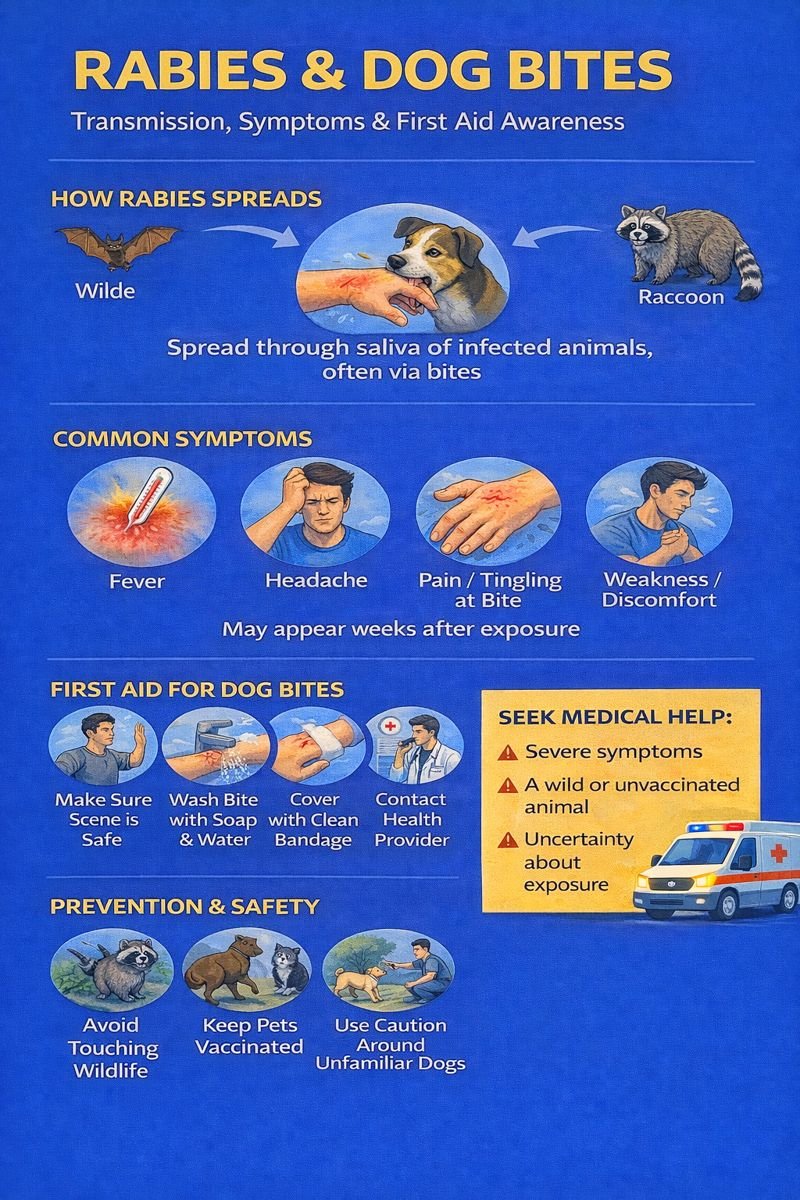
 Rabies is a viral disease that affects the nervous system of mammals. In rare cases involving untreated exposure, rabies can become serious. The virus is most commonly transmitted through the saliva of infected animals via bites or scratches. Prompt medical assessment after a potential exposure is an important step in prevention.
Public health & workplace relevance (Canada)
Rabies is uncommon in domestic pets in Canada due to vaccination programs, but wild animals (such as bats, raccoons, foxes, and skunks) can carry the virus. Outdoor workers, animal handlers, and individuals in rural or recreational environments may have increased exposure risks. First aid awareness helps ensure rapid reporting and proper medical follow-up when bites occur.
Scenario story
While hiking with friends, Jordan noticed a small dog behaving oddly and was bitten on the hand while attempting to move it away from a trail. Jordan washed the area with soap and water and visited a local urgent care clinic for evaluation. The health team gathered information about the animal and provided further guidance.
How rabies spreads
Rabies spreads primarily through the saliva of an infected animal via bites. Less commonly, saliva contacting broken skin or mucous membranes can also transmit the virus.
Because the disease progresses through the nervous system, timely medical assessment after a possible exposure can play a role in preventing infection.
Early symptoms
Early symptoms of rabies can resemble common viral illnesses. These may include:
-
Fever
-
Headache
-
General discomfort or fatigue
-
Pain, tingling, or itchiness at the bite site
Symptoms may take several weeks or longer to appear, depending on the location of the bite, the amount of virus transmitted, and individual factors. Not everyone experiences the same pattern.
Later symptoms
Without timely medical care after exposure, symptoms can progress. Later stages may involve:
-
Confusion or agitation
-
Neurological changes
-
Difficulty swallowing or speaking
-
Muscle weakness
These symptoms may require hospital-based supportive care.
Dog bites & first aid awareness
If a dog bite occurs:
-
Ensure the scene is safe
-
Wash the bite area gently with soap and running water
-
Avoid scrubbing or using harsh chemicals
-
Cover with a clean dressing
-
Contact a healthcare professional to determine if further care is needed
Medical teams may ask about:
-
Whether the dog is domestic or wild
-
The dog’s vaccination status (if known)
-
Location and circumstances of the bite
-
Local public health guidelines
Prevention & public health considerations
-
Avoid approaching unfamiliar animals
-
Do not attempt to handle sick or injured wildlife
-
Keep household pets’ vaccinations up to date
-
Use caution around animals during travel to regions with higher rabies risk
-
Report unusual animal behaviour to local authorities when appropriate
FAQ
Is rabies common in Canada?
Human rabies cases are extremely rare in Canada due to vaccination programs and public health measures.
Does every bite need rabies evaluation?
Not necessarily. Healthcare professionals assess exposure risk based on the animal, behaviour, and circumstances.
How long after a bite can symptoms appear?
Incubation can vary widely, from weeks to months. Earlier assessment after exposure is safer than waiting for symptoms.
Can pets carry rabies?
Vaccinated domestic pets are unlikely to carry rabies. Wild animals are more commonly involved in transmission.
Should a person try to catch the animal?
No. Capturing animals can increase risk. Reporting the incident to appropriate authorities is safer.
Educational note
This article supports public health awareness and first aid learning and does not replace clinical assessment or official public health guidance for potential rabies exposure.
About The Author

Mark Kascha
Certified First Aid Instructor Trainer with 30+ years of real-world experience, including lifeguarding, workplace emergency response, and first aid program development across Canada. Has worked with WorkSafeBC, WSIB, and Manitoba Health.
👉 [View full credentials]🔗 View LinkedIn Profile
Last reviewed: March 2026