 What is a valgus knee brace?
A valgus knee brace (also called an “unloader brace”) is designed to shift some of the pressure away from the inner (medial) compartment of the knee. This may help reduce discomfort in people with medial osteoarthritis, where gradual wear-and-tear affects the inner portion of the knee joint.
Canadian & workplace relevance
Knee osteoarthritis is common in older adults, individuals who perform repetitive kneeling or lifting, and those who participate in sports. Awareness of supportive devices can help people make informed decisions when discussing mobility, work participation, and symptom management with a healthcare professional.
Scenario: Returning to activity with a brace
A maintenance worker with medial knee discomfort used an unloader-style brace during longer walks at work. The brace reduced strain during ladder climbing and allowed participation in light recreational sports without as much discomfort. The worker continued to follow up with a clinician about strengthening and long-term management.
How valgus knee braces work
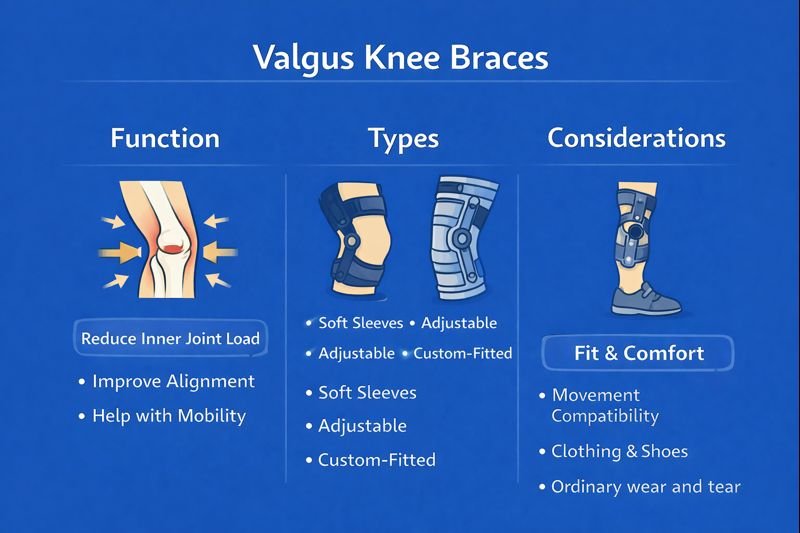
Valgus knee braces apply gentle outward force along the outside (lateral) portion of the knee. This can:
-
Reduce load on the inner (medial) joint compartment
-
Improve alignment during walking
-
Decrease uneven pressure that may contribute to limping
The overall goal is to support mobility and comfort rather than provide a cure for osteoarthritis.
Medial osteoarthritis and joint load
Medial knee osteoarthritis involves gradual cartilage wear on the inside of the knee. Load distribution is one factor that influences discomfort. Changing the mechanics of the knee joint through bracing, strengthening, or activity modification may support daily function for some individuals.
Types of valgus knee braces
Unloader braces vary by design. Options include:
-
Soft sleeves with lightweight unloading hinges
-
Semi-rigid braces with adjustable strapping
-
Custom-fitted braces tailored to leg measurements
Custom and adjustable options allow changes in how much force is applied, depending on comfort and daily activity.
Fit & comfort considerations
Several factors influence how well a brace is tolerated:
-
Proper sizing and alignment
-
Skin comfort and padding
-
Ability to wear during movement-heavy tasks
-
Compatibility with clothing and footwear
Healthcare professionals or bracing specialists may assist with selection and fit.
What valgus braces do not do
Valgus knee braces do not cure osteoarthritis or reverse cartilage wear. They are considered supportive devices that may assist with comfort, gait, and functional tasks.
When to seek assessment
Individuals may seek clinical evaluation if:
-
Knee pain persists or worsens
-
Mobility decreases significantly
-
The brace causes discomfort, skin issues, or instability
-
Symptoms affect daily work or recreation
A broader osteoarthritis management plan may include exercise, task modification, footwear strategies, or medical care depending on need.
FAQ
Are valgus braces only for athletes?
No. They are also used by many adults with medial knee discomfort during work or daily activities.
Is bracing the same as treatment?
Bracing is one supportive option. Osteoarthritis management may include exercise, education, weight-bearing strategies, or other medical interventions.
Does a brace replace surgery?
Not necessarily. Some people find bracing helpful for mobility or delay of more invasive options, while others may not notice significant benefit.
Do all knee osteoarthritis cases benefit from valgus bracing?
Valgus bracing is mainly considered for medial compartment OA. Suitability depends on anatomy, symptoms, and professional assessment.
Educational note
This post supports public education, workplace mobility awareness, and general understanding of valgus knee braces. Clinical assessment helps determine if bracing is appropriate and how it fits into a broader management plan.
About The Author

Mark Kascha
Certified First Aid Instructor Trainer with 30+ years of real-world experience, including lifeguarding, workplace emergency response, and first aid program development across Canada. Has worked with WorkSafeBC, WSIB, and Manitoba Health.
Last reviewed: March 2026