
 Understanding a Chronic Sprained Ankle
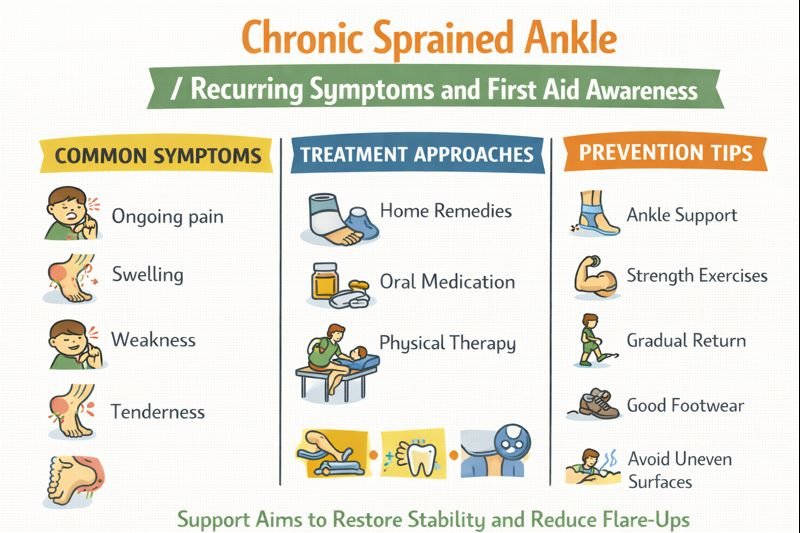
A chronic sprained ankle develops when a previous ankle sprain does not fully heal or is stressed again before recovery is complete. As a result, symptoms such as pain, swelling, stiffness, or a feeling of instability may return repeatedly. Because the ankle plays a key role in balance and mobility, even minor reinjury can trigger flare-ups during everyday activities like walking, standing, or exercising.
While many ankle sprains heal well, some individuals continue to experience recurring symptoms despite earlier improvement. Recognizing these patterns early supports safer movement and helps reduce the risk of long-term instability.
First Aid & Workplace Relevance in Canada
In Canadian workplaces, chronic ankle symptoms can affect employees who walk long distances, stand for extended periods, climb stairs, or work on uneven surfaces. First aid awareness helps coworkers recognize recurring ankle strain, encourage supportive measures, and reduce the chance of reinjury. Simple steps — such as allowing rest breaks or adjusting tasks — can support recovery while maintaining safety.
A Short Realistic Scenario
An employee returning to regular duties after a previous ankle sprain notices swelling and discomfort by the end of the shift. A coworker trained in first aid awareness suggests elevating the ankle during a break and using light support. The employee adjusts activity levels and schedules follow-up care before symptoms worsen, helping avoid another setback.
Common Symptoms of a Chronic Sprained Ankle
Recurring ankle symptoms may include:
-
Ongoing or repeated pain
-
Swelling (edema) around the ankle
-
A feeling of weakness or instability
-
Discomfort after activity or prolonged standing
Symptoms may flare after minor twists, uneven steps, or overuse.
General Treatment Approaches (Awareness-Based)
Management of chronic ankle symptoms often focuses on conservative, non-invasive strategies. These may include a combination of home comfort measures and guided rehabilitation.
Supportive Home Measures
-
Ankle wraps or braces to provide stability
-
Rest and elevation to reduce swelling
-
Cold applications to help manage inflammation
-
Activity modification during flare-ups
These measures aim to support the ankle while daily movement continues safely.
Rehabilitation and Movement Awareness
Structured rehabilitation programs may focus on:
-
Strengthening muscles that support the ankle
-
Improving balance and coordination
-
Restoring normal range of motion
These approaches help retrain the ankle to remain stable during movement and everyday tasks.
Time Frame for Symptom Improvement
Recovery time can vary depending on the severity and frequency of reinjury:
-
Mild flare-ups may settle within hours or days with supportive care
-
Moderate symptoms may take a week or longer
-
More serious reinjury may require extended recovery periods
Consistency with supportive measures often plays a role in how quickly symptoms improve.
Prevention and Ongoing Support
Preventive strategies can reduce future ankle problems:
-
Use ankle support during sports or physically demanding work
-
Gradually return to activity after symptoms improve
-
Maintain strength and balance exercises as part of regular movement
-
Wear appropriate footwear with good support
-
Avoid uneven surfaces when possible
Rehabilitation exercises may act as both treatment and prevention by improving joint stability.
Workplace Considerations
-
Encourage early reporting of recurring ankle discomfort
-
Adjust duties temporarily during symptom flare-ups
-
Promote safe walking surfaces and clear walkways
-
Allow rest periods and elevation when needed
-
Include lower-limb injury awareness in first aid and safety training
Frequently Asked Questions
What makes an ankle sprain “chronic”?
It is considered chronic when symptoms return repeatedly or never fully resolve after the initial injury.
Can minor movements trigger symptoms?
Yes. Simple actions such as twisting the ankle slightly or sitting awkwardly on the foot can cause flare-ups.
Is movement still important during recovery?
Gentle, appropriate movement can help maintain circulation and muscle alignment, depending on comfort level.
Can ankle supports help prevent reinjury?
Supportive wraps or braces may help stabilize the ankle during activity and reduce strain.
Why is workplace awareness important?
Early support and task adjustment can help prevent reinjury and long-term mobility issues.
Educational Note
This information is provided for general public education and first aid awareness. Chronic ankle symptoms vary by individual, and learning supportive strategies can help people respond calmly and safely during everyday activities.
About The Author

Mark Kascha
Certified First Aid Instructor Trainer with 30+ years of real-world experience, including lifeguarding, workplace emergency response, and first aid program development across Canada. Has worked with WorkSafeBC, WSIB, and Manitoba Health.
👉 [View full credentials]🔗 View LinkedIn Profile
Last reviewed: March 2026